Modesto began as a small stop on the railroad between Sacramento and Los Angeles. In 1870, it was just a patch of land, waiting to grow. The Central Pacific Railroad co-founder, Mark Hopkins Jr., wanted to name the town after his associate, banker William C. Ralston. But Ralston refused the honor. He was a modest man, a fact that was loudly stated by a railroad employee. Charles Crocker, another co-founder, decided the name should reflect that modesty. And so, Modesto was born.
The town’s early years were slow. By 1884, the population reached 1,000. Most people farmed grain. The Tuolumne River helped transport goods, and the railroad kept the town connected. Water was scarce, but that changed when irrigation came from dams in the foothills. Fields of vegetables, fruit, and nut trees bloomed, transforming Modesto into a farming hub.
By 1900, Modesto had grown to over 4,500 residents. The town thrived on agriculture. World War II brought a new demand. The area produced canned goods, powdered milk, and eggs for the U.S. armed forces and their allies. After the war, the town continued to grow, its population increasing steadily year by year. By 1980, over 100,000 people called Modesto home. By 2001, that number had more than doubled.
Amidst this growth, a woman named Clara lived quietly in the town. Clara was not a farmer. She didn’t work in the factories or on the railroad. Her work was with children. Clara had a passion for helping kids from broken homes. She had a small house on the edge of town, where she invited children to come after school.
She didn’t advertise her help. Word spread on its own. Families who struggled, children who felt lost—Clara’s house became a refuge. She taught them simple things: reading, cooking, and sometimes just listening.
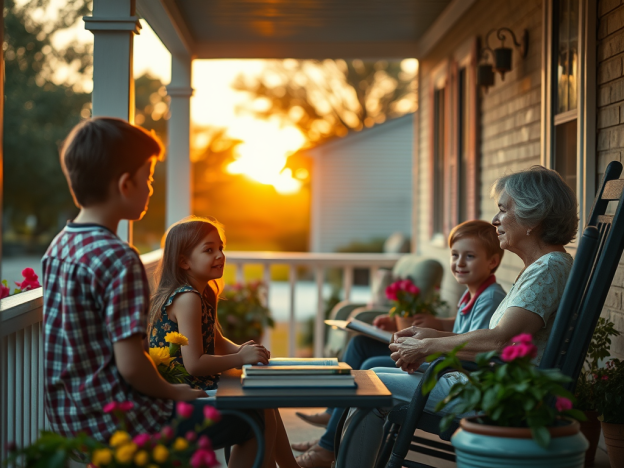
One afternoon, Clara sat with a boy named Sam on her porch. Sam had been coming to Clara’s for a few months. His parents fought often, and home didn’t feel safe.
“Do you ever wonder why people leave?” Sam asked quietly.
Clara looked at him. “They don’t always mean to.”
Sam frowned. “But they do.”
Clara nodded. “Yes, sometimes they do. But it’s not always the end.”
Sam kicked the ground, thinking. “Do they ever come back?”
“Sometimes,” Clara said. “But sometimes you have to find your own way, even if they don’t.”
Sam didn’t reply. He just sat there, staring at the fading light.
Clara’s house became a second home to many children. She taught them skills they didn’t get elsewhere. More than that, she gave them a sense of belonging. The children knew they could always return to her porch, her kitchen, her quiet words.
Years passed, and Modesto kept growing. New roads were built, new farms appeared, and businesses flourished. But Clara’s work remained steady. She didn’t ask for recognition. She didn’t need it. Her reward was seeing the kids grow, seeing them find their way.
One evening, Clara sat with a teenage girl named Lily. Lily’s parents had recently divorced, and she struggled to understand why.
“Why can’t they just get along?” Lily asked, her voice filled with frustration.
Clara sighed softly. “People see things differently. Sometimes too differently.”
“But they were happy once.”
“Maybe. But happiness isn’t always enough.”
Lily looked down, her eyes tearing up. “So, what am I supposed to do?”
Clara leaned closer. “You take care of yourself. You don’t carry their weight. You find your own strength.”
Lily didn’t speak, but her expression softened. She knew Clara’s words were true, even if they were hard to hear.
The years continued to pass, and Clara aged quietly. She kept helping the children, never stopping, even when her own body grew tired. Her modest house stayed the same while the town around her changed.
One morning, the children came to find Clara, as they often did. But this time, she didn’t answer the door. She had passed away peacefully in her sleep, her face calm, her work complete.
The town mourned her, though few outside of the families she helped had known her well. Her funeral was small but filled with the faces of those she had touched. Parents who had once struggled, now standing strong. Children who had grown, now adults with families of their own.
After her passing, the town decided to honor her in a way she would have never asked for. A small park was built near the Tuolumne River, where Clara had once taken the children to play. It was named after her, Clara’s Grove.
The surprise came in the years that followed. Children, now grown, began to help other children. They opened their doors, invited kids in, and listened. Just like Clara had.
Her work, it seemed, had never truly ended.
 Motivation E-Books