In 1797, a small settlement began to grow along the coast, attracting people from distant lands. By 1830, the population had quadrupled as immigrants poured. The settlers came from all walks of life. Many were drawn by the promise of prosperity. With them, a cosmopolitan community began to emerge, blending cultures and traditions. It was a bustling place, but growth brought its challenges.
Crime surged, and health facilities could not keep up. Riots broke out in 1867, as rival factions clashed over control. It was a time of unrest, but that same year, Newstead came under British rule. The colonial administration set about restoring order. Immigration was tightly regulated, and new laws were enforced. Investments were made in hospitals and schools, and the town began to stabilize.
Newstead developed a reputation as a hub of intellectual life, with ideas spreading like wildfire. Newspapers championed reform and education. The settlement became known for its lively debates, where people from different backgrounds exchanged ideas. Over time, a middle class emerged. They were not European by birth, but many aspired to European standards of living. It was a town constantly shifting and growing, pulling in new influences from all over the world.
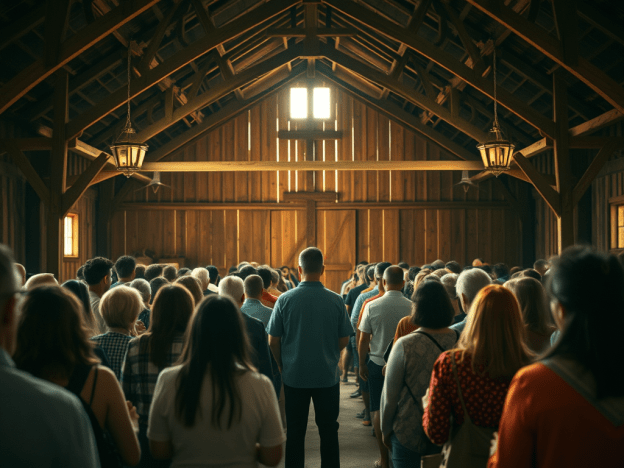
In the midst of all this change, a local man named Jonah worked quietly. He was a carpenter by trade, known for his plain but sturdy work. His wife, Alice, shared his faith, and together they dreamed of starting a small church. They believed in helping people, in the simple power of prayer. One Sunday, after years of saving, they gathered a few families at an old barn on the outskirts of town.
But the town did not welcome them. Newstead was not a religious place, and many saw Jonah and Alice as intruders. “This town has its own ways,” people said. “We don’t need new ideas.” Others whispered that the couple were just looking for power or money, though Jonah worked his trade every day and Alice tended to their small garden.
Jonah’s friend, Andrew, spoke to him one evening. “They fear what they don’t know,” Andrew said, as they sat by the fire. “It’s not personal. It’s just the way of things here.”
Jonah nodded. “We didn’t come here to fight,” he replied. “But we won’t leave either.”
Weeks turned to months, and still the community opposed the church. Some spread rumors, others made threats. Yet Jonah and Alice remained steadfast. They held small gatherings every Sunday, praying quietly for their neighbors and the town.
One day, news spread about a boy named Peter. He was the son of a prominent merchant and had been sick for many months. No doctor in the town could help him. Desperate, the family sought out Jonah and Alice.
Alice visited the family home. She sat beside Peter’s bed, her hands folded. “We’ll pray,” she said softly to the boy’s mother. The air in the room was heavy with doubt, but Alice’s voice was steady. Jonah stood by the door, silent and watchful.
For three days, they prayed, and on the fourth, Peter stirred. By the week’s end, he was walking. The news spread quickly. Many could hardly believe it. The boy who had been on death’s door was now playing in the town square.
“What did they do?” people asked. “Could it really be a miracle?”
Word of the healing traveled far, and the opposition to Jonah and Alice’s church began to fade. “Maybe there’s something to it,” someone muttered at the market. “Maybe we were wrong.”
The church grew slowly after that. People who had once turned their backs now came, curious but still cautious. Jonah and Alice didn’t make any grand claims about what had happened. “We just prayed,” they would say when asked. “The rest was not ours to decide.”
Years passed, and the church became a small but steady presence in Newstead. The community warmed to them, though the town never fully embraced religion. But Jonah and Alice did not mind. They had built something that mattered to them, and that was enough.
One evening, long after the church had become part of the town’s fabric, Alice sat on the porch with Jonah. The sun was setting, casting long shadows across the yard.
“Do you ever wonder why it all worked out?” Jonah asked.
Alice smiled, looking out toward the horizon. “Because we didn’t ask for anything,” she said softly. “We just gave what we could.”
Jonah was quiet for a long time. Then, with a sigh, he stood. “There’s something I need to tell you,” he said.
Alice turned to him, her eyes questioning.
“Remember the night before Peter was healed?” Jonah began. “I wasn’t sure anymore. I wasn’t sure of anything. But that night, after we prayed, I asked God for a sign. Not for me, but for you. I didn’t want to see you lose hope.”
“And?”
Jonah smiled gently. “I think the sign was for both of us.”
 Motivation E-Books