
Monthly Archives: December 2024

Healing Ministry for Boulder, Colorado

Boulder, Colorado, was a city of contrasts. Nestled against the Rocky Mountains, it was a place of stunning landscapes and innovative ideas. It had a reputation for blending the natural and the modern. From the famous Bolder Boulder race to its experiments with goats for weed control, Boulder embraced creativity.

Trish and Dan were a part of this community, but their journey was about faith and healing. They were Christians, passionate about God’s Word and its promise of restoration. Dan, in particular, had been studying healing in Scripture.

“God’s Word is medicine,” Dan often said. “Not just for the body, but for the spirit. If you take it long enough, it will heal you.”

Trish understood this truth in a personal way. Her story was one of struggle and redemption. At a recent conference in Boulder, she shared her testimony with hundreds of people.


Trish’s Testimony

Trish stood on the stage, the crowd silent as she began.

“For years, I suffered from a debilitating condition,” she said. “Doctors couldn’t help. I was in pain, physically and emotionally. But then I found hope in God’s Word.”

Her voice grew stronger. “Matthew 4:4 says, ‘Man does not live by bread alone but by every Word that comes out of the mouth of God.’ I took that to heart. I read the Scriptures daily. I meditated on His promises. I doubled and tripled my intake of God’s Word, just like you would with medicine.”

Trish paused, meeting the eyes of those listening. “It wasn’t immediate, but I began to heal. Slowly, surely, my body responded. God’s Word brought life and health to all my flesh.”

She ended her story with five keys to healing:

  1. Believe that healing is God’s will for everyone.
  2. Immerse yourself in God’s Word—it is medicine.
  3. Speak healing Scriptures over your life daily.
  4. Surround yourself with people who stand in faith with you.
  5. Never give up, no matter how long it takes.

The audience erupted in applause. Many were moved to tears.


Dan’s Vision for Boulder

After Trish spoke, Dan took the stage.

“Friends, Boulder is a place of ideas,” he began. “It’s a place where people think outside the box. But there’s one idea we haven’t explored yet: a healing center built on the principles of God’s Word.”

He described his vision. The center would offer Scriptural teaching, prayer, and community support. It would be a place where people could immerse themselves in God’s promises and find restoration.

“God’s Word is medicine,” Dan said. “And we want to help people take that medicine every day. Imagine a space where we can teach healing Scriptures, where people can meditate on God’s Word, and where prayer and faith bring breakthroughs.”

He shared detailed plans. The center would include a chapel, classrooms, and quiet spaces for meditation. There would be daily Bible studies and healing services.

“This isn’t just a dream,” Dan continued. “It’s happening. We’ve already secured a location near Boulder’s Open Space and Mountain Parks. Construction begins soon.”

The crowd gasped in surprise, then cheered loudly.


A New Chapter for Boulder

That evening, Trish and Dan sat on their porch, looking out at the mountains.

“You were amazing,” Dan said, his voice filled with admiration.

Trish smiled. “I just told the truth. God’s Word does the rest.”

Dan nodded. “This is the start of something bigger than us, Trish. God is moving in Boulder. People will see His power and love like never before.”

As the stars came out, they prayed together, thanking God for what He had done and what was to come. Boulder was about to experience healing—not just in its people, but in its spirit.
Detective is Funny Lady

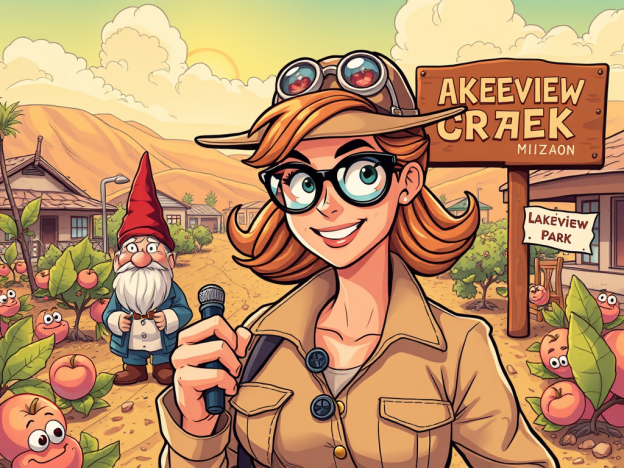
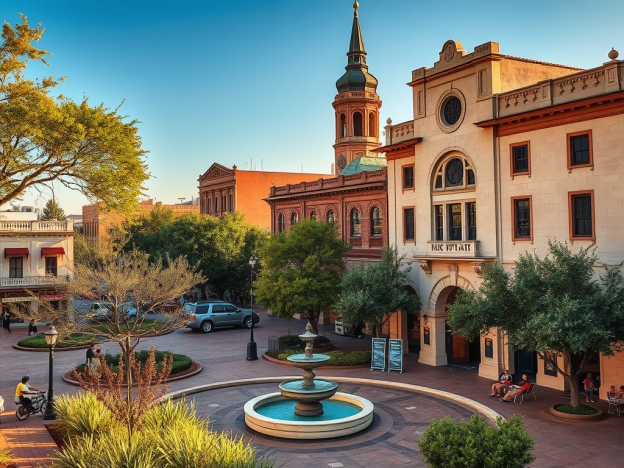
Queen Creek, Arizona, started as a tiny agricultural town in the early 1900s. Farmers tilled the land, avoiding rattlesnakes and nosy neighbors. It grew slowly, thanks to peach orchards, olive groves, and an odd tradition of naming parks after things they didn’t have—like “Lakeview Park,” which featured no lake but did have an impressive sandbox.

By the early 2000s, Queen Creek was no longer a secret. People moved in for the sun, the peaches, and the illusion of peace. Among the newcomers were Susan and Luke, a newlywed couple. They believed this would be the perfect town to start their lives. But life had other plans.

Susan was a detective. Her job wasn’t glamorous. Most cases involved missing flip-flops or stolen lawn flamingos. But sometimes, the real crimes came knocking. And when they did, Susan worked long hours, digging through clues like a dog digging for its bone.

Luke was patient—at first. Then, dinners got cold, and weekends became Susan’s “work recovery” time. Arguments followed. Queen Creek’s sunny charm didn’t extend indoors.

The Car Crash
One Friday night, Susan stayed late chasing leads on a stolen garden gnome. She skipped dinner and ignored Luke’s texts. As she drove home, exhausted and frustrated, she didn’t notice the stop sign until it was too late.

The crash wasn’t as bad as it could’ve been. A delivery truck full of foam pool noodles cushioned her car. She walked away with only bruises—and a bizarre reputation in town as “Detective Noodle.”

While Susan was recovering at home, Luke tried to cheer her up. He stuck googly eyes on her bandages and told her she’d solved the case of the “stolen dignity.” They laughed, but the crash was a wake-up call. Susan realized she needed a change.

The Idea
While stuck at home, Susan stumbled upon an online ad: “Start Your Coaching Business Today!” She rolled her eyes but clicked anyway.

The ad promised independence, freedom, and the chance to “change lives.” Susan thought about her detective work. She had skills—problem-solving, observation, talking people into confessions. What if she could use those skills to help people online?

Luke was skeptical. “You’re going to be a life coach? You can barely find your keys!”

“Exactly!” Susan replied. “I’m relatable!”

She started small. Her first client wanted advice on organizing their garage. Susan applied her investigative skills:

  1. Interrogate the junk.
  2. Identify the suspects (tools, keepsakes, etc.).
  3. Create zones for “innocent,” “guilty,” and “indecisive.”

The garage transformation was a hit. Susan was onto something.

Growing the Business
Susan called her coaching service “The Detective’s Guide to Life.” She used humor and crime metaphors to make self-improvement fun. Her slogan: “Solve the case of your messy life!”

Her clients loved it. One woman said, “You’re like Sherlock Holmes meets Marie Kondo, but sassier.” Susan didn’t know who Marie Kondo was but took it as a compliment.

Business grew fast. Susan filmed videos, wrote blog posts, and hosted webinars. Luke became her unofficial cameraman, holding a phone while muttering, “This better go viral.”

And it did. Susan’s online persona, Detective Coach Susan, became a local celebrity. The town loved her blend of practical tips and absurd humor.

The Five Keys
By year’s end, Susan’s business was thriving, and her confidence was back. At a local seminar, she shared her five keys to success:

  1. Embrace the Chaos: Life’s messy—like an unsolved case. Lean in and tackle it step by step.
  2. Find Your Team: Luke wasn’t just her husband; he was her partner in crime-solving (and video editing). Surround yourself with people who support you.
  3. Laugh Often: Humor lightens the load. Susan used jokes to connect with clients—and keep herself sane.
  4. Use What You Know: She turned her detective skills into a business. Whatever you’ve learned in life, it’s valuable.
  5. Keep Learning: Every failure (even crashing into pool noodles) is a lesson.

Susan’s story inspired Queen Creek residents to follow their dreams, even if those dreams involved solving the mystery of a chaotic garage.

And Luke? He said he liked the new, happier Susan—almost as much as he liked her famous peach pie.

A Church Growth Plan

Georgetown, Texas, was founded in 1848. It grew because of its location along a key cattle trail. The town’s beauty brought people in, with its scenic Blue Hole lagoon and limestone buildings on the square. Over the years, people came and went. Growth was steady, but challenges arose.

Paul and Daisy moved to Georgetown in 2022. They were optimistic, as the town was growing fast. It was the fastest-growing city in the U.S. They wanted to build a church, but they had no idea how hard it would be.

“People are friendly here,” Paul said. “But they have so many options.”

Daisy nodded. “We’ll find a way. God will lead us.”

They started with a small building near the town square. Twenty people showed up for their first service. Daisy baked cookies. Paul preached about love. The congregation smiled. But smiles didn’t mean they would stay.

“We need a plan,” Daisy said. “Otherwise, we’ll just be a revolving door.”

Chapter 2: The Five Ideas

Paul and Daisy brainstormed five ways to grow their church.

  1. Host community events, like movie nights and picnics.
  2. Start small groups for deeper connection.
  3. Offer free coffee and breakfast at Sunday services.
  4. Launch a kids’ program with fun activities.
  5. Go door-to-door inviting people to church.

Paul wasn’t sure about all the ideas. “Do people even open doors for strangers anymore?” he asked.

Daisy laughed. “Only one way to find out.”

They presented the ideas to the board. The board shrugged. “Worth a try,” one member said. “Just don’t run out of money.”

Chapter 3: Results and Laughs

Over the year, they tried everything.

  • Community events drew a crowd. Families came to picnics, but few came back for church. “They like the hot dogs,” Daisy joked. “Not the gospel.”
  • Small groups were a hit. People opened up about life. One member shared, “I stayed because I finally felt seen.”
  • Free coffee and breakfast caused chaos. One Sunday, Paul spilled coffee on his sermon notes. “Guess I’ll preach from memory,” he said. It kept people around after service, though.
  • Kids’ program was a mixed bag. Some kids loved it. Others caused havoc. One child painted the walls with pudding. “Artistic expression,” Daisy called it.
  • Door-to-door invites flopped. Most doors stayed closed. Paul once tripped over a lawn gnome. “This is why people shop online,” he grumbled.

By year’s end, attendance grew slightly. More importantly, people were building relationships.

Chapter 4: Reporting Back

At the board meeting, Paul and Daisy shared results.

“Community events brought awareness, not growth,” Daisy said. “Small groups worked because people want connection.”

Paul added, “Coffee kept people talking. Kids’ programs helped parents. But door-to-door didn’t work.”

The board discussed. One member said, “Small groups sound like the future. People crave intimacy, not crowds.” Another said, “Kids’ programs bring young families. That’s growth potential.”

The board voted to keep small groups, coffee, and kids’ programs. They cut community events and door-to-door invites.

“Why keep what works?” Daisy asked later.

“Because it’s about people, not programs,” Paul said.

Chapter 5: A Key to Growth

The conference invitation surprised them.

“They want us to talk about growing churches?” Paul said. “We’re barely growing.”

Daisy smiled. “Maybe that’s why. We’re honest.”

On stage, they shared their story. They laughed about spilled coffee and pudding-painted walls. Then they got serious.

“It’s not about numbers,” Paul said. “It’s about grace.”

Daisy added, “People don’t stay for flashy programs. They stay when they feel loved.”

Paul concluded, “The key? Don’t measure success by attendance. Measure it by relationships.”

The crowd erupted in applause. Afterward, one pastor said, “We’ve never thought of that.”

Daisy grinned. “It’s simple. Love works.”