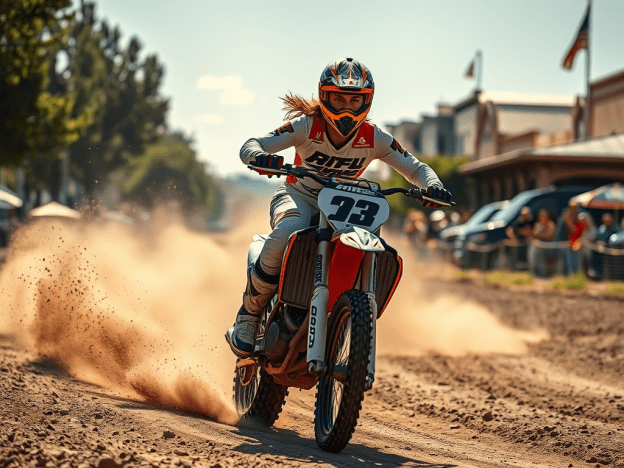
Walla Walla, a vibrant town in southeastern Washington, is known for its rich history and growing wine industry. The town features tree-lined streets and a downtown dotted with 19th-century buildings. Visitors often enjoy walking tours and exploring the Fort Walla Walla Museum. Yet, one year, a young woman named Ashley James brought an unexpected spotlight to this picturesque town.
Ashley was 23. Born and raised in Walla Walla, she grew up watching her father race motocross. He taught her how to ride when she was just six years old. By the time she was 16, she could handle a bike as well as most local riders. But motocross in Walla Walla was a male-dominated sport, and the local community didn’t expect much from Ashley.
“You’re good, kid,” a veteran rider once told her, “but this sport’s tough on everyone, especially women.”
Ashley didn’t argue. She let her skills do the talking.
One spring, Walla Walla hosted its annual motocross contest at the edge of town near Mill Creek. Riders from across Washington competed. The dusty track was lined with fans cheering for their favorites. Ashley entered on a whim.
Her first race was against three men. The crowd didn’t take her seriously. As the flag dropped, Ashley surged ahead, her bike kicking up a trail of dust. By the second lap, she had pulled far ahead. When she crossed the finish line, the crowd was stunned.
“That girl can ride,” a spectator said, shaking his head in disbelief.
Word spread fast. Ashley advanced through the rounds, beating rider after rider. By the end of the day, she held the first-place trophy.
For weeks, Ashley became the talk of Walla Walla. Men who had never noticed her were suddenly offering advice. Some were kind, others dismissive.
“You won one race,” another competitor told her at a local café. “Let’s see you do it again.”
Ashley smiled. “I’ll let you know when I’m done winning.”
She wasn’t done. Over the summer, she entered more races across the Pacific Northwest. Each time, she won or placed in the top three. Her success drew attention from local media, but also criticism. Some accused her of stealing attention from male riders. Others questioned if she was pushing herself too hard.
“Do you ever think about slowing down?” her mother asked one evening over dinner.
“No,” Ashley replied. “I’m just getting started.”
Ashley’s riding career took a turn in late summer. During a race in Spokane, she overheard two organizers discussing her entry.
“She’s fast,” one said, “but the sponsors aren’t interested in promoting a woman.”
That conversation stayed with Ashley. She finished the race in second place but left feeling frustrated.
Back in Walla Walla, Ashley decided to shift her focus. She wanted to share her love of riding in a way that empowered others. She approached a local business owner with a bold idea.
“I want to start a motorbike tour for women,” she explained. “Something that combines riding with exploring the outdoors.”
The owner, who also ran a vineyard, was intrigued. “What’s your plan?”
Ashley worked tirelessly. She mapped routes through Walla Walla’s countryside, highlighting trails near wineries and scenic overlooks. She partnered with local businesses to offer packages that included wine tastings and guided rides. By early fall, her tour, called “Ride the Wild,” was ready to launch.
The first group consisted of five women, all from out of town. Ashley led them through trails along the Blue Mountains. They stopped at a vineyard for lunch and ended the day with a ride through the rolling wheat fields.
“This is incredible,” one participant said. “I’ve never felt so free.”
Ashley’s tours quickly gained popularity. Women from across the region came to Walla Walla to ride with her. Local businesses noticed the boost in tourism. Even the critics began to quiet down.
By winter, Ashley had built a reputation not just as a rider but as a community leader. Still, she felt Walla Walla wasn’t fully supportive of her vision. The town was growing, but its culture remained tied to tradition.
“I need to take this further,” she told her father one evening.
“Where would you go?” he asked.
“Somewhere with more opportunities for women riders,” Ashley replied.
In January, Ashley moved to Bend, Oregon. The city was known for its outdoor culture and thriving community of adventure sports enthusiasts. She quickly established a new branch of “Ride the Wild.” Within weeks, her tours were fully booked.
Back in Walla Walla, people followed her success with pride. Ashley’s story inspired young women to take up motocross and explore new possibilities. Local businesses even considered expanding to include more outdoor activities for tourists.
By spring, Ashley’s tours in Bend were attracting national attention. She was featured in a magazine article about women leading the way in adventure tourism. Ashley remained humble.
“This isn’t just about me,” she told the journalist. “It’s about creating spaces where everyone can feel empowered to try something new.”
Though Ashley left Walla Walla, her impact on the town was lasting. Her determination showed that even in a small, traditional place, one person could create change.
And while Bend became her new home, Ashley often returned to Walla Walla, leading the occasional tour and visiting her family.
By the end of that year, Ashley had achieved more than she imagined. Her tours expanded to include advanced training sessions for women who wanted to compete in motocross. She began mentoring young riders, ensuring the next generation had the support she had often lacked.
Ashley’s journey started with a single race in Walla Walla. It ended with her building something far bigger than trophies or accolades: a legacy of empowerment and adventure.
 Motivation E-Books