Monthly Archives: January 2025

River of Faith in Mildura, Australia

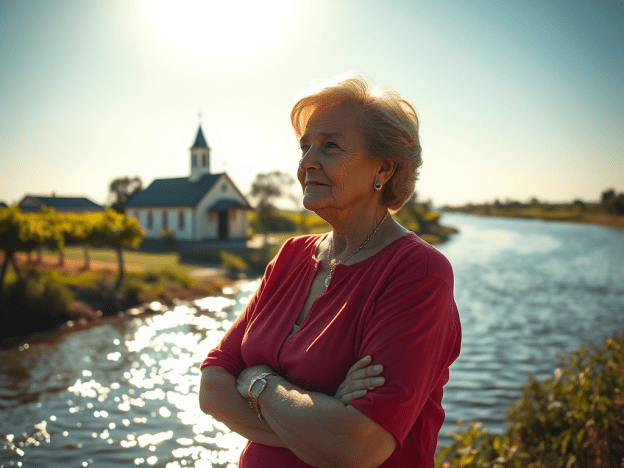
Mildura, Victoria, sits on the banks of the Murray River, a town of quiet charm and steadfast community. Its history tells of farmers, fruit growers, and families weaving their lives together through shared effort and faith. Yet, in 2024, amidst the vineyards and sunshine, a subtle shift began with a young woman named Hilda Anders.

Hilda grew up in Mildura, the youngest of three children. Her parents ran a small fruit stand by the market. Faith was central to their lives, with Sundays reserved for worship at Grace Chapel, a modest church near the town’s edge. Grace Chapel had been a cornerstone of Mildura for over a century. Its congregation was small but steady, a gathering of familiar faces. Yet, Hilda noticed something unsettling—the pews were emptier than they’d been a decade ago.

One Sunday afternoon, Hilda approached her pastor, Reverend Daniels. “Why aren’t more people coming to Grace?” she asked.

The Reverend sighed. “Times change, Hilda. People have busy lives, distractions. Faith takes commitment.”

Hilda wasn’t satisfied. She loved her church and felt its message should resonate with more people. Determined to find answers, she began reading the Bible in depth. Over weeks, she compared passages, studied sermons, and even consulted commentaries. Yet, she found no flaw in the doctrine or its teachings.

“Maybe it’s not about the Bible,” her brother James suggested one evening. They were sitting by the river, fishing rods in hand.

“Then what?” Hilda asked.

“I heard about a church in Red Cliffs,” James said. “It’s growing fast. Maybe check it out.”

The following Sunday, Hilda visited Spirit Hill Fellowship. The contrast was striking. The sanctuary was vibrant, filled with people of all ages. The music was lively, and the pastor, Pastor Logan, spoke with a dynamic energy that captivated the crowd. After the service, Hilda stayed to observe.

She noticed how welcoming the members were. Newcomers were greeted warmly, and small groups formed organically to discuss the sermon. The atmosphere buzzed with community.

Over the next month, Hilda attended both Grace Chapel and Spirit Hill Fellowship. She paid close attention to the sermons, the structure of the services, and the interactions among the congregants. She kept notes, comparing the two churches.

One evening, she shared her observations with her parents. “Spirit Hill isn’t just preaching; they’re connecting. They’re showing how faith fits into everyday life.”

Her father nodded. “That’s important. People need to see the relevance.”

Hilda decided to act. She approached Reverend Daniels with her findings. “We need to make Grace more engaging,” she said. “People are looking for connection, not just tradition.”

Reverend Daniels was hesitant. “Change isn’t easy, Hilda. But I’ll consider it.”

Encouraged, Hilda organized a community event at Grace. She invited families, set up games for children, and arranged a potluck dinner. She also initiated a Bible study group focused on practical application, attracting younger participants.

Attendance began to improve. The pews filled, and the congregation’s energy grew. Hilda felt hopeful. Yet, she couldn’t shake a feeling that something was missing.

One Sunday after service, she stayed behind to pray. As she knelt, a voice startled her. “You’re doing good work here.”

It was Pastor Logan from Spirit Hill Fellowship. “I heard about your efforts,” he said. “Impressive.”

“Thank you,” Hilda replied. “But I still feel like I’m not seeing the whole picture.”

“Faith is about more than growth,” Pastor Logan said. “It’s about authenticity. People sense when it’s real.”

His words stayed with Hilda. She realized she’d been focused on numbers, not depth. That week, she shifted her approach. She encouraged members to share their stories during service and fostered deeper conversations in Bible study. The changes brought a new sense of purpose to the congregation.

By December, Grace Chapel was thriving. But something curious began happening. People reported strange, uplifting dreams after attending services. Others spoke of a soft, unexplainable glow in the chapel during evening prayers. Hilda herself experienced a moment where she felt an unseen presence guide her thoughts while reading scripture. The congregation began to grow faster than expected, and rumors of the supernatural drew more visitors.

One night, Hilda stayed late at Grace, organizing hymnals. She saw a faint light emanating from the altar. As she approached, she felt warmth and a sense of peace unlike anything before. She knelt and prayed, and for the first time, she heard a voice, calm and clear, “Continue your journey, Hilda. There is more to discover.”

On Christmas Eve, after the candlelight service, Reverend Daniels approached her. “You’ve done wonders here, Hilda. What’s next for you?”

Hilda smiled. “I’ve been hearing about a mission in Robinvale. They’re working with isolated communities. I think I can help.”

As she left the church that night, the stars above Mildura seemed brighter. Hilda knew her work at Grace Chapel was just the beginning. She felt ready for her next adventure, carrying the lessons of faith, connection, and authenticity—and perhaps a touch of the supernatural—with her into the new year.

Power of Prayer: Believe You have Received

Paia, a charming town on Maui’s North Shore, has seen many transformations. Originally a plantation town, its sugarcane roots gave way to a Bohemian hub for surfers, artists, and wanderers. By 2025, it was known for its laid-back vibe, bustling small shops, and golden beaches. Despite its small size, barely 7.5 square miles, Paia had a magnetic charm, drawing visitors and residents alike.

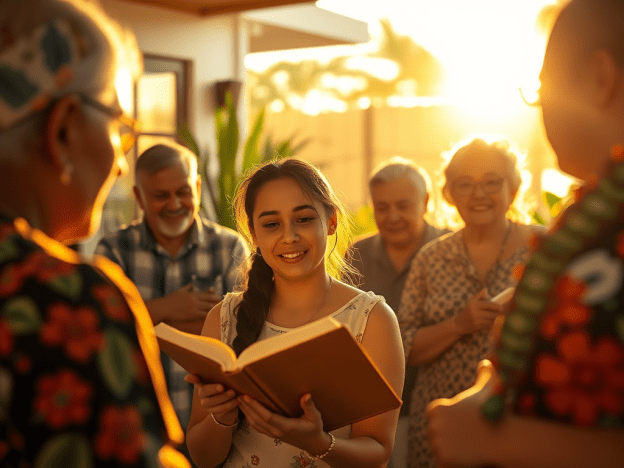
At the heart of this community was a young woman named Leilani. She was 24, born and raised in Paia, with a mind as curious as the winds that swept Ho’okipa Beach. She worked part-time at a local café and spent her evenings reading. Leilani had recently joined a church home group, intrigued by their promises of faith and community.

The group met every Wednesday at the home of Auntie Malia, an elder known for her warm smile and banana bread. Each session began with a prayer circle. Members took turns sharing their needs—from healing illnesses to finding lost pets. Yet, Leilani noticed something odd. Few of these prayers were answered. Weeks passed, and the same requests echoed in the circle.

“Auntie,” Leilani asked after one meeting, “why do you think our prayers don’t seem to work?”

Auntie Malia shrugged. “Maybe we must wait. Or pray harder. Faith is a mystery, child.”

Leilani wasn’t satisfied. She decided to investigate. She borrowed a Bible from the church library and studied it meticulously. She read about faith, persistence, and the promises of answered prayers. But she found no clear reason for the group’s apparent lack of success.

One Sunday, while chatting with the pastor, Leilani heard about another Bible study group meeting on Fridays. Curious, she attended. This group was smaller, and the leader, a man named Kimo, shared a different perspective.

“When you pray, believe you’ve received it already,” Kimo said. “That’s what the Bible teaches. Faith sees it as done before it happens.”

Leilani listened, fascinated. She began taking notes, comparing the two groups. The Friday group’s prayers focused on clear outcomes and a deep conviction that the answers were already given. In contrast, Auntie Malia’s group often prayed in vague terms, leaving outcomes entirely to divine will.

One Friday, Leilani shared her observations. “Do you think it’s about believing first?” she asked.

Kimo nodded. “Exactly. Faith without sight. That’s the key.”

Leilani decided to compile her findings into a letter for Pastor Keawe. It outlined the differences between the groups and suggested focusing on believing in answered prayers. Her mother, a former schoolteacher, helped edit the letter.

Leilani delivered the letter on a sunny afternoon. Pastor Keawe read it carefully. “This is insightful,” he said. “Let’s discuss it with both groups.”

Over the next five weeks, the church held joint lessons to delve deeper into the principle of believing before seeing. Each week focused on a specific aspect:

  1. Faith Beyond Sight: Members learned to visualize their prayers as already answered, grounding their belief in Scripture.
  2. Aligning with God’s Promises: They explored biblical promises and how to align their prayers with God’s will.
  3. Speaking Life: The group practiced speaking positively and affirmatively about their requests.
  4. Gratitude in Advance: Members expressed thankfulness for their prayers being answered, even before seeing results.
  5. Action Steps of Faith: They discussed practical actions to demonstrate their trust in God’s provision.

Slowly, they noticed a shift. Auntie Malia’s group began to see results. Lost pets were found. Illnesses improved. Relationships mended. By December, the church community buzzed with stories of answered prayers.

One evening, after a particularly moving session, Auntie Malia pulled Leilani aside. “You’ve taught us much, child. Mahalo.”

Leilani smiled. “It’s not me. It’s all of us learning together.”

The culmination of their faith journey came during a special Christmas service. The congregation had been praying for a young boy in the community, Kaipo, who had been battling a severe illness. That evening, Kaipo and his family stood before the church to share incredible news: he had received a clean bill of health from his doctors, defying all odds.

Tears of joy filled the room as Pastor Keawe spoke. “This is the power of faith and belief. When we trust completely, miracles happen.”

Leilani sat quietly, her heart full. The year had changed her and her community forever. Faith had become more than words; it had become their way of life.

Uncovering Spa Secrets: A Biology Grad’s Impact on Wellness

Champaign-Urbana, Illinois, is known for its sprawling university, strong ties to technology, and vibrant cultural scene. Its twin-city charm has attracted many ambitious minds. Among them was a young woman named Helen Hastings. She had grown up in Urbana, the quieter of the two cities, and recently graduated from the University of Illinois with a degree in biology. The story of Helen’s extraordinary year began with a visit to Crystal Lake Park on a crisp spring day.

Helen had heard about Serenity Spa, a wellness retreat near the park. It was gaining popularity for its unique mud baths, touted as “revitalizing” by locals. Helen decided to treat herself to a session, having recently landed a research job. Her parents, avid supporters of her pursuits, encouraged her to relax after months of grueling study.

The spa had a calming atmosphere. Customers sipped herbal teas while waiting for their treatments. Helen signed up for the signature mud bath and found the experience oddly soothing. The staff were friendly, and the setting was serene. She left feeling rejuvenated.

A week later, Helen felt unusually tired. Soon, she developed a fever and a persistent rash. Her physician ran tests but found nothing conclusive. “It’s probably a viral infection,” he said. Helen’s parents urged her to rest, but her curiosity gnawed at her.

“The spa seemed clean,” Helen told her friend Maya, a fellow biology graduate. “Still, I can’t shake the feeling that something wasn’t right.”

Maya shrugged. “If you’re that worried, go back and ask questions. Maybe you’ll find something interesting.”

Helen returned to Serenity Spa, posing as a curious customer. She asked about their mud source. The manager, an affable man named Greg, explained that it came from a local supplier. “We test it monthly for contaminants,” he assured her. Helen left feeling slightly embarrassed for suspecting anything.

Two months later, Helen overheard a coworker, Jake, discussing his recent visit to Serenity Spa. “Great experience,” he said, “but I’ve been sick ever since.” Helen’s ears perked up. She questioned him about his symptoms, which mirrored her own.

“I’m sure it’s unrelated,” Jake said. “These things happen.”

But Helen couldn’t let it go. This time, she took action. Armed with sterilized containers, she revisited Serenity Spa and discreetly collected samples of the mud. She mailed them to a former professor’s lab at the university, seeking help to analyze them.

The results came back two weeks later. The mud contained unusually high levels of a rare bacterium, Pseudomonas thermotolerans, known to thrive in warm, moist environments. It was harmless to most but posed risks to individuals with certain genetic markers—like Helen.

Her family rallied around her. “You should notify the spa,” her mother urged. Her father agreed. “But be tactful. They may not know about this.”

Helen arranged a meeting with Greg. She presented her findings calmly. Greg appeared genuinely concerned. “We’ll investigate immediately,” he promised. He thanked Helen for her diligence and assured her that the spa’s operations would be halted temporarily.

A month later, Helen received an unexpected call. It was Greg. “We found nothing wrong with the mud from our supplier,” he said. “Your results were an anomaly.”

Confused, Helen revisited her data. Everything seemed accurate. Meanwhile, reports of illnesses among spa visitors dwindled. Helen wondered if she had been mistaken.

Then came the twist. Helen’s mother, an avid gardener, mentioned something peculiar. “The compost I bought recently had a strange smell,” she said. Helen’s curiosity flared. She examined the compost and ran quick tests in her lab. To her shock, it contained traces of the same bacterium found in the spa’s mud.

Helen pieced it together: the spa’s mud supplier and the compost vendor were the same. A contaminated batch of compost had likely seeped into the mud used at the spa. Helen notified Greg, who immediately pulled all products sourced from the vendor.

The spa reopened months later with stringent new protocols. Greg invited Helen to their grand reopening. “Thanks to you, we’re safer now,” he said, offering her a lifetime membership, which she politely declined.

The year ended with Helen receiving a local award for community contribution. During her acceptance speech, she joked, “Who knew mud baths could be so educational? I’ll stick to bubble baths from now on.” The audience roared with laughter. Helen’s mother added, “And I’ll stick to planting flowers, not bacteria.”

Champaign-Urbana’s residents still talk about the time a young woman uncovered the mystery of the spa mud. Helen became a local hero—and an accidental advocate for better compost. The spa continues to thrive, and Helen’s story is a reminder that even small actions can make a big difference.