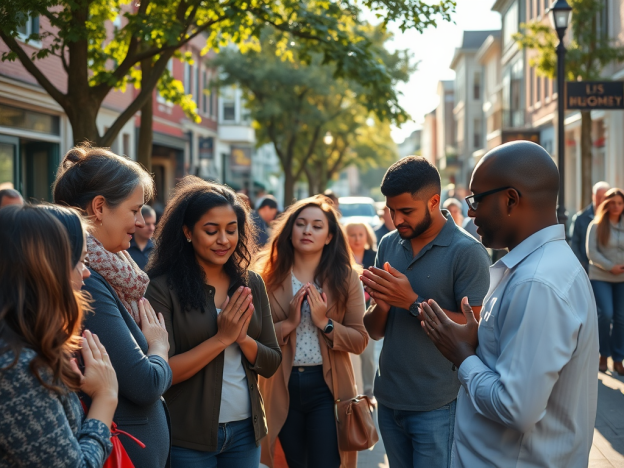
A Church Growth Plan

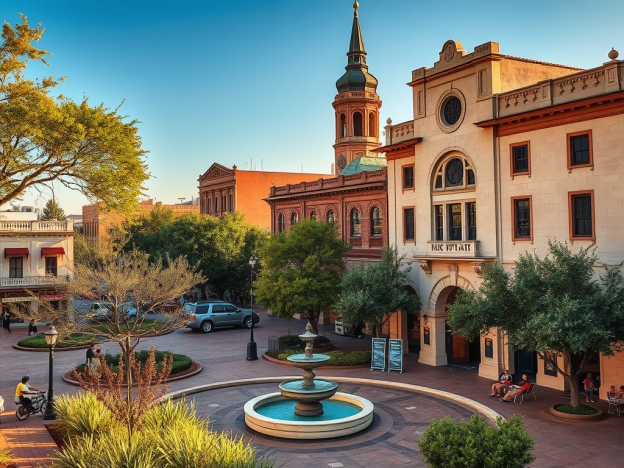
Georgetown, Texas, was founded in 1848. It grew because of its location along a key cattle trail. The town’s beauty brought people in, with its scenic Blue Hole lagoon and limestone buildings on the square. Over the years, people came and went. Growth was steady, but challenges arose.

Paul and Daisy moved to Georgetown in 2022. They were optimistic, as the town was growing fast. It was the fastest-growing city in the U.S. They wanted to build a church, but they had no idea how hard it would be.

“People are friendly here,” Paul said. “But they have so many options.”

Daisy nodded. “We’ll find a way. God will lead us.”

They started with a small building near the town square. Twenty people showed up for their first service. Daisy baked cookies. Paul preached about love. The congregation smiled. But smiles didn’t mean they would stay.

“We need a plan,” Daisy said. “Otherwise, we’ll just be a revolving door.”

Chapter 2: The Five Ideas

Paul and Daisy brainstormed five ways to grow their church.

  1. Host community events, like movie nights and picnics.
  2. Start small groups for deeper connection.
  3. Offer free coffee and breakfast at Sunday services.
  4. Launch a kids’ program with fun activities.
  5. Go door-to-door inviting people to church.

Paul wasn’t sure about all the ideas. “Do people even open doors for strangers anymore?” he asked.

Daisy laughed. “Only one way to find out.”

They presented the ideas to the board. The board shrugged. “Worth a try,” one member said. “Just don’t run out of money.”

Chapter 3: Results and Laughs

Over the year, they tried everything.

  • Community events drew a crowd. Families came to picnics, but few came back for church. “They like the hot dogs,” Daisy joked. “Not the gospel.”
  • Small groups were a hit. People opened up about life. One member shared, “I stayed because I finally felt seen.”
  • Free coffee and breakfast caused chaos. One Sunday, Paul spilled coffee on his sermon notes. “Guess I’ll preach from memory,” he said. It kept people around after service, though.
  • Kids’ program was a mixed bag. Some kids loved it. Others caused havoc. One child painted the walls with pudding. “Artistic expression,” Daisy called it.
  • Door-to-door invites flopped. Most doors stayed closed. Paul once tripped over a lawn gnome. “This is why people shop online,” he grumbled.

By year’s end, attendance grew slightly. More importantly, people were building relationships.

Chapter 4: Reporting Back

At the board meeting, Paul and Daisy shared results.

“Community events brought awareness, not growth,” Daisy said. “Small groups worked because people want connection.”

Paul added, “Coffee kept people talking. Kids’ programs helped parents. But door-to-door didn’t work.”

The board discussed. One member said, “Small groups sound like the future. People crave intimacy, not crowds.” Another said, “Kids’ programs bring young families. That’s growth potential.”

The board voted to keep small groups, coffee, and kids’ programs. They cut community events and door-to-door invites.

“Why keep what works?” Daisy asked later.

“Because it’s about people, not programs,” Paul said.

Chapter 5: A Key to Growth

The conference invitation surprised them.

“They want us to talk about growing churches?” Paul said. “We’re barely growing.”

Daisy smiled. “Maybe that’s why. We’re honest.”

On stage, they shared their story. They laughed about spilled coffee and pudding-painted walls. Then they got serious.

“It’s not about numbers,” Paul said. “It’s about grace.”

Daisy added, “People don’t stay for flashy programs. They stay when they feel loved.”

Paul concluded, “The key? Don’t measure success by attendance. Measure it by relationships.”

The crowd erupted in applause. Afterward, one pastor said, “We’ve never thought of that.”

Daisy grinned. “It’s simple. Love works.”
Byron Bay Crime Solved

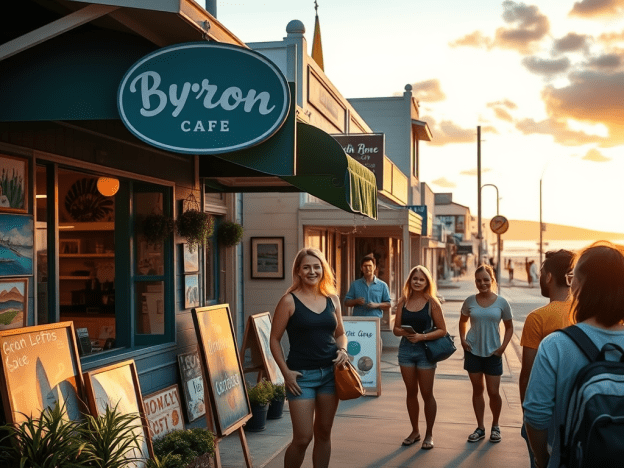
Byron Bay, Australia, is a town with a rich and evolving history. Known for its stunning beaches and vibrant community, it’s a blend of luxury and creativity. Today, it’s a sought-after residential area, with median house prices soaring beyond AU$1.5 million as of 2017. But it hasn’t lost its charm for surfers, backpackers, and tourists. The mix of artists, musicians, and wellness seekers keeps its spirit alive. Yet, one week in its recent past stood out as a story of faith, courage, and surprise.

It started on a Monday. Sarah Lowe, a longtime resident and devout Christian, was opening her small cafe near Belongil Beach. She greeted her first customer, an elderly man named Tom. “Good morning, Tom! Coffee as usual?”

Tom smiled. “Yes, please. Busy week ahead?”

“Always is,” Sarah replied. She handed him his cup and turned to see a commotion outside. Two young boys were arguing loudly by the bike rack.

“Let’s settle this peacefully,” Sarah said, stepping outside. The boys looked at her, embarrassed. “We’re Christians here. Let’s show kindness.” They nodded and walked away, muttering apologies. Sarah returned to the cafe, smiling. But her week was just beginning.

On Tuesday, Sarah’s neighbor, Emily, rushed in, looking distressed. “Sarah, my son’s bike was stolen last night! It’s the third one this month.”

“That’s awful,” Sarah said. “Did you call the police?”

“Yes, but they’re busy. They said it’s probably kids from out of town.”

Sarah thought for a moment. “I’ll keep an eye out. Maybe we can figure this out together.”

Wednesday brought more trouble. A local artist, Max, came into the cafe, fuming. “Someone took my easel and paints from the beach! I can’t work without them.”

“That’s terrible,” Sarah said. “Let me ask around. Someone must have seen something.”

By Thursday, the town was buzzing with talk of the thefts. Sarah decided to act. She gathered a group of friends at the cafe. “We need to work together. Let’s patrol the streets and keep watch. If we see anything suspicious, we’ll report it.”

The group agreed. That evening, Sarah and her friend Daniel walked along the beach. They saw a group of teenagers near the Wollongbar wreck, acting suspiciously. Sarah approached with a friendly smile. “Hello! Lovely evening, isn’t it?”

The teens looked startled. One of them, a girl named Mia, spoke up. “We’re not doing anything wrong.”

“Of course not,” Sarah said. “But if you’ve seen any bikes or art supplies lying around, let us know. The town’s had some trouble lately.”

Mia hesitated. “I might know something. But you can’t tell anyone it was me.”

Sarah nodded. “Your secret’s safe with me.”

Mia led them to an old shed near the edge of town. Inside were the stolen bikes and Max’s art supplies. “It wasn’t us,” Mia said quickly. “We found them here yesterday. We didn’t know what to do.”

Sarah smiled. “You did the right thing by telling us. Let’s get these back to their owners.”

By Friday morning, the town’s belongings were returned. Emily’s son rode his bike again, and Max was painting by the beach. The police investigated the shed but found no clear evidence of who had taken the items. Sarah didn’t mind. The community had come together, and that was what mattered.

On Saturday, the cafe was busier than ever. People stopped by to thank Sarah. “You’re the hero of Byron Bay,” Tom said with a grin.

“Not me,” Sarah replied. “It was everyone working together.”

But there was one last surprise. As Sarah cleaned up that evening, Mia walked in with a small painting. “I made this for you,” she said. “To say thank you.”

Sarah took the painting. It was of the Wollongbar wreck, bathed in golden light. “It’s beautiful,” she said. “Thank you, Mia.”

Mia smiled. “You taught me something this week. Helping others makes life better.”

As the sun set over Byron Bay, Sarah looked out at the water. The week had been unexpected, but it reminded her of the power of faith and kindness. And somewhere, perhaps, the spirit of the town’s history smiled too.

The church in Portsmouth

The church in Portsmouth, New Hampshire, was alive with the murmur of expectation. Julie stood at the pulpit, a simple cross behind her. She began, her voice calm and clear.

“This town is special,” she said. “Portsmouth has history, beauty, and community. But like every place, it has struggles too. Families are hurting. People are searching. And some feel forgotten.”

The congregation listened closely.

Julie continued, “Prayer can change a town. It can heal hearts and lives. But it has to be real prayer. Not just words. Prayer with faith. The kind of faith that says, ‘Lord, I believe You will.’”

She paused, looking out at the crowd. “What did the Lord say when people asked Him to heal? Did He ever say, ‘I won’t’? No. Every time, He said, ‘I will. Be thou clean.’ That same answer is for us today.”

Nods spread through the room. Julie smiled. “If we pray like that, we’ll see Portsmouth change. Not just in here, but out there. Let’s pray together now for this town.”

Heads bowed, and her voice filled the room. “Lord, please, if it be Your will, heal this town. Bring hope and life. Help us believe You still say, ‘I will.’ Amen.”

Preparing to Go

The next evening, Julie stood before a smaller group in the church. She held her Bible in one hand and gestured with the other.

“Tonight, we’re going to learn how to bring prayer to the streets. People need to see God’s love, not just hear about it.”

A man raised his hand. “What if someone doesn’t want prayer?”

Julie nodded. “That’s okay. Be kind. Offer to listen. Sometimes love is enough to open a door. But remember, you’re not alone. The Holy Spirit is with you.”

Another woman asked, “What if we don’t see healing?”

Julie smiled. “That’s not your job. Our job is to pray and believe. God does the rest. Remember, faith isn’t about seeing first. It’s about trusting Him.”

She held up her Bible. “We have Scripture to stand on. Jesus never said, ‘I won’t.’ He said, ‘I will.’ Go with that confidence.”

Stories of Healing

The following night, Julie addressed the same group. This time, she shared stories.

“A woman in Boston had been in pain for years,” she began. “She came to one of our meetings, desperate for relief. We prayed, and her pain left immediately. She was shocked, but she believed.”

The room was silent, hanging on her words.

“In another town, a young boy had trouble walking. His parents brought him forward. We prayed, and he started running around the church. His father cried, ‘It’s a miracle!’ It was.”

She looked at the group, her voice steady. “These stories aren’t just for faraway places. They’re for Portsmouth too. Let’s believe together.”

Taking It to the Streets

Saturday morning, the group gathered downtown. Julie led them through Market Square, where shops and cafés bustled with life.

“Split into pairs,” she instructed. “Look for people who might need prayer. Be respectful. Be kind.”

She and a local volunteer approached a man sitting on a bench. His face looked tired. Julie smiled warmly. “Hi, we’re from a local church. Can we pray for you?”

The man hesitated but nodded. “Sure. My back’s been hurting for weeks.”

Julie placed a gentle hand on his shoulder. “Lord, we ask for healing. In Your name, we speak life and health. Amen.”

The man stretched cautiously, then smiled. “It’s better. Thank you.”

Stories and Encouragement

That evening, the group gathered back at the church. Julie stood at the front, her face glowing with joy.

“One of the men I prayed for today told me his pain was gone,” she shared. “He said, ‘I didn’t think anyone cared.’ That’s why we do this—not just for healing but to show love.”

She invited anyone needing prayer to come forward. A woman in her forties approached, tears in her eyes. “My son is sick,” she said. “Please pray for him.”

Julie laid a hand on her arm. “Lord, we lift this child to You. We believe You will heal. Bring peace to this family. Amen.”

Others followed, each receiving her gentle faith-filled prayers. By the end, the church was filled with hope.

As the night closed, Julie reminded them, “The Lord never says, ‘I won’t.’ Let’s live like we believe His promise: ‘I will.’”