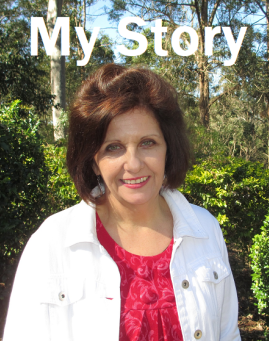
Dear readers: a few years ago, my lovely wife Lorna tripped and cut her hand. I was at work so our daughter Jessica took her to the hospital. Lorna had cut the tendon and nerves to her fingers. She needed micro-surgery.
It was a public holiday; no surgeons were on duty.
Lorna knew a lady at church who organised the prayer chain.
When Lorna rang this lady to ask for prayer, this lady told Lorna that her husband was a doctor who happened to specialise in hand surgery.
And he did operate on Lorna’s hand.
A week later Lorna went to a mid-week ladies meeting to listen to a speaker called Faylene Sparkes who has a strong prophetic anointing on her life.
This speaker called Lorna out and spoke a word over her.
She said, “The Lord is going to open double doors for you.”
The next day Lorna received a phone call from the doctor’s wife.
She had been in the meeting and heard the word that was spoken.
She said to Lorna, “If the Lord opened double doors would you walk through them?”
Lorna said that she would be willing.
The doctor’s wife began to explain that in 6 weeks she was going to a prophetic conference at Bethel Church in Redding, California.
She had already booked accommodation and a car.
If Lorna wanted to go, all she had to do was book the flights and register for the conference.
The doctor’s wife said that maybe this was a double door.
Because Lorna had injured her hand she was not able to work.
The doctor’s wife told Lorna to trust God to provide and God did provide generously through the people in Lorna’s church.
Everyone seemed to believe that this was an opportunity that was set in motion by the prophetic word that Lorna had received from Faylene Sparkes.
Before all this came about Lorna did not know the doctor’s wife very well, but now they are the best of friends.
The trip was a success.
On one of the flights in America, Lorna sat next to a lady who was married to a Jew. They both shared their different beliefs and settled down to enjoy the flight.
The Lord started to tell Lorna some things about this lady’s life that Lorna could not have possibly known.
Lorna turned to the lady and said, “You love gardening, don’t you?”
The lady answered, “Yes, I love gardening.”
Then Lorna said, “Your favourite colour is yellow.”
The lady answered, “Yes it is, I have just repainted my kitchen in yellow.”
By now the lady was giving Lorna all her attention.
When they had talked earlier in the flight this lady had mentioned that her husband was a psychiatrist, but had not said what field he was in.
Finally Lorna says,” Your husband specialises in eating disorders.”
These 3 words of knowledge that Lorna received from the Holy Spirit…caused this lady’s heart to open up so that Lorna could tell her about Jesus and his saving grace.
Lorna has always carried the presence of the Holy Spirit on her life.As you can see, I am a great fan of my wife’s ministry.
Lorna has been at the same church for over 20 years.
Nexus Church.
She has been involved in all types of ministry.
And has worked part-time as the receptionist at the church.
She loves to travel, especially in the U.S.A.
Whenever she visits this country, she is amazed at the level of believing that she encounters.
If you have a ladies meeting that you would like Lorna to speak at?
Please MESSAGE ME.
My goal is to surprise her.
Chapter 2
Lorna’s parents came to Australia from Europe, after World War 2.
They settled in Sydney and had 3 daughters and a son.
Her mother died when Lorna was 4 years old.
Her father could not cope.
He put the children in state-care and visited them a few times.
Then he just disappeared.
After that Lorna never saw him again.
Lorna grew up without parents and eventually was separated from her siblings.
She was about 20 years old when she cried out to God in her loneliness.
Lorna was looking out of the window of her unit at the time.
She uttered a heartfelt prayer.
“God if you are real, please help?”
She had a vision of the clouds opening up, she saw a giant hand come down and touch her. She was instantly changed and felt the loneliness leave her and the love of God come into her.
Since that time, she treats God as her real father not just her heavenly father.
She thinks of the church family as her real family.
This all took place in Melbourne, Australia.
Unknown to her… her future husband was getting saved a few miles away from her in the same city.
Lorna and I ended up going to the same church but we did not know each other.
We went to the same Bible college and that is where we finally met.
Half-way through the year I had to leave the college because of a death in the family. While I was away Lorna wrote a letter to me which I still have to this day.
I thought, “What a nice person Lorna is.”
When I went back to college for the third term… I had forgotten about the letter.
On the morning of my first day back I walked into chapel to be greeted by all the students.
One of the students was a middle–aged woman who said to me as I walked past, “Tony you need a wife, Lorna would be good for you.”
How embarrassing was that?
I just ignored her.
The funny thing was, as soon as she said those words a shift happened in my heart.
All day I walked around thinking this was nuts.
But the feeling would not go away.
I did not tell anyone about it and did not even ask Lorna out for a date.
The feeling grew into a knowing, so I just waited and sure enough Lorna started to become unusually drawn to me even though she did not initially like me.
At an outreach camp about 6 weeks later Lorna went to bed as normal but woke up the next morning with her heart completely turned around.
And the rest is history.
We always felt that God put us together for a reason beyond the normal reasons of raising a family.
We have been very happy in marriage and as parents.
But we always have this impression… there is more.
Here is the letter Lorna wrote.
“Dear Tony,
I have just come through much of the same thing myself.
I did share part of it with you.
I just want to encourage you and let you know that I amongst many are holding you up in prayer each day.
There is hope and a purpose in these things.
In time you will be able to see the plan and the way of God’s hand.
He is and will be in control of this situation.
My heart really goes out to you because at times it’s so hard.
And there will be a lot you won’t understand.
But Tony there is hope, just draw on that inner strength and rest.
I mean, rest in God.
God’s grace is upon you, he will enable you to cope.
Because he doesn’t put us through anything that we can’t cope with.
(That’s always comforting to know).
Hang in there brother!!
You have another family here who miss you and love you.
Tony, time will heal, and God will touch you, like he did me.
It pleases me to hear that you are in good spirits.
I am not really worried about you,
You have the best friend right within your heart.
And there is someone within, to comfort you 24 hrs a day.
Keep your candle burning and keep shining.
Hurry back now.
I believe Tony, God has got something really special for you.
Count it all joy and smile.
He loves you. See you soon.
Your sister in the Lord, Lorna.”
Reading this letter 35 years later I can see that God did have something really special for me, except it was someone really special.
It was Lorna.
Chapter 3
The anointing on Lorna never seems to lift off; she carries the love continually and effortlessly.
In the chemist shop where she used to work, the young mothers who were not coping would always find her and end up crying on her shoulder.
Just the other day at her new job a young lady whose parents were away on holiday came up to Lorna and asked her for a hug.
When Lorna let go, she saw tears in the girl’s eyes.
No words were spoken!
When Lorna was pregnant with both our children,
she saw them in visions before they were born and because she saw them,
she felt she knew them and therefore loved them before she physically met them.
She relates to the Holy Spirit as a very close friend.
She is often prompted to visit someone or phone them or buy a gift for them.
The response is often, “how did you know?”
When the church wanted someone to do random acts of kindness, for the community.
Who did they ask?
Of course, Lorna said yes.
She rang the local primary school and asked if any of the teachers were going through a hard time.
And if so, could she come and bless that teacher as a surprise?
The school gave the okay, and Lorna bought an enormous bunch of flowers and chocolates and a gift.
When she arrived at the school office two of the staff escorted her to the classroom of the teacher.
Lorna burst through the door and presented the very surprised teacher with the flowers and gifts.
The children got carried away and spontaneously gave three cheers.
Lorna felt something break in the atmosphere.
When she turned around, the two ladies who had accompanied her were crying.
Lorna told me later that it was a Holy Spirit moment.
A couple of years ago we were at the wedding of the son of our good friends.
Lorna started talking to one of the waitresses, she was from Columbia.
Lorna invited her to church and gave her an email contact.
Two months later Lorna got a message,” Can you pick me up and take me to church?”
Eventually this connection grew to five Columbian visitors coming to church.
They were so far from their families, they almost adopted Lorna.
They became so attached to her that when two of them were married, they asked Lorna to take part in the marriage ceremony.
As they were pronounced man and wife, they asked for Lorna to walk down to the front and lay her hands on their hands and pray a special blessing over their marriage.
She was an honoured guest!
While Lorna was doing [random acts of kindness] she felt led by the Holy Spirit to wander down to the shops near the church.
As she stood there waiting, she was prompted to approach a Chinese lady and offer to pray for any needs she or her family may have had.
The Chinese lady said she needed to find a church.
How easy was that!
She and her family now go to Lorna’s church on a regular basis.
Lorna has been able to introduce this lady to a young student from China who goes to the church.
Now they meet for meals and enjoy speaking in their national language.
Christians need Christians.
People need family.
Have you noticed when Lorna arrives, the love of God manifests in spiritual ways and in practical ways?
People come closer to God and closer to each other.
The anointing can transfer from one person to another.
Many years ago, the wife of our pastor approached Lorna and asked her to pray for God to give her the same ability that Lorna had.
The very next day this pastor’s wife went down to the shopping mall and waited for God to bring along someone she could bless.
And sure enough, along came this woman who was in a state of distress.
The pastor’s wife was able to bring the love of God into the situation in an amazing way.
She was so happy to be an agent of mercy.
Chapter 4
In 1985-87, we were a young married couple with two young children.
We had just moved into a house that was owned by a missionary couple who were overseas.
They left their piano in the house.
Lorna had never played the piano, never been taught the piano, she did not play any musical instrument.
One day she sat down at the piano and started playing.
She played in a style that none of us had ever heard before.
It was worship, pure and simple.
Her fingers ran over that keyboard by an inspiration that was supernatural.
She began to write songs and sang them over and over to the Lord.
The church members heard about what was happening and invited Lorna to get involved in worship at the church.
But there was a problem, all the people were trained musicians.
They found it hard to enter into free worship,
they were inclined to choose organisation instead of inspiration.
Lorna was, and is, a free spirit.
The opportunity to be involved in worship dried up.
She was still able to use this new gift in smaller groups.
And she was forever grateful to the church for the opportunity.
Both of us have always had a heart for a move of the Holy Spirit.
I have seen this get very close to happening when Lorna is given opportunity.
I think there is a fullness still to come, through the anointing on Lorna as she worships.
It is her favourite thing to do.
She loves to worship and stay in the presence of God.
I am believing for Lorna’s hand to be completely healed so she can play the piano again.
Another gift that appeared for Lorna around that same time, was the ability to memorise scripture and then declare a prophetic word using a whole passage of the Bible to carry the message.
This gift was also encouraged by the leaders at our church.
It became a fruitful season in the things of the Spirit.
I have seen Lorna work with many people in different situations.
She is always at rest and in peace when the Spirit moves.
She is so gentle; it is easy for her to blend into the background.
That can be a problem as more dominant personalities take the lead.
The end result is gentle people like Lorna get overlooked.
Because a move of God often works through humility and grace.
The tree of life is once again left out of the picture.
Those with more experience or knowledge come to the front and those who carry the presence just blend.
I have seen this again and again over the last 30 years.
Not just with Lorna but with many people of like nature.
Chapter 5
Would you believe it?
Lorna has just sat down to play the piano for the first time since she injured her hand.
One of her fingers is not going back into place.
I am thinking, maybe as she plays, she will be completely healed.
We have to fan our gifts into flame.
We have to believe the verse in Romans 11:29
Gods gifts and call are unchanging.
When Lorna was growing up in the children’s home, she was often taken to the local Baptist church for Sunday school.
Lorna remembered with affection, the young lady who taught her, because of the kindness shown to her.
When Lorna was about 30 years old and herself a mother of two children, guess who should attend our church service while on holiday?
Remember Lorna grew up in Sydney and now we were living in Adelaide.
It was only because Lorna is so friendly that she recognised this lady as a visitor.
She did not recognise her as her old Sunday school teacher until they started comparing notes about where this lady lived in Sydney and then Lorna says,
” Oh, I grew up in that same area.”
A little more sharing and suddenly their eyes were opened to the fact.
This was the lady who had taught Lorna as a little girl.
The biggest thrill for this lady was, the realisation that her efforts in Sunday school had not been wasted.
She was going through a divorce and needed all the encouragement she could get.
What a divinely inspired coincidence.
Lorna has always loved the women in her local church and treated them as sisters in the Lord.
When our first child was born Lorna missed not having a mother to help and guide her.
The ladies in her church became aware of this.
They organised a roster to visit Lorna and help her with the baby and to keep her company.
She has always remembered and treasured those acts of kindness.
She still appreciates what those women did for her and her family.
After the birth of our second child, Lorna knew it was time for her to move on from the past. She wanted to raise her children with all the benefits that she had missed out on.
It was during this time of change that she got a big revelation about,
“the new creation.”
2 Corinthians 5:17
If anyone is in Christ, they are a new creation.
Old things have passed away, all things have become new.
Old things had passed away.
Her old life was gone.
She was not the result of unfortunate circumstances.
She was brand new in Christ.
Her old life had died.
Now her new life was here.
From then on, she never looked back or felt sad.
She came into a new joy because she was a new person.
A new Lorna.
I had a new wife.
Her children had a new mother.
The old Lorna died a long time ago.
She really got set free by this fresh understanding.
It remains that way to this day.
Whenever we mention the words, “a new creation,” our children’s faces light up.
They remember their mother instilling this truth into them as they grew up.
When you meet Lorna, you will notice, she is interested in everything that is new and never looks back.
Of course, the most important person in the room will be you!
One of the secrets to Lorna’s motivation is written on her mirror, these are the first words she reads when she gets up in the morning.
Decide to do something differently today so when you wake up tomorrow there will be no doubt that you have changed.
Chapter 6
Lorna has just come home after having dinner with the Chinese family she had met at the shopping centre and invited to church.
She was sitting around the table with the grandparents,
wife, husband, and two-year-old daughter.
Lorna always thought the husband was a Christian because he often accompanied his wife and daughter to church.
But just to be sure, she asked him what he believes.
He says. “I believe in myself.”
Lorna says, “Don’t you believe in Jesus? ”
He says, “No, I believe in myself.”
Lorna says,” What about heaven? ”
He says,” I don’t believe in heaven.”
Lorna says,” Eternity is a long time, a very long time, what if I am right and you are wrong? ”
He says,” That is a good point.”
Lorna says,” Why don’t you give your heart to Jesus? ”
He says,” I have tried all that before, but there is no connection.”
Lorna says,” That is because of sin.”
He says,” I am a good person.”
Lorna says,” We have all sinned, everyone sins.”
He says,” I have been to your church, I don’t see any power, I don’t see any healings!”
Lorna was then able to tell him about some of the healings she had seen when she had prayed for people.
This is where the grace of God comes in.
As you can see, the conversation appeared to be going nowhere.
But as Lorna gently prodded this man towards salvation, he suddenly softened and then Lorna was able to ask him in front of his family and at his own dinner table,
” why don’t you ask Jesus into your heart right now? ”
She led him in a prayer of salvation and he followed her word for word.
When Lorna came home that night and told me what happened,
I was amazed to hear how a man was led to Christ in front of his family,
at his own dinner table.
Especially when he started out saying that he did not believe.
Sometimes people say they don’t believe when they actually do believe.
I have met people who say they don’t believe in their marriage any more.
Or they don’t believe in their job, or don’t believe in their church.
Or don’t believe in themselves.
As I listen to their story, I can hear doubt.
And once doubt comes in; so do a whole lot of other things.
In those circumstances you must change the focus of the person.
You have to get them out of the sand and onto the rock.
Our actions speak louder than words.
Sometimes [not all the time] we need to hear what our actions are telling us.
Rather than what our doubts are telling us.
When Lorna was having her conversation with the husband,
she could have been deterred by his doubt and unbelief,
but she had seen him take his family to church even though he did not believe in church.
Lorna focused on his actions, not his words.
This enabled her to believe, even while he was telling her he did not believe.
She kept believing right through the dinner time with this family.
Eventually her believing influenced his believing and he was quite happy in the end to turn his believing on and accept Jesus as his Lord and Saviour.
Isn’t it interesting that God has designed salvation to include an action such as water baptism?
When we are going through a storm, we may find it hard to believe we have a brand-new life because our circumstances are too familiar.
That is when we need to focus on our actions.
We may struggle in our believing but if we went through the waters of baptism, we don’t doubt that it happened.
Notice I said,” we don’t doubt that it happened.”
If I can say,” I don’t doubt”, then I know I have put my feet on the rock instead of the sand.
Look at some of your good actions and realise what they are telling you.
At least there is a safe place of faith in the middle of the storm.
Anyone who says the “sinner’s prayer” is saved.
They may not feel saved, but we tell them to believe in what they have done not in how they feel.
This Chinese family took their nephew to Lorna’s church and she also had the privilege of introducing him to Jesus in a prayer of salvation.
He had only been in Australia for a few days.
He had never been in a church before.
While the service was going on Lorna received a picture from the Holy Spirit.
She asked God what it meant and the impression clearly came to her that this young nephew was close to salvation and just needed a nudge to get him over the line.
This gave Lorna the boldness to talk to him after the service and ask him if he would like to invite Jesus into his life.
He followed Lorna in prayer and then said to her,
“that feels better now!”
Chapter 7
Here is Lorna telling her story in her own words.
Hi, my name is Lorna.
I was born and raised in Sydney.
At the age of four my mother died, leaving behind my brother and two sisters.
My father disappeared and we were placed in a children’s home.
Looking back on my childhood I recall many happy times, but there was always one nagging thought that remained with me, who’s little girl, was I?
Who was coming to collect me?
Year after year, month after month, and day after day for eleven years I would wait, hope, and dream that one day my father would come and collect me as he promised.
That day never did come until I met Jesus seventeen years later and now,
‘He walks with me, and talks with me, and tells me that I am his own.’
I understand the scripture that says:
‘When my mother and father forsake me, then the Lord will take care of me.’ (Psalm 27:10)
At the age of fifteen I left the children’s home.
I was out in the world virtually on my own, completely ill-prepared.
I still wonder how I ever survived those years.
But the hand of the Lord was upon me, although I did not know it at the time.
At the age of twenty-one, there were times in my life when my heart would ache with the pain of loneliness.
My mind was filled with questions, so many questions.
Who was I?
Who did I belong to and where was I going in life?
I longed to be loved, to belong, and most of all to be understood.
I felt so lost, so afraid and so very alone.
During this period in my life, I was working for a transport company.
It was a Christian organisation of various denominations and it was there I began to enquire about the Lord.
I found myself asking every other question but the one I needed to know.
One night I left work in anguish of heart.
I arrived home, closed the door and wept bitterly.
With all that was within me I cried out to God and said,
‘God if you’re up there, please help me!’
With tears streaming down my face, I looked out of my lounge room window, the day was overcast and the sky was grey.
As I was looking up, I saw the sky part and then a large hand reached down and touched me. I cannot express the joy that filled my soul that day!
In the words of the well-known song,
‘Something happened and now I know, He touched me and made me whole.’
For the first time, I knew I was loved,
Today I still know that I am loved.
Ever since I met Jesus, I know who I am and whose I am.
Jeremiah 29:11 says;
‘God knows the plans he has for you,
plans to prosper you and not to harm you,
plans to give you hope and a future.’
I had only known the Lord a matter of weeks when he miraculously saved my life.
After spending a few days in Cooma, my girlfriend and I were driving along the Alpine Way.
We found ourselves caught in a freak snow storm.
I had never seen snow before; it was magical.
However, it was only minutes later that the conditions dramatically changed.
I felt an overwhelming sense of danger.
The car began to slide.
Visibility was extremely poor and I was no longer in control.
The car slid between two safety rails and over the mountain, totally air-born with a drop beneath of 1000ft.
As we came crashing onto the mountain several times,
I saw our luggage, glass, and parts of the car scattering everywhere.
I thought to myself:
‘We are not going to make it’.
We had already fallen about 500ft and we still had a long way to go.
I thought we were going to die.
Suddenly I relaxed and a tremendous peace swept over me.
Fear left and I turned to my friend and said, ‘I’ll see you up there. ‘
Abruptly the car stopped; how, I do not know?
We scrambled out of the back window.
I looked at the car and was horrified at the damage.
How did we get out alive?
All I could say was, ‘My car, my car.’
With bare feet we both climbed the mountain.
It was still snowing quite heavily; my head was bleeding.
I felt myself going in and out of consciousness.
I felt so cold, so awfully sick, and I ‘just wanted to die.’
Then I remembered Jesus.
So, on my hands and knees I crawled to the middle of the road, put my hands together and prayed, ‘Jesus, please send a car. ‘
I had no sooner prayed and he had answered.
The car that picked us up was the only other car caught in the storm.
No other cars could come up or down the mountain due to weather conditions as the road had to be completely closed off.
When we arrived home, I did not have a mark on my body, the snow being so cold that it drew out all the bruising.
It also stopped my head from bleeding.
And therefore, I had no need of stitches.
We had not been home long, when I was met with more bad news.
The father of the family I had lived with, died of a massive heart attack that same weekend.
And now, not only having lost a material thing, my car.
I had also lost a person.
It was really only through this experience that I learnt to appreciate life.
And to realise how precious people are:
they can never be replaced, but ‘things ‘can.
So now, ‘I do not store up for myself treasures on earth.
But I store up treasure in heaven.
By Lorna Egar
Chapter 8
One more story written by Lorna.
Lorna has just come home from work and told me about her day.
She is excited, here is the story in her words.
Today I was working at Nexus Church on reception;
I received a phone call from a lady called Fran.
She said, “I am here to get a food parcel from Nexus Care, and I don’t know where to go.”
I said to her,” drive up to the top car park and I will take you down to Nexus Care.”
She got out of her car and walked over to me.
She was in a lot of pain and dragging her leg.
She said, “I am Fran,”
I could see she was not a Christian and was really struggling to walk.
I said, “what’s going on with your leg Fran?”
She said, “I have a spur in my heel and arthritis in my back which goes down my leg.”
I said,” Would you mind if I pray for you Fran?”
She said,” yes, that’s ok.”
I bent down and prayed and asked Jesus to heal her and to take away her pain.
I felt heat go through my hands;
I said to Fran,” can you feel that heat?”
She said,” yes I can.”
I told her to try and walk.
I saw a miracle begin before my eyes.
Fran was in shock and disbelief she kept saying,
“HOW CAN THAT HAPPEN, I COULDN’T WALK BEFORE?”
She said,” I couldn’t do this;
I was in so much pain, now I’m walking normally!”
There was still a sore spot so I said,” lets pray again.”
I felt something physically move in her heel, she did too.
She was completely set free from pain and could walk normally.
She was so excited.
She was looking at her reflection as she walked through the glass doors,
“GET OUT OF HERE – GET OUT OF HERE!”
She walked and walked and walked some more,
up and down, up and down!
It was so exciting; I was amazed myself.
She told me she just came from the doctor’s.
And asked him to increase her pain medication.
I said, “You won’t be needing that any-more.”
I said,” God loves you so much Fran,”
she became overwhelmed and started to cry.
I said,” today you got a lot more than your food parcel,
I bet you weren’t expecting that,”
and she cried happy tears as God was working on her heart.
“But how did this happen?”
I said,” it’s a miracle, Jesus has healed you.
He loves you so much Fran.”
I left her with the Nexus Care team and she had to fill out a form.
The form asked if there were any disabilities.
She began to write, I have arthritis in my back and then said,
“NO… I used to have arthritis in my back,” and smiled the biggest smile.
I couldn’t believe it when I saw her carry a huge carton filled with food to her car.
I almost ran over to offer assistance,
and then thought, no she’s fine, she’s been healed.
A member of the staff at Nexus Care also carried a carton for her filled with delicious fresh fruit & vegies.
She came over to me after Fran had driven off.
“Lorna, Fran had crutches in her car, isn’t God amazing?”
We have such a lovely Jesus.
Praise him! Praise him! Praise him!
Written by Tony and Lorna Egar
If you would like to share with us; please leave a message on our website.
God Bless from Tony and Lorna.
 Motivation E-Books