Murder Mystery in Fiji

An Unexpected Incident.

Wendy and Tom’s peaceful missionary work on the island took a sudden, grim turn. One morning, the villagers gathered near the riverbank. A body had washed ashore. The victim was Father Filmone, their beloved priest. Shockwaves went through the community. It didn’t take long for suspicion to fall on Tom.

Tom was arrested that afternoon, taken in by the island’s young and eager policewoman, Susan Harris. She was new to the job, transferred from the mainland, and desperate to prove herself. The case seemed clear: Tom had been the last one seen talking to Father Filmone the night before his death.

Wendy tried to plead Tom’s case. “He wouldn’t hurt anyone! He can barely open a coconut without hurting himself.”

But Susan wasn’t convinced. “That might be true, Mrs. Tom, but sometimes it’s the ones you least expect.”

With Tom locked up, Wendy felt helpless. Two months passed, and still, there was no trial. The case lingered in limbo, much like Tom, who was getting used to the daily routine in prison, much to his own confusion.

“I’m practically a local now,” Tom joked through the bars. “Next, they’ll have me teaching a coconut safety course.”

Wendy smiled weakly, though inside, she felt panic. Something about the whole situation didn’t add up.

Chapter 2: The Accusation

During his time in jail, Tom met a variety of characters, but none stranger than Mr. Kalim, a local fisherman who seemed to have some odd information about Father Filmone’s death. Kalim, while eating fish soup one day, leaned in and said, “People see what they want to see, Tom. You didn’t do it, but you’re not innocent either.”

Tom, who was halfway through making a friendship bracelet with prison yarn, frowned. “What’s that supposed to mean?”

Kalim only shrugged. “Father Filmone had secrets. Maybe you found out. Maybe you didn’t. Either way, you’re here now, and they needed someone to blame.”

Meanwhile, Susan Harris was not letting go of her theory. The village was buzzing with rumors—some claimed Father Filmone had angered Tom by not approving his religious module idea. Others said Tom had argued with the priest over the upcoming village festival, which Wendy had been organizing.

“Tom’s wife seems very capable,” one villager said to Susan. “Maybe she’s the real brains behind this.”

But Susan was focused on Tom. “The evidence doesn’t lie,” she muttered, though she wasn’t entirely sure what the evidence was. A set of footprints near the riverbank? A muddy shirt found near the crime scene? It wasn’t exactly airtight, but she felt she was onto something.

Chapter 3: The Twist

Two months in, Tom was still in prison, and Wendy was starting to lose hope. She had tried everything—talking to villagers, begging Susan to investigate further, even offering to take a polygraph test herself. But no one listened.

That changed when Father Filmone’s secret came out. One afternoon, while Wendy was visiting Tom, Susan burst into the room, holding a yellowing letter in her hand.

“It was in Father Filmone’s personal files,” she said, out of breath. “I found it.”

“What?” Tom asked, leaning forward.

The letter was a confession. Father Filmone had written it a week before his death. It revealed that Father Filmone had been involved in some shady dealings back when he lived on the mainland—smuggling artifacts, mostly religious items, out of Fiji. He had been blackmailed by a former accomplice, and the night before his death, he was supposed to meet this person by the river.

“But he never made it to the meeting,” Susan said, pacing. “He was killed before then.”

“Wait,” Tom interrupted. “So, you’re saying the person who blackmailed him—”

“Killed him,” Susan finished. “And we arrested the wrong guy.”

Tom threw his hands up. “That’s what I’ve been saying for two months!”

Susan shrugged. “Well, we all make mistakes.”

Chapter 4: The Real Killer

The revelation of Father Filmone’s secret led to a new investigation. The once quiet village was now on edge. Whispers filled the streets about the mysterious accomplice, and it didn’t take long for the villagers to point fingers at Kalim, the fisherman.

Kalim had always been a bit of an outsider, with a tendency to say cryptic things that made people uncomfortable. But now, with this new information, everyone seemed to remember seeing him act suspicious around the time of Father Filmone’s death. And wasn’t he the one who told Tom, “You’re not innocent either?”

Susan, eager to make up for her mistake, arrested Kalim within the hour. He didn’t resist. In fact, he laughed as they put the handcuffs on him.

“So, you think it’s me?” Kalim said as Susan led him to the police station.

“Looks that way,” she replied, trying to keep her voice steady. “You’re going away for a long time.”

“Maybe,” Kalim said, his eyes twinkling. “But you’ll never really know, will you?”

Susan frowned, but Kalim didn’t say anything else. He went quietly to his cell, whistling a tune that sounded eerily familiar to the village’s traditional funeral songs.

Chapter 5: The Clever Surprise

Two weeks after Kalim’s arrest, Tom was finally released. The village celebrated his freedom, and Susan, feeling both relieved and embarrassed, personally apologized.

“Sorry for, you know, thinking you were a murderer,” she said awkwardly. “It’s my first big case.”

“Hey, no hard feelings,” Tom replied. “I’m just glad to be out of there. You have no idea how many coconuts they made me crack open in there.”

Wendy hugged him tightly. “I knew you didn’t do it,” she said, her voice muffled against his shirt.

As they walked back to their hut, Tom looked around at the village. It seemed peaceful again, but something about Kalim’s cryptic smile still bothered him.

Later that evening, Tom sat by the fire, thinking about the whole ordeal. “You know, I can’t shake this feeling,” he said to Wendy. “What if Kalim didn’t kill Father Filmone?”

Wendy looked up. “What do you mean?”

“Think about it,” Tom said. “Father Filmone had a lot of enemies from his past, right? What if the real killer is still out there?”

Wendy frowned. “Then why would Kalim confess?”

Tom paused, then grinned. “Maybe he just likes the attention. Or maybe… he did it for the coconuts.”

Wendy burst out laughing. “You’ve got to be kidding.”

Tom shrugged. “Who knows? At this point, I wouldn’t be surprised if this whole thing was a giant misunderstanding.”

And with that, they laughed into the night, content that, whatever the truth was, they were finally free—though in the back of their minds, the mystery of Father Filmone’s death would always linger.

Chapter 6: The Final Revelation

Weeks passed, and the village slowly returned to its quiet routine. Tom and Wendy resumed their missionary work, though the air still held whispers of Father Filmone’s death. Kalim remained in prison, and the villagers, content with the arrest, moved on. But Tom couldn’t shake the feeling that something was still off. Kalim wasn’t the killer. There had to be more to the story.

One evening, as Tom and Wendy sat by the fire, Tom turned to her, a deep frown on his face. “You know, I’ve been thinking… Kalim always seemed to know something, but he never admitted to the murder. What if we’re missing something?”

Wendy sighed. “We’re not detectives, Tom. You’ve been out for weeks. Let it go.”

But Tom couldn’t let it go. He decided to pay Kalim one last visit in prison. Maybe there was something Kalim had hinted at that he had missed before.

The next day, Tom walked into the prison, and there was Kalim, lounging as if he owned the place. “Ah, Tom,” he said, grinning as usual. “Come to crack open another coconut of mystery?”

Tom ignored the joke. “Kalim, tell me the truth. You didn’t kill Father Filmone, did you?”

Kalim leaned back, his grin fading just a little. “Nope. But I know who did.”

Tom’s heart skipped a beat. “Who?”

Kalim’s eyes twinkled as he said, “People always look for big reasons—money, jealousy, betrayal. But sometimes it’s much simpler.”

Tom stared at him, confused. “What are you talking about?”

Kalim smiled, his cryptic demeanor returning. “It wasn’t me, and it wasn’t you. But there’s someone who’s not telling the whole truth.”

Tom left the prison, more confused than ever. He went straight to Susan Harris, the policewoman. “Kalim says he knows who did it, but he won’t say.”

Susan raised an eyebrow. “He’s playing games with you. The man loves his mystery.”

“Maybe,” Tom said, “but what if there’s more to this? What if the killer is someone we haven’t considered?”

Susan looked at Tom, her eyes narrowing in thought. “Alright,” she said. “Let’s take another look.”

They started with the people closest to Father Filmone. As they dug deeper into his personal life, something strange came up. There had been whispers about a woman—someone Father Filmone had been spending a lot of time with. She wasn’t from the village, but she had visited often. Susan tracked down her name: Mere, a woman from a nearby village.

They found Mere at a small house near the outskirts of the neighboring village. She looked nervous when they arrived, glancing around as if expecting someone to come through the door any moment.

“What do you want?” she asked, her voice shaky.

“We’re investigating Father Filmone’s death,” Susan said.

Mere’s face went pale. “I don’t know anything,” she said quickly. Too quickly.

Tom’s instincts kicked in. “Mere, we know there was something between you and Father Filmone. You don’t have to hide it.”

She trembled, her eyes darting between them. “It wasn’t like that,” she whispered. “It wasn’t supposed to happen.”

Susan stepped forward. “What wasn’t supposed to happen?”

Mere’s eyes filled with tears. “It was an affair,” she admitted. “I didn’t want it to continue, but he kept coming to see me. I was trying to end it when—”

“When what?” Tom asked, his voice soft.

“Buta, my husband, found out,” she said. “He was furious. He thought I had ended it months ago, but when he saw Filmone come to our village that night… I tried to stop him, but Buta followed him to the river.”

Tom felt a chill run down his spine. “What happened?”

Mere’s voice broke as she continued. “He confronted Filmone by the riverbank. They argued. Buta lost control. He pushed him… into the water. Filmone hit his head on a rock.”

Susan’s face hardened. “And then he drowned.”

Mere nodded, tears streaming down her face. “I begged Buta to turn himself in, but he refused. He said no one would believe me. He made me swear to stay silent.”

Tom and Susan exchanged a glance. It all made sense now—the secret affair, the jealous husband. Buta had framed Tom by making it look like an argument between Tom and Father Filmone had escalated into murder.

Susan immediately called for backup. Buta was arrested later that evening, and Mere, relieved to finally be free from the weight of the secret, gave a full confession.

Epilogue: A Strange Justice

Buta went to trial and was sentenced to prison. Kalim was released, his cryptic smile intact as he walked out of the cell, nodding at Tom. “Told you,” he said. “People see what they want to see.”

Tom couldn’t help but laugh at the absurdity of it all. Kalim hadn’t been the killer, but he had known all along that Tom was innocent. The village was relieved to have the true murderer behind bars, but the whole ordeal left them wary of secrets and suspicions.

Wendy, always one to see the bright side, hugged Tom as they stood by the river one evening. “At least it’s over now.”

Tom nodded, gazing at the calm water. “Yeah, but next time, I think we’ll stick to coconuts.”

They laughed, but deep down, Tom knew that island life had its own mysteries. This one had just happened to wash up on the shore.

Activating God’s Healing Power: Testimony and Faith

Julie stood on the stage, her Bible in hand. The church was silent, waiting for her to speak. Her words were always clear, never forced. She smiled gently and opened to John 14:10.

“Jesus said, ‘Believest thou not that I am in the Father, and the Father in me?’ He didn’t take credit for the works done through Him. The Father in Him did it,” she said. Her voice carried conviction. “And what does that mean for us? The same power that worked through Jesus works in us.”

Julie paused, scanning the faces before her. “He that believeth in Jesus will do the works He did. That’s what the Bible says.” She raised the Bible, her fingers resting on the open page. “Do we believe that? Really believe it?”

The congregation nodded, some murmuring, “Amen.”

“God’s power hasn’t changed,” Julie continued. “He heals. All things are possible to those who believe. It doesn’t matter if it’s something you’ve had your whole life. It’s not bigger than God.”

A hand shot up in the middle of the room. Julie smiled. “We’ll get to that in a moment. First, let’s invite someone up who can testify to this truth.”

Chapter 2: A Testimony of Healing

A man stepped forward, limping slightly as he approached the stage. Julie gestured for him to speak.

“This is Mark,” she said, introducing him to the crowd. “He has something to share.”

Mark took the microphone. “I was born with a condition that made it hard for me to walk. For years, I thought I had to live with it. Then, one day, I heard Julie teaching on healing. She said, ‘You don’t have to accept what the world says. God does miracles.'”

He looked at Julie, then back at the congregation. “I believed. I didn’t feel anything at first, but I held onto that word. I kept declaring, ‘I am healed. I am the seed of Abraham.’ And slowly, I started getting better.”

The room was filled with a quiet awe.

Mark smiled. “Now, I can walk without pain. Not perfectly yet, but I’m on my way. God is healing me. I’m a living testimony that His word works.”

Julie nodded, her eyes shining with encouragement. “Thank you, Mark. That’s exactly it. The man believed the word that Jesus spoke, and his boy was healed. Faith activates the power of God. We must believe and not waver.”

Chapter 3: Andrew Joins

Julie’s husband, Andrew, walked up to the stage. He stood beside her, a calm presence. Andrew was a man of few words, but when he spoke, people listened.

He took the microphone. “Jesus told the man at the pool, ‘Rise, take up your bed, and walk.’ He didn’t say, ‘Be patient.’ He didn’t say, ‘Keep waiting.’ Jesus told him to act.”

Andrew’s voice was steady. “God’s healing isn’t about waiting endlessly. It’s about believing and receiving. We’ve seen it over and over. Julie and I have prayed with many, and when they believe, things change.”

He paused, letting his words settle in the hearts of those listening. “But it’s not just about saying the right words. It’s about knowing that God’s power is at work in you, just like it was in Jesus.”

Julie stepped forward again. “And that’s why we’re here. To teach you how to stand on God’s promises. It belongs to you. Healing is for the children of God.”

Chapter 4: The Lesson on Faith

Julie opened to Romans 12:1. “The Bible says, ‘Present your bodies a living sacrifice, holy, acceptable unto God.’ What does that mean? It means giving your body to God, trusting Him completely. He wants you whole, healthy.”

Andrew nodded. “That’s right. The condition of the sheep reflects the shepherd. If we’re not walking in health, what does that say about our Shepherd? God is a good Shepherd. His will is healing.”

Julie stepped forward again, her voice firm. “It’s not about earning healing. Jesus already paid the price. You are Abraham’s seed. Healing belongs to you. You just need to believe and receive.”

The congregation was silent, soaking in every word. Julie could feel their hearts opening to the truth.

“Let me remind you,” she said, “the enemy has no legal right to touch your body. When sickness comes, say, ‘No, not in my house.’ Jesus gave us authority over all the works of the enemy. Stand in that authority.”

Andrew added, “Don’t wait for someone else to do it for you. Take hold of the truth for yourself. It’s God’s power, not ours, but we have to activate it by faith.”

Chapter 5: A Call to Action

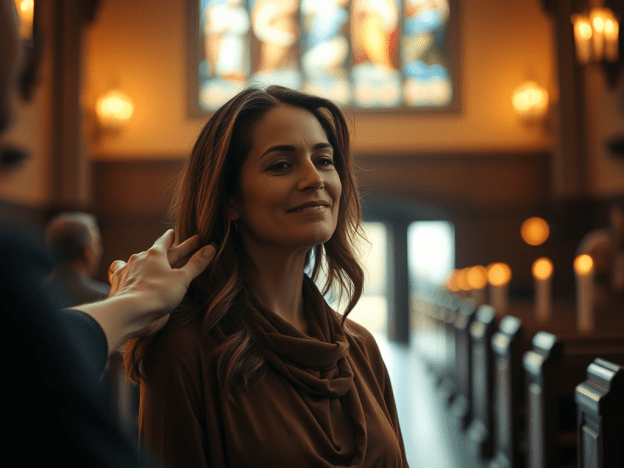
Julie stepped down from the pulpit and walked into the congregation. “God is here, right now. He wants to heal you, just like He healed Mark. Who needs healing today?”

Hands went up across the room. Julie and Andrew began praying for people, laying hands on them and declaring God’s promises over their lives.

“Remember what Jesus said,” Julie told one woman. “‘The Father in Me does the works.’ It’s not about striving. It’s about believing. God will do the work.”

As they moved through the room, Andrew reminded the people, “Faith isn’t complicated. It’s simply trusting that God’s word is true. Jesus never said, ‘Maybe.’ He said, ‘Rise and walk.'”

The atmosphere in the room shifted as people began to feel the presence of God. Some wept, others praised quietly, but everyone knew something was happening.

Julie and Andrew returned to the stage. Julie spoke one last time. “God is healing today. Just like Uncle Ernie, who got up after years of paralysis, you too can rise. Don’t leave here without believing that.”

Andrew finished with a prayer. “Lord, we thank You for Your healing power. Let these people walk in Your truth, and may Your word be alive in them.”

As they closed, the room was filled with hope. Julie smiled, knowing that seeds of faith had been planted. The church was learning to believe, and soon, they would see the fruits of that faith in their lives.

The Power of the Word: Julie’s Journey as a Healing Evangelist

Julie stood before the church, a quiet hum in the air. The congregation waited. She had shared her story many times, but this one was special. Today, she wasn’t just telling them about her journey to becoming a healing evangelist. She would show them.

“I remember a woman testifying one time,” Julie began, holding the microphone steady. Her voice was calm but filled with purpose. “She looked like she should have died two weeks earlier when she first came to our healing school. Skin and bones, no strength left. But she stayed. Week after week, month after month, and she began to blossom like a flower in the sunshine.”

Julie paused, allowing the words to sink in. “Her color came back. She gained weight. And then one day, she stood up and testified.”

The congregation leaned in, hanging on her every word. “Everyone there knew a miracle had happened. You’d have to be blind not to see it.”

Julie stepped aside and nodded to the AV team. The lights dimmed, and the screen lit up with the video of the woman. In the video, the woman’s voice trembled but was full of joy.

“I guess I just got so full of the Word that there was no more room for the cancer,” the woman said. The room echoed with murmurs of awe as the woman in the video described her healing process.

Julie turned back to the crowd. “It’s not about how much Word you hear, but how much you receive. You have to let it in, let it work in you. The Lord will help you, but you have to stay with it.”

The pastor joined her on stage, nodding as he took the microphone.

Chapter 2: The Power of the Word

Pastor Joseph smiled warmly at the congregation. “Julie’s right,” he said. “You see, the Word is life. Proverbs says it’s life to those who find it and health to their flesh. The Word brings healing, but you have to receive it.”

He glanced at Julie, who gave a small nod of agreement. “Just like this woman in the video,” he continued, “you have to keep hearing and hearing. It’s not that healing takes a long time, but sometimes we don’t receive because of how we think. But if you’ll stay with it, if you’ll change your thinking, the healing will come.”

Julie smiled, remembering the days when she, too, struggled with doubt. “I used to think,” she said, “that healing was instant, like flipping a switch. But sometimes, it’s like planting a seed. You water it. You give it light. And it grows.”

Pastor Joseph picked up where Julie left off. “That’s right. It grows. And it blossoms, just like Julie said earlier. That’s the power of God’s Word.”

Chapter 3: Spiritual Exercise

Julie took the microphone again. “But it’s not just hearing the Word,” she said, pacing slowly across the stage. “You have to exercise your spirit. How do you exercise your body? You move it. How do you exercise your spirit? You confess. You speak God’s promises. You believe in your heart and say it with your mouth.”

The crowd murmured in agreement, and she continued. “Speaking in tongues, praising God, walking in love—these are all ways to exercise your spirit. I used to think that if you just fed your spirit with the Word and exercised it, you’d be strong. But then the Lord showed me something else.”

Pastor Joseph stepped in, looking thoughtful. “Drains,” he said simply.

Julie nodded. “Exactly. Drains. You can feed your spirit and exercise it, but if you’ve got drains, you’ll still be weak.”

The crowd was silent, absorbing the lesson. Pastor Joseph explained further, “Just like a bathtub with a drain, if you don’t close it, the water will keep flowing out. You can fill yourself up with the Word, but things like fear, worry, and strife will drain you.”

Chapter 4: Watch the Drains

“Fear will drain you,” Julie said, her voice firm now. “Worry will drain you. Too many involvements, things the Lord never asked you to do—those will drain you, too. You can be built up in a service, feel strong in your faith, and then get into strife or worry, and it’s like pulling the plug.”

Pastor Joseph added, “Strife is a big one. I’ve seen people get into arguments after a powerful service, and suddenly they’re weak again. Strife drains your spirit faster than anything.”

Julie nodded. “That’s why we must stay in love. Love isn’t a suggestion; it’s a commandment. Strife takes two people. But you can refuse to participate. When you choose love, you stay strong.”

The church listened intently. Julie could feel the atmosphere changing as they grasped this truth.

Chapter 5: Speak Life

“We’re going to act on this now,” Julie said, stepping forward with renewed energy. “Joel 3:10 says, ‘Let the weak say, I am strong.’ We’re going to speak life.”

She encouraged everyone to stand. The room buzzed with anticipation.

“Some of you have been feeling weak, in body or spirit,” she said. “But today, we’re going to declare strength. We’re going to say, ‘I am strong.’ And we’re not just saying words—we’re speaking God’s Word, words full of life.”

Julie led the congregation in declaring their strength. “I am strong,” they repeated after her, voices rising with each declaration.

Pastor Joseph closed his eyes, lifting his hands. “As you speak these words,” he said, “you’re releasing faith. Healing is being manifested.”

Julie smiled as she watched the people declare their strength, knowing that some were being healed even now.

“I’ve seen it before,” she said quietly to the pastor. “People who were bedfast, too weak to speak, now standing, shouting, and testifying. God’s Word is life.”

The service ended with a quiet reverence, the congregation transformed. As they left, Julie knew that many lives had been touched, not just by her words, but by the power of God’s truth.

Her journey as a healing evangelist had only just begun.