
Darwin and Cyclone Tracy sell Amazon books

Sharon and Jim lived in Palmerston, a satellite city east of Darwin. Palmerston, rebuilt with modern techniques after Cyclone Tracy, was a place of clean streets, sturdy homes, and oddly specific road signs warning about wallabies. It was safe but unremarkable—much like their book sales.

The couple had co-written three novels about a quirky amateur detective who solved crimes while birdwatching in the Northern Territory. Reviews were solid. “Clever plot twists!” wrote one reader. “Not bad,” wrote another. Yet sales were flat, stuck in the low dozens each month.

“This town survived a cyclone and a reconstruction,” Sharon said one evening, staring at their Amazon dashboard. “We can survive bad sales.”

Jim groaned. “Surviving isn’t selling. We need a plan.”

They came up with five ideas that night. It felt optimistic, like rebuilding after a storm.

Chapter 2: The Five Ideas

The first idea was simple: advertise on Amazon. They set up campaigns targeting readers of similar books. At first, the results were promising. Clicks trickled in, but conversions were scarce.

“People click but don’t buy,” Jim muttered.

“Maybe our blurb needs work,” Sharon suggested.

Their second idea was to revamp their book covers. They hired a designer who specialized in bold, genre-specific designs. The new covers were beautiful. Sales rose slightly, but not enough to justify the cost.

Idea three: social media. Sharon started a TikTok account, posting videos about writing and birdwatching. Jim focused on Twitter, where he mostly argued with people about the proper use of commas. Sharon’s videos got a few thousand views. Jim got blocked by a grammar influencer.

“Social media is exhausting,” Sharon said.

“I think I lost followers,” Jim added.

Their fourth idea was to release an audiobook version of their first novel. They hired a local voice actor who nailed the detective’s dry humor. The audiobook launched to silence.

Finally, they tried direct engagement. They emailed every reader who’d left a positive review, offering free short stories in exchange for joining their newsletter. This worked better than expected. Their newsletter grew modestly, and repeat sales increased.

Chapter 3: The Report

After a year, they met with their life coach, Rhonda, a retired public speaker who’d built her own business from scratch. Rhonda listened as they reported their results.

“Advertising didn’t work well,” Sharon said. “Too expensive for the return.”

“The new covers helped a little,” Jim added. “But they didn’t pay for themselves.”

“TikTok was fun but inconsistent,” Sharon said. “Twitter was pointless,” Jim muttered.

Rhonda nodded, her expression neutral. “And the audiobook?”

“Dead on arrival,” Sharon said.

“What did work?” Rhonda asked.

“The newsletter,” Jim said. “That actually brought people back for more.”

Rhonda leaned forward. “Good. Then focus on what works. And here’s another idea: collaboration. Find another author in your genre. Share audiences. Double your reach.”

Jim scratched his chin. “You mean like cross-promotion?”

“Exactly,” Rhonda said. “Try it. What’s the worst that can happen?”

Chapter 4: A Marine-Sized Collaboration

Inspired by Rhonda’s advice, Sharon and Jim reached out to a local author named Max, who wrote military thrillers. Max’s books often featured Marines stationed in Darwin, complete with F-22 Raptors and political intrigue. It was the opposite of birdwatching mysteries, but Max was game.

Max suggested they co-write a novella. “Marines and birdwatching,” he said. “It’s so weird, it just might work.”

The novella, Parrots and Platoons, took three months to write. It was an absurd mashup of genres, but it was fun. They cross-promoted it to their newsletters and saw modest success. Sales didn’t skyrocket, but their mailing lists grew significantly.

“People liked the humor,” Sharon said.

“Even the wallabies got fan mail,” Jim added.

Chapter 5: The Conference Revelation

Months later, Sharon and Jim were invited to speak at an online conference on Amazon book sales. They were hesitant. “We’re hardly experts,” Jim said.

“Maybe not,” Sharon said, “but we survived.”

During the conference, they shared their story. Jim talked about their failures with ads and audiobooks. Sharon highlighted their modest wins with newsletters and collaborations.

Near the end, an attendee asked, “If you could give one piece of advice, what would it be?”

Sharon and Jim exchanged a glance. Then Sharon said, “Everyone tells you to find your audience. But maybe your audience doesn’t know they’re your audience yet.”

Jim nodded. “Sometimes, people don’t know what they want until they see it. Be willing to experiment, even if it feels ridiculous. That’s how we found out birdwatchers like military thrillers.”

The chat exploded with reactions. Attendees praised their insight, calling it fresh and unexpected. The phrase “audience doesn’t know they’re your audience” trended on conference forums.

When the session ended, Rhonda called. “You two just invented a new marketing theory,” she said.

Sharon laughed. “Who knew wallabies and Marines could teach us so much?”

Palmerston remained a quiet town, but Sharon and Jim’s words echoed far beyond its borders. Sometimes, the key to success wasn’t rebuilding like Darwin after a cyclone. Sometimes, it was embracing the storm and letting it carry you somewhere new.
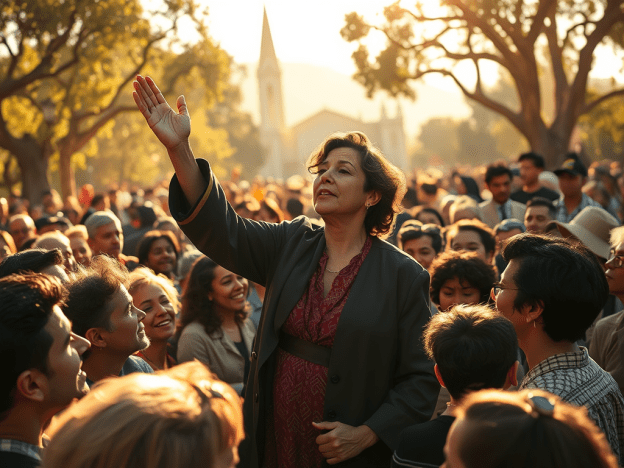

The Healing Power of Faith in Early 20th Century Los Angeles

Los Angeles in the early 20th century was a city on the rise, teeming with opportunity and a blend of cultures. Among the waves of new arrivals was McPherson, a fiery preacher with a unique gift. She claimed to have been personally healed through faith in 1909 when her broken foot was miraculously mended. This experience, she said, opened her eyes to the healing power of God.

By 1916, her reputation was growing. During a revival in New York, she prayed over a woman in advanced stages of rheumatoid arthritis, and the woman reportedly walked out of the church without crutches. These moments cemented McPherson as a leading figure in faith healing. By 1919, she had moved her ministry to Los Angeles, drawing tens of thousands to her services. Her mother joined her on tour after her husband Harold left, unwilling to endure the nomadic lifestyle.

McPherson’s Los Angeles revivals became legendary, combining heartfelt sermons with dramatic healings. One attendee remarked that the power in the room was “like nothing this city’s ever seen.” Over time, she transitioned away from regular faith-healing events but still scheduled monthly sessions that remained popular until her death.

Los Angeles, already buzzing with ambition and creativity, embraced McPherson’s blend of showmanship and spiritual fervor. The city became the perfect backdrop for her ministry and, later, the home of writers Kevin and Tania.

Kevin, Tania, and Daisy

Kevin and Tania, a married couple from Brisbane, had recently moved to Los Angeles. Kevin was writing a novel set in the 1920s, inspired by McPherson’s larger-than-life presence, while Tania was working on a mystery novel. They lived near Echo Park, where McPherson had once preached to overflowing crowds at Angelus Temple.

The couple often spent afternoons with Daisy, a local healer with a ministry reminiscent of McPherson’s early days. Daisy’s calm demeanor and sharp insights made her a beloved figure in the community. She believed deeply in the power of faith and often cited McPherson as an inspiration.

One sunny afternoon, Daisy met with two curious locals, Trent and Lisa, at a café in Echo Park. Lisa was a quick thinker, always asking probing questions, while Trent took longer to process ideas.

“So, healing,” Lisa said, leaning forward. “You really believe it works?”

Daisy nodded. “It’s not about what I believe. It’s about what God can do. Faith is the connection.”

Lisa tilted her head. “But what if someone doesn’t have faith?”

“Faith can start small,” Daisy said. “Like a mustard seed. Even doubt can be the beginning of belief.”

Trent frowned. “I’ve got plenty of doubt. Does that count?”

“It’s a start,” Daisy replied with a smile. “Doubt means you’re thinking, and that’s better than giving up.”

Lisa leaned back in her chair, considering Daisy’s words. “What about people who aren’t healed? Doesn’t that mean it doesn’t work?”

Daisy shook her head. “Not at all. Sometimes healing isn’t what we expect. And sometimes it’s about timing. The gardener knows when the fruit is ripe, even if we don’t.”

An Unexpected Call

As the conversation unfolded, Daisy’s phone buzzed. She excused herself and stepped outside.

The call was from her sister, who had news about Roberta, a young woman Daisy had been praying for. Roberta had been battling a serious illness, but her condition had taken an unexpected turn.

“She’s improving,” her sister said. “The doctors don’t understand it, but she’s getting better every day.”

Daisy closed her eyes, a smile spreading across her face. “That’s wonderful news. Sometimes, faith does what medicine can’t explain.”

Returning to the table, Daisy shared the update. Lisa smiled, genuinely pleased, while Trent looked skeptical.

“Sounds like luck,” Trent said.

“Maybe,” Daisy replied calmly. “Or maybe it’s something more.”

Kevin and Tania, sitting nearby, overheard the exchange. Tania looked at Kevin, her eyes sparkling with an idea.

“Sounds like the kind of story your novel needs,” she said.

Kevin grinned. “Maybe Daisy can be my historical consultant.”

Daisy laughed. “Only if I get royalties.”

As the group settled back into their conversation, the energy of Los Angeles swirled around them. The city, like faith itself, was a place of endless possibilities, where even skeptics like Trent could find themselves believing in something greater than luck.

Townsville Youth Centre

Townsville began as a small port settlement. Early settlers were drawn by its proximity to the ocean and fertile land. The bay served as a natural harbor, and trade flourished. Ships carried goods inland, while cattle and crops flowed outward. The town’s population grew steadily, and with it, its reputation as a thriving hub in the region.

In the 1800s, Townsville became a key link between the coast and the goldfields further inland. Miners passed through, seeking fortune, and some stayed to build lives. Over time, industries like sugar and tourism joined agriculture as the backbone of the economy. By the mid-20th century, the town had grown into a city, boasting schools, hospitals, and a vibrant community life.

In recent years, Townsville has become known for its innovative youth programs. The Townsville Youth Foyer was established to support young people at risk of homelessness. Using an “Advantaged Thinking” approach, it provided education, housing, and employment opportunities. The Foyer quickly became a beacon of hope for many, transforming lives and strengthening the city’s social fabric.

Four Weeks in the Life of Ella and Max

Ella and Max were lifelong residents of Townsville. Both had seen the struggles faced by young people in their community. They decided to act. Together, they founded a youth center on the edge of town. It started small, just a rented space and a handful of volunteers.

Week One
The first week was chaos. Furniture arrived late, and the internet didn’t work. Max spent hours fixing broken chairs. Ella coordinated with local schools to spread the word. By Friday, the center opened its doors. Ten young people came that day. They were curious but cautious.

Ella led an art session, while Max set up a basketball game outside. The kids smiled, some for the first time in weeks.

Week Two
Word spread quickly. More young people came. Some needed a safe place to study; others just wanted someone to talk to. Max noticed one boy, Liam, sitting alone. He handed Liam a basketball. “Play a game with me?” he asked.

By the end of the game, Liam was laughing. Ella worked with a group of teens on resumes. “You’re good at this,” one girl told her. Ella nodded. She hoped they would see their own potential.

Week Three
A surprise came that week. A local bakery donated food for the center. “I heard what you’re doing,” the owner said. “Keep it up.” Ella and Max were overwhelmed.

They used the food to host a community dinner. Families joined, sitting together in a way Ella hadn’t seen before. Max noticed how the atmosphere shifted. “We’re building more than a center,” he thought. “We’re building trust.”

Week Four
The youth center was thriving. Every room was filled with activity. A music program started on Monday, led by a local musician. By Wednesday, Ella had secured a partnership with the Townsville Youth Foyer. They would provide coaching and support for education, employment, and housing.

On Friday, something unexpected happened. An older man walked in, looking nervous. He introduced himself as Sam. “I used to live here,” he said.

Max asked him to share his story. Sam explained he had been a troubled teen, in and out of shelters. He’d turned his life around thanks to a youth worker who believed in him. “Now I want to give back,” he said.

Ella and Max were speechless. Sam offered to volunteer every week. His presence became the surprise ending to a whirlwind month.

Legacy of the Youth Center

By the end of four weeks, the center had grown beyond its founders’ dreams. It wasn’t just a place for young people—it was a place for the entire community. The partnership with Townsville Youth Foyer strengthened its reach, offering structured support through “The Deal” and a pathway to brighter futures.

Ella and Max continued to work tirelessly, inspired by the transformations they saw. Sam became a mentor to the young people, sharing wisdom gained from his own journey.

Townsville thrived because of people like Ella, Max, and Sam. Their commitment reminded everyone that small actions could lead to big changes. The center became more than a building; it became a symbol of hope, resilience, and unity in the heart of the city.