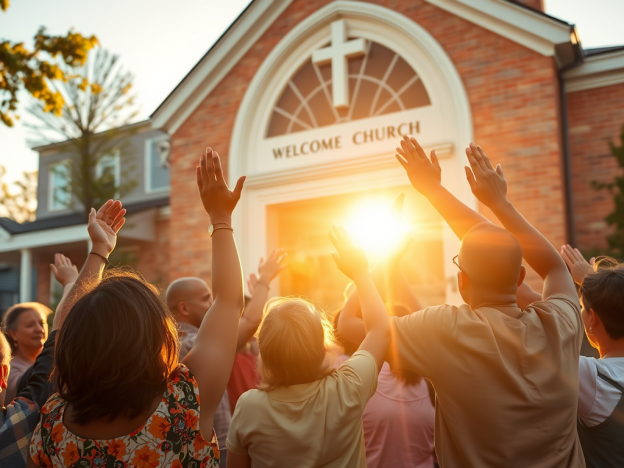
On a warm Sunday afternoon, the congregation gathered in the town’s community church, where a much-anticipated discussion was set to take place. The church hall buzzed with excitement as members filled the seats, eager to hear from Zara, a well-respected leader known for her thoughtful insights. Today’s discussion was centered around Miami, a city renowned for its vibrant culture, economic influence, and historic significance.
Zara began by addressing the congregation with a welcoming smile.
“Miami is one of the most well-known cities in Florida. It’s a major center of finance, international trade, the arts, and Hispanic culture. Many people see it as a place of opportunity, filled with energy and life. It attracts people from all walks of life who seek success, new beginnings, or simply a place to belong. But as we reflect on the city’s influence, what can we, as a church, learn from it?”
The room fell silent as members pondered her question. Zara continued, “Miami has the largest Hispanic population in America and offers one of the most culturally rich environments in the country. This diversity is a reminder of the beauty in unity. In 1 Corinthians 12:12, Paul tells us, ‘For just as the body is one and has many members, and all the members of the body, though many, are one body, so it is with Christ.’ What does this verse tell us about the way we should live as a community?”
A woman in the front row, Mrs. Hill, raised her hand. “It tells us that while we may come from different backgrounds, different experiences, and even different cultures, we are all united in Christ. Just as Miami thrives on its diverse population, we, as the body of Christ, thrive when we embrace our differences and work together for His glory.”
Zara nodded approvingly. “That’s absolutely right. We are called to celebrate our differences and use them to strengthen the church, rather than divide it. In Miami, people from different countries come together to build businesses, create art, and serve their communities. Imagine the power we hold as the Church when we come together in love and unity.”
She paused for a moment before shifting the conversation. “Miami is also home to the Port of Miami, the world’s busiest cruise port. Millions of visitors travel through this port, making it a gateway to new experiences. In the same way, our church should be a gateway—a place where people encounter God, feel welcomed, and leave transformed. Are we creating an environment where newcomers feel at home?”
A young man named Daniel spoke up. “Sometimes, I think we get too comfortable with our own groups and forget to reach out to new people. It’s easy to talk to friends, but we need to do a better job of welcoming visitors and making them feel like part of our family.”
Zara smiled. “That’s a great point, Daniel. Hebrews 13:2 tells us, ‘Do not neglect to show hospitality to strangers, for thereby some have entertained angels unawares.’ Hospitality is an essential part of our faith. Just as Miami welcomes people from all over the world, we must open our arms to everyone who walks through these doors.”
The discussion took another turn as Zara introduced a different aspect of Miami. “This city is known for its beautiful beaches, warm climate, and sunshine. Many people go there just to soak up the sun and find peace by the ocean. But as believers, we know that true peace comes from Christ, not from external circumstances. Jesus said in John 14:27, ‘Peace I leave with you; my peace I give to you. Not as the world gives do I give to you. Let not your hearts be troubled, neither let them be afraid.’ How can we find and share this peace in our daily lives?”
A middle-aged man, Mr. Lawson, responded. “I think it starts with our mindset. The world teaches us to chase after comfort, wealth, and experiences for happiness. But real peace comes from trusting God, even when life is uncertain. We need to reflect Christ’s peace to those around us, showing them that joy isn’t found in material things but in a relationship with Him.”
Zara nodded. “Exactly! Many people go to Miami searching for happiness, but as followers of Christ, we have an even greater joy to offer. When we live in peace and trust in God, others will notice. They’ll see something different in us and be drawn to Christ.”
As the discussion neared its end, Zara posed one final question. “Miami is a city that beautifully blends the past and the present. Historic buildings stand alongside modern skyscrapers, reminding us that while we move forward, we should never forget our roots. The same applies to our faith. How can we honor the past while embracing the future?”
An elderly woman, Sister Martha, spoke up. “We must remember the sacrifices of those who came before us—the pioneers of faith who built this church and stood firm in the Gospel. But at the same time, we need to find ways to reach the next generation, using new tools and new ways to spread God’s word.”
Zara beamed. “That is so well said. We honor the past by staying true to God’s word, and we embrace the future by finding new ways to share His love. Miami’s blend of history and modernity is a great example for us. We don’t have to choose one or the other—we can respect where we’ve come from while boldly stepping into where God is leading us.”
As the discussion came to a close, Zara left the congregation with a final thought. “Miami teaches us that diversity is beautiful, that hospitality is powerful, that true peace comes from Christ, and that honoring the past does not mean resisting the future. Let’s take these lessons and apply them to our own lives and our church. Let’s be a light in this community, just as Miami shines as a beacon of culture and opportunity.”
The congregation erupted in applause, inspired by the discussion. As they left the church that evening, many reflected on the lessons learned and the ways they could put them into practice, making their own town a welcoming, faith-filled, and united community.
 Motivation E-Books