
Category Archives: Prayer

Mandy’s Prayer Investigation in La Conner

La Conner, a quaint waterfront village nestled along the Swinomish Channel, has a rich history that stretches back to the late 19th century. Originally a trading post, it became a hub for fishermen, loggers, and farmers. Over the decades, it evolved into an artist’s haven, its historic buildings transformed into galleries, museums, and specialty shops. The town’s crowning achievement was the preservation of its iconic Architectural Landmark, the Swinomish Bridge, built in 1916. It’s a favored spot for weekend getaways, especially during the Skagit Valley Tulip Festival when the fields blaze with color.

In the heart of this vibrant village lived Mandy Turner, a spirited 22-year-old with a knack for noticing what others overlooked. Mandy grew up in La Conner, her family running a small café near the waterfront. The café served locals and tourists alike, offering hot coffee and homemade pies. Mandy’s days were split between the café, her college classes, and volunteering at the local church.

The La Conner Community Church was small but active. Its congregation met regularly for Sunday services and midweek home groups. Mandy often attended, though she found herself questioning things she heard. One Wednesday evening, she joined a home group at the Petersons’ house. The group was lively and warm, but Mandy noticed something odd. The prayers they shared—requests for jobs, healing, and reconciliation—seemed to go unanswered. Week after week, the same struggles resurfaced.

After one meeting, Mandy asked Mrs. Peterson, “Why do you think so many prayers go unanswered?”

Mrs. Peterson smiled. “God works in mysterious ways, Mandy. We just need to keep the faith.”

Mandy nodded but wasn’t satisfied. Faith was important, but so was understanding. She decided to investigate.

A Search for Answers

Mandy dived into her Bible, reading passages about prayer. She studied verses from Matthew, James, and Psalms. She found encouragement, promises, and guidelines. But nothing seemed out of place. She even attended a seminar on intercessory prayer hosted by the church. Still, the prayers at the Peterson group remained unanswered. She began to wonder if it was just bad luck.

One Sunday after service, she overheard two women discussing another home group. “The Walters’ group has been seeing miracles,” one whispered.

Mandy’s ears perked up. Miracles? That wasn’t a word tossed around lightly. She decided to visit the Walters’ group the following week.

A Different Experience

Mandy knocked on the Walters’ door the next Thursday evening. She was greeted warmly by Mr. Walters, a retired fisherman with a booming laugh. The group was smaller but intense. They prayed fervently, their words filled with conviction. What struck Mandy most was their joy. People shared stories of jobs found, illnesses healed, and relationships mended.

After the meeting, Mandy stayed behind. “Your group feels different,” she said to Mr. Walters.

He chuckled. “We just follow the Word and trust God to do the rest.”

“Do you do anything differently from the Petersons’ group?” she pressed.

He raised an eyebrow. “Not sure. Maybe it’s the way we pray? We focus on thanking God first.”

Mandy left puzzled. She returned every week, comparing the two groups. At the Walters’ group, prayers were answered with surprising regularity. At the Petersons’, they weren’t. The contrast was stark. Mandy decided to document her findings.

Sharing the Findings

Mandy typed up a detailed letter and sent it to Pastor Mike. She included observations, Bible verses, and notes about the two groups. She didn’t accuse anyone, just laid out the facts.

Two weeks later, Pastor Mike called her to his office. “This is impressive work,” he said. “But you realize what you’re suggesting?”

Mandy nodded. “I’m suggesting we look closer at how we approach prayer.”

Pastor Mike promised to review her notes and visit both groups.

Meanwhile, Mandy’s family cheered her on. Her mom, a sharp-witted woman with a talent for making people laugh, joked, “If you solve this mystery, maybe you can tackle why our café keeps running out of apple pie!”

Her younger brother, Tommy, chimed in, “Or why Dad can’t fix the leaky sink!”

The humor lightened the weight of her investigation.

The Pastor’s Verdict

Pastor Mike visited both groups and gathered feedback. A month later, he addressed the congregation. “Prayer is a cornerstone of our faith,” he began. “But how we pray matters. Gratitude, humility, and trust are key. Let’s learn from each other.”

The church decided to combine the two home groups for a month-long series on prayer. Mandy felt proud but stayed humble. “It’s not about me,” she told her mom. “It’s about helping people connect with God.”

The combined group meetings were lively. People shared openly and learned from one another. Mandy noticed a shift in the Petersons. Their prayers became more heartfelt and hopeful. Miracles started to happen in their group too.

The Plot Twist

One evening, as Mandy walked home from the group, she bumped into Mr. Walters. He was carrying a bag of groceries. “Mandy,” he said, “I hear you’ve been quite the detective.”

She laughed. “Just curious.”

“Well,” he said, lowering his voice, “there’s something you should know. The Walters’ group? We have a rule: no praying for parking spaces.”

Mandy blinked. “What?”

“Parking spaces,” he said, grinning. “We figure God’s got bigger things to worry about.”

Mandy burst out laughing. “That’s the secret?”

Mr. Walters shrugged. “That, and we always start with pie. Good pie makes everything better.”


Epilogue

Mandy’s investigation changed how the church approached prayer. People became more intentional, more grateful, and more aware of their faith. Mandy continued her studies and even led a prayer seminar herself. As for the café, they started baking more apple pies.

And the leaky sink? It got fixed—eventually.

Mandy never stopped wondering about the mysteries of life, but she learned one thing for sure: Sometimes the answers are simpler than you think, and sometimes they just involve pie.
Living Abundantly Through Faith in God

In Matthew 21:22, Jesus emphasizes the importance of belief in prayer: “And all things, whatsoever ye shall ask in prayer, believing, ye shall receive.” Faith is essential for receiving from God. It is not about repetitive or mechanical prayer but about a faith-filled connection with God’s will. The Word of God reveals His will, and Jesus—the Word made flesh—demonstrated it through His teachings and actions. His healings, teachings, and sacrifices reflect God’s unchanging will for all people and all time.

God’s will is life, not death, poverty, or sickness. When His will is done, life manifests. Believers are called to reject the notion that suffering or sickness is “good” or “God’s will” and to embrace the life and wholeness revealed through Jesus. Faith requires a steadfast focus on God’s promises rather than visible challenges. For instance, instead of dwelling on financial lack, believers should affirm Philippians 4:19: “My God shall supply all your needs.” By focusing on these promises, they strengthen their faith.

Maintaining faith requires actively resisting negative thoughts and fears. Believers must cast down fear and replace it with God’s truth, enabling them to retain peace and joy amid trials. Faith in God’s Word—His promises of healing, provision, and eternal life—grounds believers in His will and power.

Redemption and Healing

God’s redemptive plan, as revealed through Scripture, includes healing. Just as sin was universally addressed through Christ’s sacrifice, so is healing available for all. Psalm 91 highlights God’s promise of protection and satisfaction with long life, underscoring His desire for His people to thrive. Healing is not merely a possibility; it is a provision secured through Christ’s work.

Faith in God’s healing requires aligning one’s beliefs with His Word. Believers must reject the idea that sickness is a tool of God. Instances like 1 Corinthians 5:5, where individuals are turned over to the enemy for the destruction of the flesh, clarify that God is not the author of sickness or death. Instead, He is the source of life and restoration.

Testimonies of healing demonstrate the power of faith. One account describes a paralyzed man who declared his belief in healing and acted on his faith despite physical limitations. His recovery illustrates that faith requires action, even amid doubt or adverse circumstances.

Believers are encouraged to discern God’s truth amid confusion and deception. Through intimacy with God, a teachable spirit, and immersion in His Word, they gain discernment to navigate challenges and walk in divine health and victory.

Living in Victory and Abundance

Living in alignment with God’s will means embracing the abundant life He offers. In Him, believers find forgiveness, healing, and provision. Ephesians 1:7 reminds us of the cleansing power of Christ’s blood, while Ephesians 2:18 highlights believers’ access to the Creator. This access empowers them to live as citizens of God’s kingdom, with rights and responsibilities that include standing firm on His promises.

Faith is essential to pleasing God, as Hebrews 11:6 states. It is not passive but requires believers to speak and act in alignment with God’s Word. This active faith ensures that His promises—such as healing, protection, and provision—manifest in their lives. The power of faith and communion with God enables believers to overcome the enemy’s attempts to deceive and hinder them.

Ultimately, God’s will is revealed in His Word and His actions through Jesus. Believers are encouraged to focus on His promises, resist distractions, and stand firm in faith. By doing so, they experience the fullness of life God intended, both in the present and in the eternal future. As Revelation 21:4 declares, there will come a day when death, pain, and sorrow are eradicated, restoring creation to its original perfection. Until then, believers are called to live in the light of His truth, manifesting His glory and walking in the victory secured by Christ.

Prayer and Basketball

Grand Rapids, Michigan, began as a settlement along the Grand River in the early 19th century. The land was dense with forests, and early settlers relied on logging to build homes and businesses. By the 1830s, the area’s potential as a center for craftsmanship became evident. In 1837, a skilled cabinetmaker opened a small workshop. Within a decade, Grand Rapids became known for fine furniture. By 1880, it was the furniture capital of America, attracting buyers worldwide.

In 1967, Grand Rapids commissioned La Grande Vitesse, a bold, abstract red sculpture by Alexander Calder. It became a symbol of the city’s passion for creativity and innovation. Public art spread throughout downtown, including Maya Lin’s Ecliptic and Cyril Lixenberg’s Steel Water. These works reflected a tradition of merging art with daily life. Meanwhile, the brewing scene grew, earning Grand Rapids the title Beer City, USA, with over 100 breweries contributing to its reputation.

Grand Rapids’ history was shaped not only by industry but also by individuals who changed the community. One such figure was Hannah King, a 19-year-old woman from the city’s west side. In February 2024, Hannah became known for her determination and vision.

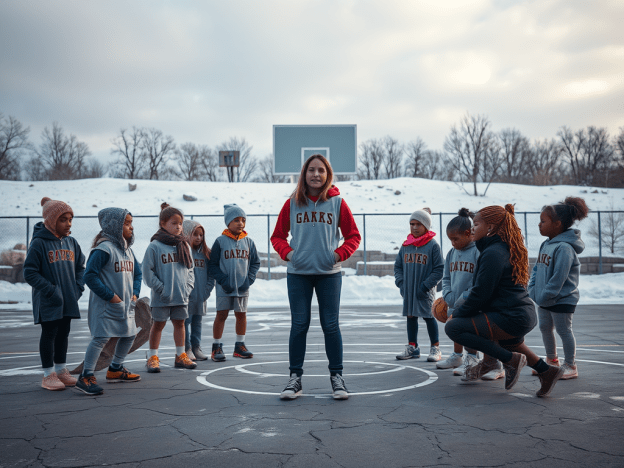
Hannah lived with her grandmother, who shared stories of community resilience. Inspired, Hannah decided to start a basketball team for girls in her neighborhood. The west side had few opportunities for organized sports, and Hannah saw this as a chance to bring people together. She called her team the Westside Sparks.

“The first step is belief,” her grandmother told her one morning. “When you believe, you’ll find the way.”

Hannah recruited players by visiting schools, parks, and community centers. She faced resistance from some parents who doubted the idea’s practicality.

“Why basketball?” asked Mr. Jensen, a father of three. “What’s the point?”

“Because it teaches discipline,” Hannah replied. “And it’s fun.”

By mid-February, Hannah had gathered eight players. Practices took place on cracked courts under the cold winter sky. They lacked uniforms and proper equipment, but Hannah improvised. She painted old jerseys with a homemade stencil and borrowed basketballs from a local recreation center.

Hannah had another secret: a method of prayer she called “focused stillness.” Before each practice, she sat with the team in a circle. They closed their eyes, breathed deeply, and visualized success. “Feel the ball swishing through the net,” she would say. “Imagine the sound of victory.”

The method worked. The team grew confident and united. Word spread about the Westside Sparks, and soon, local businesses offered sponsorships. By late February, the Sparks had proper uniforms and a refurbished court. Hannah scheduled games against other community teams. The Sparks won their first game 28-22.

“We did it,” said Lisa, the team captain, grinning.

“And we’ll do it again,” replied Hannah.

The Sparks continued to win. Their story attracted attention. A reporter from CNN visited Grand Rapids to document their journey. “Why did you start this team?” the reporter asked Hannah.

“To show that small efforts can create big change,” she said.

On February 28, the Sparks faced their toughest opponent, the Eastside Eagles. The game was intense. The Sparks were down by two points in the final minute. Hannah called a timeout. She led the team in focused stillness, then sent them back onto the court. Lisa scored a three-pointer with seconds left, securing the win. The crowd erupted in cheers.

After the game, Hannah’s grandmother approached her. “You’ve done more than build a team,” she said. “You’ve built a community.”

But the month wasn’t over. On February 29, a rare leap day, Hannah received a letter from the city council. They offered her a grant to expand the program citywide. “Your efforts embody the spirit of Grand Rapids,” the letter read.

The twist came during the celebration. As the team gathered, Hannah revealed her secret method of prayer. “It’s not magic,” she said. “It’s focus and belief.” She demonstrated it to the crowd. The city embraced her method, incorporating it into schools and community programs.

Grand Rapids was transformed by the Sparks’ story. Hannah’s efforts not only built a successful basketball team but also inspired a city to believe in the power of small beginnings. The rust-colored tree in Frederik Meijer Gardens became a symbol of resilience, its iron roots reminding visitors that strength often comes from unseen places. The surprise ending was not just the success of the Sparks but the lasting impact of one young woman’s vision.