Tag Archives: Book Review

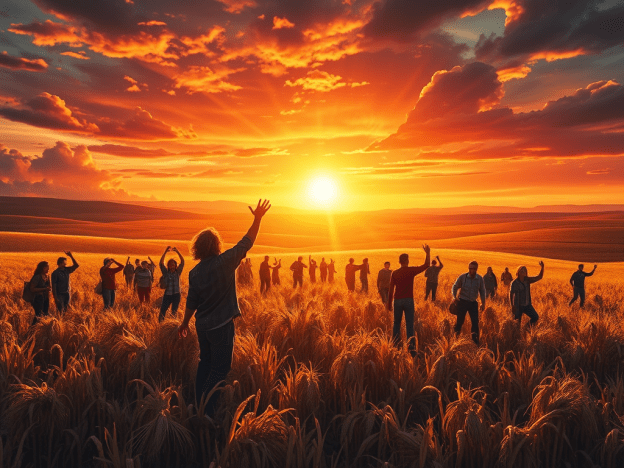
The Harvest Field: Answering God’s Urgent Call to Action

Chapter 1: The Voice That Calls
Friends, hear me now—the Lord is calling! He’s not calling the perfect or the powerful; He’s calling the willing. He called me when I was broken, hated, and despised. The world’s voices rose against me, yet His voice thundered louder, “Stand firm, for I am with you!” Like Noah obeyed the call to build an ark, I was called to rise above the storms. And let me tell you, that call is not just for me; it’s for you too! He doesn’t need your perfection—just your faith. I felt the waves crash over me, trying to drown the purpose He placed in my heart. But the Spirit whispered, “Write again, speak again, go again!” And friends, when God calls, He equips. So here I stand, and so can you!


Chapter 2: Through the Fire
Let me tell you, the journey isn’t easy. When God calls, the fire comes. The enemy will try to break you—oh, yes, he will. Dark clouds surrounded me, and the storm raged against me, but the Lord said, “I have hidden you in Me.” Praise God! In the fire, He was refining me. He wasn’t breaking me; He was preparing me! I saw the Spirit move like never before. The earth shook, the heavens roared, and I realized He was shaping me into a vessel for His glory. Let me tell you, when you’re in the fire, hold on. Don’t give up, because on the other side is freedom, power, and purpose. The battle is fierce, but the victory is already ours through Christ!


Chapter 3: The Secret of Revival
Listen closely, friends. Revival doesn’t start on a stage or in the spotlight—it begins in the secret place. It begins when you get alone with God and cry out for His Spirit to move. I’ve seen it with my own eyes! In Mexico, Argentina, Colombia, and beyond, the fire of Pentecost is sweeping across nations. Why? Because faithful people dared to seek Him in prayer. Revival is birthed in intimacy with God! When I met with Him in the quiet moments, He spoke promises of acceleration and power. He said, “I am bringing you into freedom like never before!” Let me ask you—are you seeking Him? Are you hungry for His presence? If you want revival in your home, your church, and your community, it starts on your knees.


Chapter 4: The Harvest Field
The fields are ripe for harvest, but the workers are few. Oh, friends, the battle for souls is urgent! I’ve seen the power of God turn hearts of stone into hearts of flesh. I’ve seen chains broken and lives transformed. Yet the enemy doesn’t rest. He whispers lies, “You can’t make a difference. They’ll never listen.” But I say, God is greater! I’ve stood in open-air meetings, proclaiming the Gospel to those who never planned to hear it, and I’ve watched God move mightily. Don’t let fear hold you back—step into the harvest field! The enemy has tried to take you out, but you are here because God has a purpose for you. Declare His name boldly and watch what He will do!


Chapter 5: The God of New Beginnings
Hear this truth: our God is a God of new beginnings! He is the potter, and we are the clay. He is shaping us, molding us, and preparing us for what’s next. I hear Him saying, “A new chapter has begun!” Hallelujah! He is not done with you or with His church. The Spirit of God is moving swiftly, reviving dreams and accelerating His plans. I’ve seen nations turn to Him, governments shift, and lives renewed. But let me tell you, the greatest work is yet to come. Are you ready? The search for purpose, for hope, for joy—it ends with Him. Say yes to His call, step into His plan, and watch as He does exceedingly, abundantly more than you can ask or imagine. The best is yet to come, my friends. The time is now—let us go together and proclaim His name!

Power of Prayer: Believe You have Received

Paia, a charming town on Maui’s North Shore, has seen many transformations. Originally a plantation town, its sugarcane roots gave way to a Bohemian hub for surfers, artists, and wanderers. By 2025, it was known for its laid-back vibe, bustling small shops, and golden beaches. Despite its small size, barely 7.5 square miles, Paia had a magnetic charm, drawing visitors and residents alike.

At the heart of this community was a young woman named Leilani. She was 24, born and raised in Paia, with a mind as curious as the winds that swept Ho’okipa Beach. She worked part-time at a local café and spent her evenings reading. Leilani had recently joined a church home group, intrigued by their promises of faith and community.

The group met every Wednesday at the home of Auntie Malia, an elder known for her warm smile and banana bread. Each session began with a prayer circle. Members took turns sharing their needs—from healing illnesses to finding lost pets. Yet, Leilani noticed something odd. Few of these prayers were answered. Weeks passed, and the same requests echoed in the circle.

“Auntie,” Leilani asked after one meeting, “why do you think our prayers don’t seem to work?”

Auntie Malia shrugged. “Maybe we must wait. Or pray harder. Faith is a mystery, child.”

Leilani wasn’t satisfied. She decided to investigate. She borrowed a Bible from the church library and studied it meticulously. She read about faith, persistence, and the promises of answered prayers. But she found no clear reason for the group’s apparent lack of success.

One Sunday, while chatting with the pastor, Leilani heard about another Bible study group meeting on Fridays. Curious, she attended. This group was smaller, and the leader, a man named Kimo, shared a different perspective.

“When you pray, believe you’ve received it already,” Kimo said. “That’s what the Bible teaches. Faith sees it as done before it happens.”

Leilani listened, fascinated. She began taking notes, comparing the two groups. The Friday group’s prayers focused on clear outcomes and a deep conviction that the answers were already given. In contrast, Auntie Malia’s group often prayed in vague terms, leaving outcomes entirely to divine will.

One Friday, Leilani shared her observations. “Do you think it’s about believing first?” she asked.

Kimo nodded. “Exactly. Faith without sight. That’s the key.”

Leilani decided to compile her findings into a letter for Pastor Keawe. It outlined the differences between the groups and suggested focusing on believing in answered prayers. Her mother, a former schoolteacher, helped edit the letter.

Leilani delivered the letter on a sunny afternoon. Pastor Keawe read it carefully. “This is insightful,” he said. “Let’s discuss it with both groups.”

Over the next five weeks, the church held joint lessons to delve deeper into the principle of believing before seeing. Each week focused on a specific aspect:

  1. Faith Beyond Sight: Members learned to visualize their prayers as already answered, grounding their belief in Scripture.
  2. Aligning with God’s Promises: They explored biblical promises and how to align their prayers with God’s will.
  3. Speaking Life: The group practiced speaking positively and affirmatively about their requests.
  4. Gratitude in Advance: Members expressed thankfulness for their prayers being answered, even before seeing results.
  5. Action Steps of Faith: They discussed practical actions to demonstrate their trust in God’s provision.

Slowly, they noticed a shift. Auntie Malia’s group began to see results. Lost pets were found. Illnesses improved. Relationships mended. By December, the church community buzzed with stories of answered prayers.

One evening, after a particularly moving session, Auntie Malia pulled Leilani aside. “You’ve taught us much, child. Mahalo.”

Leilani smiled. “It’s not me. It’s all of us learning together.”

The culmination of their faith journey came during a special Christmas service. The congregation had been praying for a young boy in the community, Kaipo, who had been battling a severe illness. That evening, Kaipo and his family stood before the church to share incredible news: he had received a clean bill of health from his doctors, defying all odds.

Tears of joy filled the room as Pastor Keawe spoke. “This is the power of faith and belief. When we trust completely, miracles happen.”

Leilani sat quietly, her heart full. The year had changed her and her community forever. Faith had become more than words; it had become their way of life.

Faith and Discovery: Hamilton’s Early Settlers

Hamilton was settled by the 4th Waikato Regiment Militia in 1864. Captain William Steele led them. They arrived on the Rangiriri, a small steamboat, on 24 August. As the boat came up the river, the local people stood on the banks, watching quietly. Among the passengers was Teresa Vowless. She held her baby in her arms but passed the child to another woman as they neared the shore. Without a word, she leapt into the river. Teresa wanted to be the first settler to set foot on this new land. Some said it was her faith in God that drove her. She believed she had been led there for a reason.

The land, however, was far from what the settlers expected. Much of it was swamp. They had been promised fertile ground, but many struggled to farm. By 1868, most of the settlers had given up and left. Hamilton’s population dropped from 1,000 to 300. Those who stayed had to rely on faith that somehow, their future would improve. In 1875, hope came in the form of a brickworks that opened in town, offering jobs and a sense that Hamilton could grow. But for many, faith was the only thing keeping them going.


In 1882, Eliza Beckett came to Hamilton. She was a widow with three children, and her life had been hard. After her husband died in an accident, she had little to her name. A distant cousin had told her about Hamilton. “Go there,” they said. “They need workers, and you’ll find a fresh start.” Eliza believed it was God who had guided her path. She had been praying for a way forward.

At first, she found work at the new brickworks, hauling clay. It was back-breaking labor, but she was thankful for the work. “God provides,” she often said, though the men around her didn’t understand why a woman would speak of faith while working in such rough conditions. Eliza saved her wages, trusting that one day, she would leave Hamilton for a better life.

One day, while working, Eliza overheard a conversation between two men. One was Thomas White, a local landowner, and the other was a man she didn’t recognize. He was quiet and spoke with conviction. They were standing by the kiln, talking in low voices. “The land’s no good,” Thomas muttered. “I don’t care what the others say—it’s cursed.”

Eliza listened, intrigued. The quiet man responded calmly. “It’s not the land, Thomas. It’s what lies beneath it. There’s something here—something God has hidden for a reason.”

Eliza pondered his words. That evening, as she prayed with her children before bed, she thought about what she had overheard. She believed that if God had hidden something, it would only be revealed when the time was right.


Days passed, and soon there was talk of a strange discovery. A local worker had uncovered something unusual while digging near the swamp. Eliza couldn’t get the details, but people whispered about it in town. Some said it was an ancient relic. Others spoke of bones. No one seemed to know for sure.

Eliza’s curiosity grew. She believed this might be connected to the conversation she had overheard. One afternoon, as she left the brickworks, she saw Thomas White again. He was standing with a group of men outside the general store. “We should’ve left it alone,” he was saying. “We’ve disturbed something that was meant to stay buried.”

Eliza approached. “What did you find, Mr. White?”

He looked at her, hesitant. “Best not ask, Mrs. Beckett. It’s not for us to know.”

Eliza didn’t push, but later that night, she prayed. She asked for guidance, for God to show her what this discovery meant. The next day, she walked out to the edge of town, to the place where the land was boggy and still. She found the spot where the men had been digging. The ground was freshly disturbed, and Eliza, believing this was God’s way of answering her prayers, began to search.

She found something half-buried in the mud. It was small, heavy, and wrapped in cloth. As she unwrapped it, a strange feeling came over her. She wasn’t sure what it was, but it felt important—holy, even. She believed it was a sign.


A week later, two men came to her door. One was Thomas White. The other was the quiet man from before, his eyes filled with a certain intensity.

“Mrs. Beckett,” Thomas said, “we need to talk.”

Eliza stepped outside, her Bible clutched in one hand. “What about?”

Thomas sighed. “You took something from the ground. We need it back.”

Eliza’s heart raced. “I don’t know what you mean.”

The quiet man stepped forward. “There are two ways to look at this,” he said calmly. “Some believe it’s a blessing, something sacred. Others say it’s dangerous, meant to stay hidden. Which do you believe?”

Eliza stood firm. “I believe God has a plan. If He wanted it hidden, He wouldn’t have let me find it.”

The man nodded. “Perhaps. But not all things revealed are meant for us.”

Eliza prayed that night, holding the strange object close. She asked for wisdom, for a sign that she was doing the right thing. The next day, she returned to the place where she had found the object. There, she felt a stirring in her spirit, something telling her to let go. She knew it was time to return what she had taken.

She found Thomas White in town the following morning. “You were right,” she told him. “It wasn’t meant for me.”


In the end, Eliza understood that what she had found wasn’t a treasure or a curse. It was a test of faith. She had believed God had given it to her, but in truth, He was asking her to trust Him enough to let it go. She had always been faithful, but now, she saw that true faith wasn’t about holding on—it was about surrender.

Hamilton went on, with its struggles and its growth. And Eliza Beckett remained a woman of faith, known for her quiet strength and wisdom. In the end, the object was never spoken of again, but those who knew the story understood its lesson. It was not what was found in the ground that mattered, but what was found in the heart.