
Tag Archives: Faith

The Healing Power of God’s Word

Chapter 1: God’s Word Is Medicine
The Bible declares that God’s Word is life and medicine for all who find it (Proverbs 4:20–22). Friends, do you realize the power in the Word of God? It is not just a book—it’s spiritual nourishment, like bread to the body. Jesus said, “Man shall not live by bread alone, but by every word that comes from the mouth of God” (Matthew 4:4). When we feast on Scripture, it’s like taking medicine that heals not only our souls but our bodies too. Imagine telling someone there’s a cure for their illness but advising them not to take it. Absurd, right? Yet some say healing isn’t for everyone. But God’s Word proves otherwise. It’s medicine for all.
You don’t need to understand every verse to benefit from it, just like you don’t need to understand the science behind a meal to be nourished by it. Read the Word, believe it, and let it work in you. God’s Word is alive, full of power, and able to heal and transform. Start today—take your daily dose of Scripture and let its healing power renew you from the inside out. Healing is His will for you, just as salvation is.


Chapter 2: A Strong Spirit Sustains
Proverbs 18:14 teaches us that a strong spirit sustains us through infirmity. Friend, there’s strength available to you in the Lord! Many miss this because they neglect spiritual nourishment. They skip church, set aside prayer, and ignore their Bibles. Over time, their spirits grow weak. But sickness and trials demand strength—a strong spirit rooted in God.
Consider this: your immune system fights off countless attacks every day. It only succumbs when you’re weak. In the same way, a strong spirit keeps the enemy at bay. Satan waits for us to weaken, to overwhelm us with fear, sickness, or doubt. But we don’t have to give him that chance. We can build our strength by immersing ourselves in God’s Word and worship.
A lady once sought healing but prioritized shopping over attending a Bible study. She missed the opportunity to strengthen her faith. Let that not be us! Feed your spirit daily—read the Word, pray, and be part of a church. As you do, you’ll grow strong, equipped to face any challenge. God’s will is for you to triumph, to stand firm in faith, and to overcome every trial with the strength He provides.


Chapter 3: The Power of Faith-Filled Words
Scripture tells us the tongue holds the power of life and death (Proverbs 18:21). Friends, what we speak over our lives matters. God’s Word is clear: He sent His Word to heal and deliver (Psalm 107:20). But are we aligning our words with His promises? Too often, we speak doubt or accept defeat. Yet Jesus showed us the authority of faith-filled words. He spoke to the sick, the storm, and even death itself, and miracles followed.
The same power resides in God’s Word and in the words we speak in faith. A man at a healing service once experienced this firsthand. Weak and gasping for breath, he began to hear and believe the Word of God. By the end of the session, he stood strong, filled with new life. His testimony was simple yet profound: “I feel good. I’m hungry!”
Let’s follow his example. Speak God’s promises over your life. Declare, “Healing power is at work in me! God’s Word is life and health to my body.” As you do, you’ll see the power of His Word manifest in your life. Believe, speak, and trust—God’s healing is for you!


Chapter 4: The Thief’s Strategy and God’s Plan
Jesus warned us in John 10:10 that the thief comes to steal, kill, and destroy. Satan waits for moments of weakness to launch his attacks. But God’s plan is for us to live victoriously, strengthened by His Spirit. A strong spirit is our defense against the enemy’s schemes.
We can’t afford to be complacent. Spiritual weakness leaves us vulnerable. Every day, we face challenges that test our faith and resilience. But God has provided everything we need to be overcomers. His Word fortifies us, prayer equips us, and fellowship strengthens us. Together, these build the foundation for a life of victory.
Friends, don’t wait for a crisis to draw near to God. Build your strength now. Stay rooted in His Word, surround yourself with believers, and keep your heart steadfast in prayer. The enemy cannot defeat a strong spirit. As we grow in faith, we’ll find that no challenge is too great. Let’s rise daily, prepared to triumph over sickness, trials, and the enemy’s lies. God’s plan for us is one of victory, health, and abundant life.


Chapter 5: God’s Healing for All
Is healing God’s will for everyone? The Bible answers with a resounding yes. From Genesis to Revelation, God’s heart is for restoration. Jesus’ ministry was filled with healing, and He never turned anyone away. Hebrews 13:8 reminds us, “Jesus Christ is the same yesterday, today, and forever.” What He did then, He does now.
Healing begins with faith—faith in His Word and His promises. It’s not about earning His favor; it’s about receiving His gift. Just as salvation is offered to all, so is healing. It’s part of the abundant life Jesus came to give.
Let’s not let doubt or tradition rob us of God’s blessings. His Word is clear: “By His stripes, we are healed” (Isaiah 53:5). Whether you’re facing a cold or a terminal diagnosis, God’s power is greater. Trust Him, take His Word like medicine, and let it work in your life. Healing is not just possible; it’s promised.
Today, declare His truth over your life: “God’s Word is health to my body and strength to my bones. Healing is at work in me!” Receive His gift, live in His promises, and share His healing power with others. God’s will is for you to be whole. Believe it and live it!
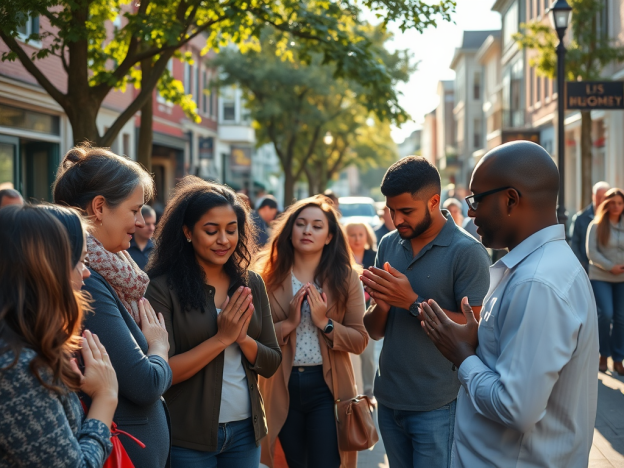
The church in Portsmouth

The church in Portsmouth, New Hampshire, was alive with the murmur of expectation. Julie stood at the pulpit, a simple cross behind her. She began, her voice calm and clear.

“This town is special,” she said. “Portsmouth has history, beauty, and community. But like every place, it has struggles too. Families are hurting. People are searching. And some feel forgotten.”

The congregation listened closely.

Julie continued, “Prayer can change a town. It can heal hearts and lives. But it has to be real prayer. Not just words. Prayer with faith. The kind of faith that says, ‘Lord, I believe You will.’”

She paused, looking out at the crowd. “What did the Lord say when people asked Him to heal? Did He ever say, ‘I won’t’? No. Every time, He said, ‘I will. Be thou clean.’ That same answer is for us today.”

Nods spread through the room. Julie smiled. “If we pray like that, we’ll see Portsmouth change. Not just in here, but out there. Let’s pray together now for this town.”

Heads bowed, and her voice filled the room. “Lord, please, if it be Your will, heal this town. Bring hope and life. Help us believe You still say, ‘I will.’ Amen.”

Preparing to Go

The next evening, Julie stood before a smaller group in the church. She held her Bible in one hand and gestured with the other.

“Tonight, we’re going to learn how to bring prayer to the streets. People need to see God’s love, not just hear about it.”

A man raised his hand. “What if someone doesn’t want prayer?”

Julie nodded. “That’s okay. Be kind. Offer to listen. Sometimes love is enough to open a door. But remember, you’re not alone. The Holy Spirit is with you.”

Another woman asked, “What if we don’t see healing?”

Julie smiled. “That’s not your job. Our job is to pray and believe. God does the rest. Remember, faith isn’t about seeing first. It’s about trusting Him.”

She held up her Bible. “We have Scripture to stand on. Jesus never said, ‘I won’t.’ He said, ‘I will.’ Go with that confidence.”

Stories of Healing

The following night, Julie addressed the same group. This time, she shared stories.

“A woman in Boston had been in pain for years,” she began. “She came to one of our meetings, desperate for relief. We prayed, and her pain left immediately. She was shocked, but she believed.”

The room was silent, hanging on her words.

“In another town, a young boy had trouble walking. His parents brought him forward. We prayed, and he started running around the church. His father cried, ‘It’s a miracle!’ It was.”

She looked at the group, her voice steady. “These stories aren’t just for faraway places. They’re for Portsmouth too. Let’s believe together.”

Taking It to the Streets

Saturday morning, the group gathered downtown. Julie led them through Market Square, where shops and cafés bustled with life.

“Split into pairs,” she instructed. “Look for people who might need prayer. Be respectful. Be kind.”

She and a local volunteer approached a man sitting on a bench. His face looked tired. Julie smiled warmly. “Hi, we’re from a local church. Can we pray for you?”

The man hesitated but nodded. “Sure. My back’s been hurting for weeks.”

Julie placed a gentle hand on his shoulder. “Lord, we ask for healing. In Your name, we speak life and health. Amen.”

The man stretched cautiously, then smiled. “It’s better. Thank you.”

Stories and Encouragement

That evening, the group gathered back at the church. Julie stood at the front, her face glowing with joy.

“One of the men I prayed for today told me his pain was gone,” she shared. “He said, ‘I didn’t think anyone cared.’ That’s why we do this—not just for healing but to show love.”

She invited anyone needing prayer to come forward. A woman in her forties approached, tears in her eyes. “My son is sick,” she said. “Please pray for him.”

Julie laid a hand on her arm. “Lord, we lift this child to You. We believe You will heal. Bring peace to this family. Amen.”

Others followed, each receiving her gentle faith-filled prayers. By the end, the church was filled with hope.

As the night closed, Julie reminded them, “The Lord never says, ‘I won’t.’ Let’s live like we believe His promise: ‘I will.’”

The Hidden History of Weipa: Secrets and Displacement

In 1895, Reverend John Hay set out to establish a mission along the junction of the Embley River and Spring Creek. It was an idea sparked by dreams of spreading faith and order in what seemed to him a wild land. He named the place Weipa, a word he had learned from the locals, which he thought meant “fighting ground.” Whether this translation was true or not, the name stuck, and so did Hay’s mission.

The early days were tough. The land was unforgiving, and the heat seemed relentless. But Hay pressed on, convinced that his purpose was divine. By 1911, the government passed laws that gave total control over the Indigenous people’s lives. The “Protector of Aborigines,” as the title went, held the authority to confine or expel anyone within the reserve. Families were torn apart. Children were forced under the guardianship of the state, their culture slowly eroded.

Years passed, and in 1932, malaria swept through the area, forcing the mission to move. They packed up and relocated to Jessica Point, about 28 kilometers away. The same mission, under a new sky. But the relocation didn’t make life any easier. By then, different groups had been forced into Weipa. Tensions brewed. Cultures mixed, and a slow simmer of conflict became inevitable.

The Discovery

In 1955, something happened that changed the course of Weipa forever. Henry Evans, a geologist with sharp eyes and sharper instincts, discovered something curious about the red cliffs that lined the reserve. The cliffs weren’t just earth and stone. They were rich with bauxite—the ore that produced aluminum. It was a discovery that sparked a frenzy, one that would ripple through the small town for decades.

The government quickly revoked the reserve status of the land. Mining companies like Comalco moved in, backed by legislation that handed over thousands of square kilometers of land. Mining started in 1960, and by 1965, it had reshaped the town. The old mission became known as Weipa South.

Yet, while some celebrated the new economy, many Indigenous residents were displaced, their homes lost to the mines. It was around this time that the local Presbyterian Church stepped away, handing the community over to the Queensland Government. It marked the end of one era and the start of another.

A Local Woman’s Secret

In the midst of this upheaval, a woman named Esther stood out. Born in the mission, she had witnessed the changes firsthand. Esther was known for her quiet strength. She didn’t speak much, but when she did, people listened. She had worked as a nurse during the worst of the malaria outbreak, saving lives when others had fled in fear. Her hands had held dying children, and her eyes had seen the suffering that came with both disease and displacement.

But Esther had a secret.

Years after the mines began to dominate the landscape, a rumor spread through the town. It was said that she had found something strange buried near the cliffs. Some whispered it was gold. Others thought it was something ancient, a relic left by the original inhabitants long before the mission was built.

One evening, Esther confided in her niece, Mara.

“There are things people don’t talk about,” she said. “Things they bury, hoping they’ll stay hidden.”

“What did you find, Auntie?” Mara asked.

Esther looked out toward the cliffs. “I found something that could change everything. Or maybe nothing at all.”

Mara pressed her. But Esther refused to reveal more. Instead, she left the next morning, heading toward the cliffs as she often did, walking slow but with purpose.

The Mystery Unfolds

The mystery of what Esther found near those cliffs lingered for years. Some believed she had hidden the gold and planned to use it to help the people displaced by the mining companies. Others thought she had discovered an artifact that could prove the land belonged to the Indigenous people, giving them a legal right to reclaim it.

In the end, neither story was true.

When Esther passed away, Mara, now an adult, found a small chest hidden in her aunt’s home. Inside was not gold or an artifact but letters. Letters from Reverend Hay, the founder of the mission. The letters revealed something shocking.

Hay had struck a secret deal with the early mining interests. In exchange for his cooperation and the mission’s continued funding, Hay agreed to allow the companies to exploit the land. The mission wasn’t just a place of faith—it had been part of the groundwork for the future mining operations that would uproot the community decades later.

Esther had discovered these letters during her work as a nurse, tucked away in the mission’s records. She had kept them hidden, not knowing what to do with them. If she revealed the truth, it could destroy the legacy of the mission and the people’s trust in their leaders.

In the final twist, Mara realized that Esther, the town’s quiet hero, had also been its villain. By hiding the truth, she had allowed the mining companies to push forward, knowing full well the cost it would have on her people.

The Truth Revealed

In the end, Mara chose to reveal the letters to the community. Some were shocked, others unsurprised. The town had always been a place of secrets. But now, at least, one of them had been brought to light.

And as the dust settled, the town of Weipa moved on, its history more complex than anyone had imagined.