Tag Archives: Fiction

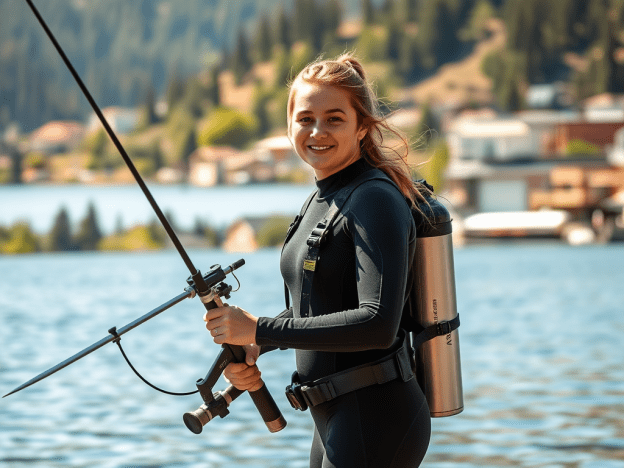
Discover Ellensburg: Kara’s Journey from Diving to Spear Fishing

Ellensburg sits in the heart of Central Washington. Its historic downtown is a lively hub. The streets hold stories of growth, change, and determination. Locals and visitors enjoy the galleries, restaurants, and boutiques. The town is also known for its stunning outdoor offerings. Fishing, hiking, and community events bring people together.

In 2023, a young woman named Kara Mitchell became part of the town’s history. Kara grew up in Ellensburg. She loved the natural beauty and vibrant community. Her family ran a small café downtown. They worked hard, supporting one another through challenges.

Kara was always drawn to water. Ellensburg had rivers and lakes nearby, but she wanted more. During a family trip to the coast, she saw scuba divers for the first time. She was fascinated. “I want to try that,” she told her father.

“Then try it,” he replied simply. “Fear does nothing but stop you.”

She enrolled in a scuba diving class. The commute to the training site was long, but she didn’t mind. Each lesson brought new skills. She learned about equipment, safety, and marine life. By the end of the course, she could dive confidently. The underwater world amazed her. It was silent, vast, and full of movement.

Back in Ellensburg, Kara shared her experience with friends. “You should try spear fishing,” one suggested. “It’s diving, but with purpose.”

Kara researched spear fishing. It required precision and patience. She decided to give it a try. Her first attempt was challenging. She missed her targets and felt frustrated. “You’re learning,” her instructor said. “No one starts as an expert.”

Her determination grew. She practiced weekly, balancing her time between diving and working at the family café. Her parents noticed her dedication. “She’s found something she loves,” her mother said.

One afternoon, Kara met a group of local divers. They invited her to join their training sessions. Among them was Mia, a spear fishing champion. Mia saw potential in Kara. “You’re focused,” Mia said. “That’s half the battle.”

Kara improved quickly under Mia’s guidance. She started catching fish on her dives. The activity required strength and strategy. It wasn’t just about catching fish; it was about respect for the ecosystem. Kara admired this balance.

Meanwhile, Ellensburg buzzed with its usual charm. Jazz in the Valley filled the streets with music. Hikers explored the nearby trails. Kara’s story became part of local chatter. “She’s doing something different,” people said.

Kara faced a choice. Scuba diving had opened a new world to her. Spear fishing challenged her in unexpected ways. Could she commit to one?

She talked with Mia. “You don’t have to choose right now,” Mia said. “Explore both until you know.”

Kara followed this advice. She split her time between diving and spear fishing. Each day taught her something new. By autumn, she had mastered advanced techniques in both. The divers’ group noticed her growth. “You should coach,” Mia suggested. “You’re ready to teach others.”

The idea excited Kara. She could combine her passions and help others. Her parents encouraged her. “You’ve worked hard,” her father said. “Share what you’ve learned.”

Kara designed a program. She taught basic diving and spear fishing skills. The sessions were small but impactful. She enjoyed seeing her students’ progress. “This is why I do it,” she said. Her program gained popularity. People came from nearby towns to learn.

As winter approached, Kara’s routine became steady. Then, a surprise opportunity came. During a dive, she found an unusual artifact on the ocean floor. It was a piece of old equipment, likely from a historic shipwreck. The discovery stirred excitement. Local historians wanted to investigate.

“You’ve started something bigger,” Mia said. “This could be your next adventure.”

Kara agreed. She decided to study marine archaeology. Her journey was just beginning.

Renewable Energy: Burnie’s Path to Revival

Burnie, a coastal town in Tasmania, began as a small settlement in the mid-19th century. It was known for its rich natural resources and timber. Early settlers saw potential in the land, especially with its port and access to the sea. Over the years, the town grew. By the early 20th century, it had developed into a thriving industrial hub. Factories and mills were built. The most significant was a pulp and paper mill, which became the heart of Burnie’s economy. It provided jobs for hundreds, if not thousands.

For decades, the mill shaped life in Burnie. It defined the rhythm of the town. Families depended on the work. The smell of the mill filled the air, a constant reminder of its presence. Through the 1960s and 70s, Burnie grew, and its port bustled with activity. Ships carried goods to and from the mainland. Industry was booming, and people were hopeful.

However, with prosperity came problems. The factories produced pollution, which began to affect the environment and people’s health. By the late 1970s, residents were voicing concerns. “The air doesn’t feel right,” one would say to another. But the economy depended on the mills. It wasn’t an easy situation.

In the 1980s, Burnie faced its first real crisis. The global economy changed, and demand for paper products declined. The town’s once-thriving industry began to falter. Factories started closing. Unemployment rose. By the 1990s, the iconic pulp and paper mill, which had been the lifeblood of the town, was shut down. Families moved away. Houses sat empty. Burnie seemed on the verge of collapse.

But the town wasn’t finished yet. In the early 2000s, there was talk of something new: renewable energy. Investors saw potential in the windy hills and sunny fields around Burnie. A project was proposed: the North West Renewable Energy Zone (REZ). It was an ambitious plan. Solar farms and wind turbines would be built. The Marinus Link, a power cable, would connect Tasmania’s energy supply to mainland Australia. It promised jobs, growth, and a chance for Burnie to reinvent itself.

Amid this, there was a local woman named Alison. Born and raised in Burnie, she was tough and practical. Everyone knew her. She worked at the mill for years before it closed. When the factory shut down, she didn’t leave like many others. She stayed, finding odd jobs, and helping where she could. She loved the town too much to abandon it.

One day, Alison had an idea. While others talked about big projects and investors, she thought about the people. “We need to get the youth involved,” she said to her friend, Margie. “They’re the future of this town.”

Margie smiled. “You always have big ideas, Alison.”

But Alison wasn’t joking. She wanted to start a training center, to teach the next generation about renewable energy. “They need skills,” she said. “We can’t rely on the old industries anymore.”

Her idea spread quickly. The town loved it at first. Local officials invited her to meetings. She spoke passionately about the need to prepare for a new era. She said, “Burnie’s not dead. It’s changing. We need to change with it.” People applauded. They admired her drive. She was becoming a local hero.

However, as with any new idea, resistance soon followed. Not everyone was on board. Some residents were afraid of change. They didn’t trust the new technologies, and they missed the old ways. Slowly, the whispers started. “She’s pushing too fast,” they said. “Why can’t she just leave things alone?”

Alison felt the shift. Friends stopped calling. People who once praised her now turned away in the streets. At the grocery store, she overheard someone say, “She thinks she can save the town, but she’s just causing trouble.” It hurt, but Alison pressed on. She kept working on her training program, even as her support dwindled. A few young people joined her, eager to learn. Quietly, they studied solar panels, wind turbines, and new technologies.

As time passed, Alison became more isolated. The town meetings continued without her, and she wasn’t invited anymore. “I don’t get it,” she said to her sister one night. “I just want to help.”

“Change scares people,” her sister replied.

Then, during a town festival celebrating Burnie’s history, something unexpected happened. The mayor took the stage to speak. He talked about the town’s past, its challenges, and its future. Then he paused and said, “There’s someone we need to thank today.” The crowd looked around, confused.

He continued, “Alison has been working behind the scenes, training our youth for a brighter future. Without her, Burnie wouldn’t be where it is today.” The crowd started clapping. Then it turned into cheers. Alison, standing at the back, was stunned.

“Alison, come up here!” the mayor called.

She hesitated but slowly made her way to the stage. As she stood there, looking at the crowd, she saw familiar faces smiling at her again. People who had turned away were now clapping. Tears filled her eyes.

The mayor smiled. “You believed in this town when others didn’t. Thank you.”

The crowd erupted into applause, louder than before. Alison looked out at her community, no longer an outcast. For the first time in years, she felt accepted again. And she knew Burnie was ready for its future.

Faith and Discovery: Hamilton’s Early Settlers

Hamilton was settled by the 4th Waikato Regiment Militia in 1864. Captain William Steele led them. They arrived on the Rangiriri, a small steamboat, on 24 August. As the boat came up the river, the local people stood on the banks, watching quietly. Among the passengers was Teresa Vowless. She held her baby in her arms but passed the child to another woman as they neared the shore. Without a word, she leapt into the river. Teresa wanted to be the first settler to set foot on this new land. Some said it was her faith in God that drove her. She believed she had been led there for a reason.

The land, however, was far from what the settlers expected. Much of it was swamp. They had been promised fertile ground, but many struggled to farm. By 1868, most of the settlers had given up and left. Hamilton’s population dropped from 1,000 to 300. Those who stayed had to rely on faith that somehow, their future would improve. In 1875, hope came in the form of a brickworks that opened in town, offering jobs and a sense that Hamilton could grow. But for many, faith was the only thing keeping them going.


In 1882, Eliza Beckett came to Hamilton. She was a widow with three children, and her life had been hard. After her husband died in an accident, she had little to her name. A distant cousin had told her about Hamilton. “Go there,” they said. “They need workers, and you’ll find a fresh start.” Eliza believed it was God who had guided her path. She had been praying for a way forward.

At first, she found work at the new brickworks, hauling clay. It was back-breaking labor, but she was thankful for the work. “God provides,” she often said, though the men around her didn’t understand why a woman would speak of faith while working in such rough conditions. Eliza saved her wages, trusting that one day, she would leave Hamilton for a better life.

One day, while working, Eliza overheard a conversation between two men. One was Thomas White, a local landowner, and the other was a man she didn’t recognize. He was quiet and spoke with conviction. They were standing by the kiln, talking in low voices. “The land’s no good,” Thomas muttered. “I don’t care what the others say—it’s cursed.”

Eliza listened, intrigued. The quiet man responded calmly. “It’s not the land, Thomas. It’s what lies beneath it. There’s something here—something God has hidden for a reason.”

Eliza pondered his words. That evening, as she prayed with her children before bed, she thought about what she had overheard. She believed that if God had hidden something, it would only be revealed when the time was right.


Days passed, and soon there was talk of a strange discovery. A local worker had uncovered something unusual while digging near the swamp. Eliza couldn’t get the details, but people whispered about it in town. Some said it was an ancient relic. Others spoke of bones. No one seemed to know for sure.

Eliza’s curiosity grew. She believed this might be connected to the conversation she had overheard. One afternoon, as she left the brickworks, she saw Thomas White again. He was standing with a group of men outside the general store. “We should’ve left it alone,” he was saying. “We’ve disturbed something that was meant to stay buried.”

Eliza approached. “What did you find, Mr. White?”

He looked at her, hesitant. “Best not ask, Mrs. Beckett. It’s not for us to know.”

Eliza didn’t push, but later that night, she prayed. She asked for guidance, for God to show her what this discovery meant. The next day, she walked out to the edge of town, to the place where the land was boggy and still. She found the spot where the men had been digging. The ground was freshly disturbed, and Eliza, believing this was God’s way of answering her prayers, began to search.

She found something half-buried in the mud. It was small, heavy, and wrapped in cloth. As she unwrapped it, a strange feeling came over her. She wasn’t sure what it was, but it felt important—holy, even. She believed it was a sign.


A week later, two men came to her door. One was Thomas White. The other was the quiet man from before, his eyes filled with a certain intensity.

“Mrs. Beckett,” Thomas said, “we need to talk.”

Eliza stepped outside, her Bible clutched in one hand. “What about?”

Thomas sighed. “You took something from the ground. We need it back.”

Eliza’s heart raced. “I don’t know what you mean.”

The quiet man stepped forward. “There are two ways to look at this,” he said calmly. “Some believe it’s a blessing, something sacred. Others say it’s dangerous, meant to stay hidden. Which do you believe?”

Eliza stood firm. “I believe God has a plan. If He wanted it hidden, He wouldn’t have let me find it.”

The man nodded. “Perhaps. But not all things revealed are meant for us.”

Eliza prayed that night, holding the strange object close. She asked for wisdom, for a sign that she was doing the right thing. The next day, she returned to the place where she had found the object. There, she felt a stirring in her spirit, something telling her to let go. She knew it was time to return what she had taken.

She found Thomas White in town the following morning. “You were right,” she told him. “It wasn’t meant for me.”


In the end, Eliza understood that what she had found wasn’t a treasure or a curse. It was a test of faith. She had believed God had given it to her, but in truth, He was asking her to trust Him enough to let it go. She had always been faithful, but now, she saw that true faith wasn’t about holding on—it was about surrender.

Hamilton went on, with its struggles and its growth. And Eliza Beckett remained a woman of faith, known for her quiet strength and wisdom. In the end, the object was never spoken of again, but those who knew the story understood its lesson. It was not what was found in the ground that mattered, but what was found in the heart.