
Tag Archives: Travel

Her Journey: From Port Townsend to Personal Growth

Port Townsend, one of the United States’ three historic Victorian seaports, sits on the northeastern tip of the Olympic Peninsula. Known for its preserved 19th-century architecture, it’s a place where maritime history meets a thriving modern community. The town’s landmarks, including its ornate Victorian mansions and century-old buildings downtown, tell the story of an industrious past. In this setting, a young woman named Kate Morrison embarked on a life-changing year.

The Beginning

Kate was born in Port Townsend, her family deeply rooted in the community. Her father ran a hardware store downtown, and her mother worked in one of the bustling art galleries. Kate had always been skilled with a bow. She had practiced archery since she was twelve, often setting up targets in the shadow of the grand Bell Tower in the uptown district.

At nineteen, Kate entered a regional archery contest held during the town’s annual Victorian Festival. She competed against seasoned participants and, to everyone’s surprise, won. The prize was an invitation to compete in an international tournament in Denver.

“Port Townsend raised you well,” her father said, shaking her hand. “Make us proud out there.”

The Move to Denver

Kate traveled to Denver with excitement. The competition was larger than she imagined. For weeks, she trained intensely. She reached the finals but lost to a seasoned archer from Germany. Though disappointed, she recognized something within herself: a growing weariness with the competitive environment.

One evening, sitting alone in her hotel room, she called her cousin Olivia, who lived in Seattle.

“I’m not sure this is for me anymore,” Kate said.

“Then don’t force it,” Olivia replied. “Come to Seattle. You can stay with us. Figure out your next step.”

Kate took the advice.

The New Path

In Seattle, Kate lived with Olivia and her family in a modest home near Green Lake. During her first week there, she attended a free seminar at a local recreation center on athletic coaching. The speaker, Coach Victor Tanaka, was a retired Olympian who had turned his energy toward mentoring young athletes.

Victor noticed Kate during the seminar and approached her afterward.

“You have the focus of an archer,” he said.

“I used to compete,” she replied.

“Why stop?”

“I lost interest,” she admitted.

Victor nodded. “It happens. But skill like that shouldn’t be wasted. If you’re willing, I can help you figure out what to do with it.”

Kate agreed to work with him. Victor had three motivational keys he emphasized repeatedly: discipline, clarity, and adaptability.

“Discipline gets you moving,” he explained during one session. “Clarity keeps you on track. Adaptability ensures you don’t quit when plans change.”

Kate spent the next three months training under Victor, but this time it wasn’t just about archery. Victor pushed her to think about how her skills could be used in broader ways.

Family Divides

Kate’s decision to stay in Seattle sparked differing opinions within her family. Her father felt she should return to Port Townsend and take over the family hardware business.

“We built something solid here,” he told her during a visit. “You don’t have to wander to find purpose.”

Her mother was more supportive. “Let her find her way,” she said. “We can’t decide her future.”

The tension grew when Kate revealed she wasn’t planning to return at all.

“I’m starting something new,” Kate told them.

Her father shook his head. “You’re throwing away stability for a dream.”

The Plot Twist

In late autumn, Kate and Victor were featured in a local news story about unconventional coaching methods. A week later, Kate received an email from the German archer who had defeated her in Denver.

“Kate,” the email began, “I saw the article. Your story inspired me. I’ve been struggling with my own path and would like to discuss a collaboration.”

The email shocked Kate. The woman who had been her competitor now wanted to work with her. They arranged a meeting in Seattle, where Kate discovered the archer, Lena, had also grown tired of traditional competition.

“We should create a program,” Lena suggested, “something that focuses on archery as a tool for personal growth, not just competition.”

The New Project

By winter, Kate and Lena launched a pilot program called “Aim Forward,” using archery to teach discipline, focus, and confidence. They partnered with local schools and community centers, offering workshops for young people.

Kate’s family visited the first event, held in a Seattle park. Her father, initially skeptical, watched as children learned to draw their bows under Kate’s guidance.

“You’ve found your way,” he said afterward.

By the year’s end, Kate was fully immersed in her new project. She and Lena planned to expand “Aim Forward” to other cities, including Port Townsend.

The town that had shaped her would now benefit from her work in a new way.
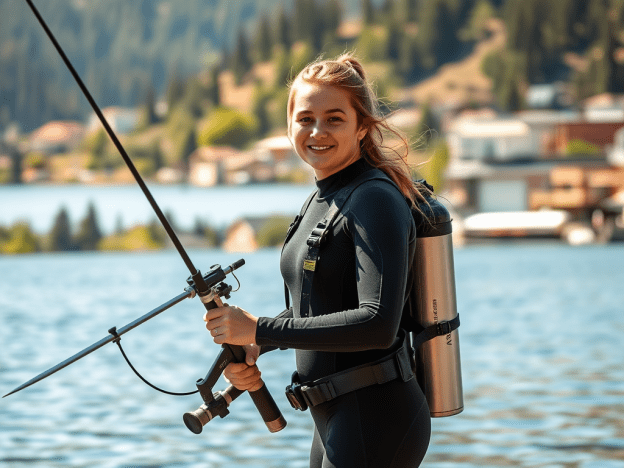
Discover Ellensburg: Kara’s Journey from Diving to Spear Fishing

Ellensburg sits in the heart of Central Washington. Its historic downtown is a lively hub. The streets hold stories of growth, change, and determination. Locals and visitors enjoy the galleries, restaurants, and boutiques. The town is also known for its stunning outdoor offerings. Fishing, hiking, and community events bring people together.

In 2023, a young woman named Kara Mitchell became part of the town’s history. Kara grew up in Ellensburg. She loved the natural beauty and vibrant community. Her family ran a small café downtown. They worked hard, supporting one another through challenges.

Kara was always drawn to water. Ellensburg had rivers and lakes nearby, but she wanted more. During a family trip to the coast, she saw scuba divers for the first time. She was fascinated. “I want to try that,” she told her father.

“Then try it,” he replied simply. “Fear does nothing but stop you.”

She enrolled in a scuba diving class. The commute to the training site was long, but she didn’t mind. Each lesson brought new skills. She learned about equipment, safety, and marine life. By the end of the course, she could dive confidently. The underwater world amazed her. It was silent, vast, and full of movement.

Back in Ellensburg, Kara shared her experience with friends. “You should try spear fishing,” one suggested. “It’s diving, but with purpose.”

Kara researched spear fishing. It required precision and patience. She decided to give it a try. Her first attempt was challenging. She missed her targets and felt frustrated. “You’re learning,” her instructor said. “No one starts as an expert.”

Her determination grew. She practiced weekly, balancing her time between diving and working at the family café. Her parents noticed her dedication. “She’s found something she loves,” her mother said.

One afternoon, Kara met a group of local divers. They invited her to join their training sessions. Among them was Mia, a spear fishing champion. Mia saw potential in Kara. “You’re focused,” Mia said. “That’s half the battle.”

Kara improved quickly under Mia’s guidance. She started catching fish on her dives. The activity required strength and strategy. It wasn’t just about catching fish; it was about respect for the ecosystem. Kara admired this balance.

Meanwhile, Ellensburg buzzed with its usual charm. Jazz in the Valley filled the streets with music. Hikers explored the nearby trails. Kara’s story became part of local chatter. “She’s doing something different,” people said.

Kara faced a choice. Scuba diving had opened a new world to her. Spear fishing challenged her in unexpected ways. Could she commit to one?

She talked with Mia. “You don’t have to choose right now,” Mia said. “Explore both until you know.”

Kara followed this advice. She split her time between diving and spear fishing. Each day taught her something new. By autumn, she had mastered advanced techniques in both. The divers’ group noticed her growth. “You should coach,” Mia suggested. “You’re ready to teach others.”

The idea excited Kara. She could combine her passions and help others. Her parents encouraged her. “You’ve worked hard,” her father said. “Share what you’ve learned.”

Kara designed a program. She taught basic diving and spear fishing skills. The sessions were small but impactful. She enjoyed seeing her students’ progress. “This is why I do it,” she said. Her program gained popularity. People came from nearby towns to learn.

As winter approached, Kara’s routine became steady. Then, a surprise opportunity came. During a dive, she found an unusual artifact on the ocean floor. It was a piece of old equipment, likely from a historic shipwreck. The discovery stirred excitement. Local historians wanted to investigate.

“You’ve started something bigger,” Mia said. “This could be your next adventure.”

Kara agreed. She decided to study marine archaeology. Her journey was just beginning.

Young Painter Goes to New York

Tacoma, Washington, has always been a place where the improbable meets the inevitable. Nestled by the Salish Sea, it grew from a scrappy railroad terminus into a city with a story as gritty as its industrial nickname, “Grit City.”

The town’s fortunes took off in 1873 when it became the western terminus of the Northern Pacific Railway. “Where the rails met the sails,” they said. Over the next century, Tacoma’s skyline filled with smoke stacks and its air with the pungent “Aroma of Tacoma.” But its residents were proud. They built ships, brewed beer, and whispered to each other in their homes, “Someday, this town will shine.”

In 2024, Tacoma had cleaned up nicely. The old slag heap was now Dune Peninsula, named after Frank Herbert, the local boy turned sci-fi legend. Tourists marveled at the Chihuly Bridge of Glass and the Museum of Glass with its iconic cone. They sat on patios, soaking in mountain views, sipping locally brewed beer, and thinking, “This might be better than Seattle.”

Amidst all this transformation, there lived a young painter named Ella Maynard. Ella was twenty-three, with a mop of unruly curls and an eye for the peculiar. She spent her days painting in a small studio near Point Defiance Park, inspired by the old-growth forests and the shimmering Salish Sea. “You paint what you see,” her grandmother used to tell her. Ella saw colors where others saw gray.

One foggy morning, Ella took one of her paintings to a local coffee shop. It was a depiction of the Dune Peninsula at sunrise, with Mount Rainier looming in the background. The piece had a strange glow—the slag heap turned golden, the mountain almost surreal. “Art’s supposed to tell the truth,” Ella said when someone asked about it. “That’s the truth I see.”

A woman sitting nearby overheard. She introduced herself as Nancy Bell, a gallery owner from New York. “I’ve never seen anything like it,” Nancy said. “I’ll take it for $3,000.” Ella blinked, then nodded. “Sold,” she said. Her voice cracked.

Within a week, Ella was on a plane to New York City. Nancy showcased her work in a trendy SoHo gallery, and within days, all her paintings sold. Critics called her “the Pacific Northwest’s new voice” and “a visionary of light and landscape.” Ella spent her days in galleries, her nights in cramped apartments, and her mornings wishing for Tacoma’s quiet.

She began dreaming about her family. In the dreams, her mother’s hands were covered in paint. Her father was singing old railroad songs. Her brother’s laughter echoed like wind through the trees. When Ella woke, she felt hollow. After three weeks in New York, she bought a one-way ticket back home.

“You’re leaving already?” Nancy asked when Ella told her. “I don’t belong here,” Ella said. “I belong where the air smells like salt and pine.”

Back in Tacoma, her family’s reaction was mixed. Her mother hugged her and said, “You followed your heart.” Her brother teased her: “Couldn’t handle the big city, huh?” Her father, ever the pragmatist, said, “Well, you’re here now. Let’s make the best of it.”

Ella rented a bigger studio and got to work. Her time in New York had sharpened her skills and her resolve. She painted Tacoma as she saw it: gritty, glowing, alive. One evening, her brother burst into her studio. “You won’t believe this,” he said, holding up his phone. “Your gallery’s trending on TikTok. Some influencer called your work ‘raw Pacific Northwest magic.’ People are losing it.”

Within days, orders poured in. But Ella wasn’t interested in fame anymore. “Art is for people, not for hype,” she said. She hosted a show in Tacoma, offering her paintings for free. “Pay what you can,” she told visitors. Her family was skeptical. “You could make a fortune,” her father said. Ella smiled. “I’ve made enough.”

The event was a wild success. People lined up for hours. Children stared wide-eyed at her glowing landscapes. One man offered her a loaf of homemade bread in exchange for a small painting. Ella accepted.

On the last day of the show, a man in a suit approached her. “Ella Maynard?” he asked. She nodded. “I’m with the Tacoma Art Museum. We’d like to acquire your collection.” Ella’s eyes widened. “All of it?” she asked. “All of it,” the man said. “Your work belongs here, in Tacoma.”

Ella agreed, on one condition. “The museum must always have free admission,” she said. The man hesitated but then nodded. “Deal,” he said.

Months later, Ella walked into the museum to see her paintings hanging in a room named after her. A small boy stared at her depiction of Dune Peninsula. “It’s glowing,” he said. Ella crouched beside him. “That’s the truth I see,” she said.

As she left, she passed her father in the lobby. He was shaking hands with the museum director, holding a check. “What’s that for?” Ella asked.

Her father grinned. “They’re paying for the bread,” he said. Ella laughed so hard, she almost cried.