Monthly Archives: October 2024

Renewable Energy: Burnie’s Path to Revival

Burnie, a coastal town in Tasmania, began as a small settlement in the mid-19th century. It was known for its rich natural resources and timber. Early settlers saw potential in the land, especially with its port and access to the sea. Over the years, the town grew. By the early 20th century, it had developed into a thriving industrial hub. Factories and mills were built. The most significant was a pulp and paper mill, which became the heart of Burnie’s economy. It provided jobs for hundreds, if not thousands.

For decades, the mill shaped life in Burnie. It defined the rhythm of the town. Families depended on the work. The smell of the mill filled the air, a constant reminder of its presence. Through the 1960s and 70s, Burnie grew, and its port bustled with activity. Ships carried goods to and from the mainland. Industry was booming, and people were hopeful.

However, with prosperity came problems. The factories produced pollution, which began to affect the environment and people’s health. By the late 1970s, residents were voicing concerns. “The air doesn’t feel right,” one would say to another. But the economy depended on the mills. It wasn’t an easy situation.

In the 1980s, Burnie faced its first real crisis. The global economy changed, and demand for paper products declined. The town’s once-thriving industry began to falter. Factories started closing. Unemployment rose. By the 1990s, the iconic pulp and paper mill, which had been the lifeblood of the town, was shut down. Families moved away. Houses sat empty. Burnie seemed on the verge of collapse.

But the town wasn’t finished yet. In the early 2000s, there was talk of something new: renewable energy. Investors saw potential in the windy hills and sunny fields around Burnie. A project was proposed: the North West Renewable Energy Zone (REZ). It was an ambitious plan. Solar farms and wind turbines would be built. The Marinus Link, a power cable, would connect Tasmania’s energy supply to mainland Australia. It promised jobs, growth, and a chance for Burnie to reinvent itself.

Amid this, there was a local woman named Alison. Born and raised in Burnie, she was tough and practical. Everyone knew her. She worked at the mill for years before it closed. When the factory shut down, she didn’t leave like many others. She stayed, finding odd jobs, and helping where she could. She loved the town too much to abandon it.

One day, Alison had an idea. While others talked about big projects and investors, she thought about the people. “We need to get the youth involved,” she said to her friend, Margie. “They’re the future of this town.”

Margie smiled. “You always have big ideas, Alison.”

But Alison wasn’t joking. She wanted to start a training center, to teach the next generation about renewable energy. “They need skills,” she said. “We can’t rely on the old industries anymore.”

Her idea spread quickly. The town loved it at first. Local officials invited her to meetings. She spoke passionately about the need to prepare for a new era. She said, “Burnie’s not dead. It’s changing. We need to change with it.” People applauded. They admired her drive. She was becoming a local hero.

However, as with any new idea, resistance soon followed. Not everyone was on board. Some residents were afraid of change. They didn’t trust the new technologies, and they missed the old ways. Slowly, the whispers started. “She’s pushing too fast,” they said. “Why can’t she just leave things alone?”

Alison felt the shift. Friends stopped calling. People who once praised her now turned away in the streets. At the grocery store, she overheard someone say, “She thinks she can save the town, but she’s just causing trouble.” It hurt, but Alison pressed on. She kept working on her training program, even as her support dwindled. A few young people joined her, eager to learn. Quietly, they studied solar panels, wind turbines, and new technologies.

As time passed, Alison became more isolated. The town meetings continued without her, and she wasn’t invited anymore. “I don’t get it,” she said to her sister one night. “I just want to help.”

“Change scares people,” her sister replied.

Then, during a town festival celebrating Burnie’s history, something unexpected happened. The mayor took the stage to speak. He talked about the town’s past, its challenges, and its future. Then he paused and said, “There’s someone we need to thank today.” The crowd looked around, confused.

He continued, “Alison has been working behind the scenes, training our youth for a brighter future. Without her, Burnie wouldn’t be where it is today.” The crowd started clapping. Then it turned into cheers. Alison, standing at the back, was stunned.

“Alison, come up here!” the mayor called.

She hesitated but slowly made her way to the stage. As she stood there, looking at the crowd, she saw familiar faces smiling at her again. People who had turned away were now clapping. Tears filled her eyes.

The mayor smiled. “You believed in this town when others didn’t. Thank you.”

The crowd erupted into applause, louder than before. Alison looked out at her community, no longer an outcast. For the first time in years, she felt accepted again. And she knew Burnie was ready for its future.
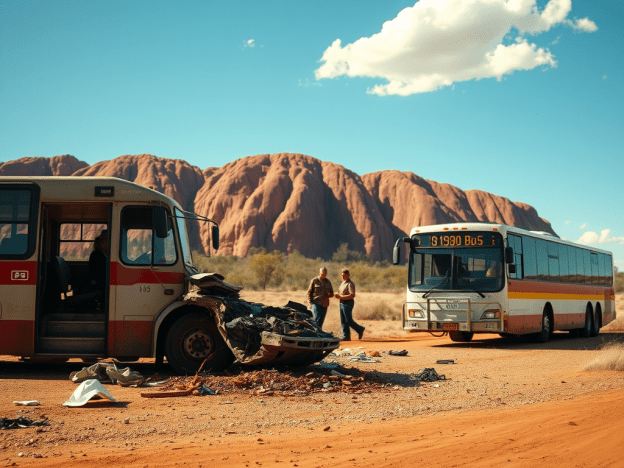
American Family in Alice Springs

Alice Springs, in the Northern Territory began as a small, isolated town.
Its people were hardy folk, used to the heat and the dry air. In 1954, Americans arrived. Not as tourists, but as residents.
Their base was set up outside of town as part of a joint American-Australian agreement. This brought American families into the heart of the desert, and slowly, Alice Springs began to change.

New customs arrived with them. Thanksgiving dinners became as familiar as Australian meat pies. Baseball games replaced cricket on weekends.
The children of Alice Springs grew up playing both sports, celebrating both the 4th of July and Australia Day.

By the 1970s, Alice Springs had transformed.
Pine Gap, the satellite tracking station southwest of town, brought in more Americans and jobs.
The town expanded. It was no longer just a remote outpost in the desert.
It had become an international community where Australian and American families lived side by side.

One American family lost their son in a crash with a bus.
The son and his friends were bored, so they decided to drive to Ayers Rock.
A tourist bus was coming in the opposite direction.
The bus driver took a corner too wide and hit the car.

The Grief of a Family

Judy sat at the kitchen table, staring at a photograph.
It had been two years since the crash. Her son, Adam, had been full of life.
Eighteen, with the world at his feet.
He had plans, dreams, things he wanted to do.
But all of that ended one rainy afternoon.
The bus had come around the corner too fast. It skidded, losing control, and smashed into Adam’s car.

The bus driver was at fault. The investigation said as much, but nothing happened.
He still walked the streets of Alice Springs.
Judy saw him at the market, at the post office.
Free, while her son was gone.

Her husband, Henry, couldn’t bear to look at the man.
Every time he saw him, rage bubbled up inside him, threatening to explode.
He’d grip Judy’s hand, tighter than he needed to, but she never said anything.
She understood.

One afternoon, they were sitting at the café.
Judy saw the bus driver again, walking down the street, laughing with a friend.
She watched Henry’s face harden. His fists clenched.

“He should be in jail,” Henry muttered.

Judy didn’t answer right away. She sipped her tea, looking out over the town square. “What would it change?”

“He’s walking free while our son is in the ground.” Henry’s voice was low, filled with pain.

“I know.” Judy placed her hand on his. “But anger won’t bring Adam back.”

Henry looked away, his jaw tight. “Then what will?”

There was no answer to that. Not one that made sense.
They had been asking themselves that question for two years. And in all that time, nothing had filled the emptiness that Adam left behind.

Weeks passed, and the town grew restless. People whispered about the tension between Henry and the bus driver. There were looks exchanged, and rumors spread. Some said Henry would confront the man. Others feared worse.

Judy sat down with Henry one evening. They were in their living room, the lights dim, the house quiet. She looked at him, really looked at him, and saw the weight he carried.

“I can’t live like this anymore,” she said softly. “It’s tearing you apart. It’s tearing us apart.”

Henry didn’t respond. He stared at the floor, his shoulders hunched.

“I’ve been thinking,” Judy continued. “We need to make peace.
Not for him,” she added quickly, “but for us.”
Henry scoffed. “Peace? How?
He’s still out there. Every time I see him, I want to kill him”

“I know,” Judy interrupted. “But we can’t keep living in anger. It’s killing us.
We need to move forward.”

Henry shook his head. “I can’t forgive him.”

“I’m not asking you to.” Judy’s voice was calm, steady.
“But we need to find a way to let go. For Adam’s sake.”

That struck a chord. Henry sat back, his eyes glistening.
“For Adam,” he repeated, his voice barely a whisper.

Judy reached out and took his hand. “I’ll make you a bargain,” she said.
“We’ll try. We’ll do it together. But if it’s too much, we’ll walk away.
No shame. But we have to try.”

Henry nodded, though reluctantly. “Alright,” he said after a long pause. “For Adam.”

Months later, Judy was in the town square when she saw the bus driver again.
But this time, he wasn’t laughing. He was handing out fliers, speaking quietly to a small group of people.

Curious, she approached.
The flier in his hand read: “A Memorial Fund for Adam”.
The bus driver caught her eye, and for the first time, his expression wasn’t one of indifference. It was sorrow.

“I did the wrong thing,” he said quietly.
“But maybe I can do the right thing and help others.”

Judy stood there, surprised, not knowing what to say.
The anger she had held onto for so long suddenly seemed lighter.
Maybe, just maybe, there was a way forward after all.

Republican Party and Democratic Party Compromise.

Crescent River was founded in 1720 by French settlers, who were soon followed by Spanish missionaries. The town sat at a bend in a wide, shimmering river, giving it the name Crescent River. Native American religions, and Christianity mixed in unexpected ways. Rituals would blend Catholic hymns with the rhythmic drums of the faiths. Spanish priests walked through the streets, while local people continued their traditional practices under the moonlight.

By 1800, Crescent River had grown into a bustling trade port. French, Spanish, and British settlers fought over control, each leaving a mark on the town’s culture. The town became a melting pot of languages, beliefs, and traditions. A small Catholic church stood in the town square, next to a Protestant meeting house. On weekends, the streets filled with both worshippers and street vendors, all moving in harmony. Christianity dominated the religious landscape, but echoes of older faiths still lingered in whispers.

In the early 1900s, Crescent River was a thriving place, known for its riverboats and agriculture. Farms grew along the fertile riverbanks, bringing wealth to a few, while many toiled in the fields. The town saw many shifts in its leadership as the United States grew. Other Christian denominations, like Southern Baptists and Methodists, were also present, but they stayed small in the shadow of the town’s Catholic roots.

As the 20th century continued, Crescent River became a center for political debate.
It was a place where community and personal beliefs often collided.

The Political Dispute

By 2020, Crescent River was still a quiet town, but one couple caused quite a stir: Emily and John Delacroix. They lived in a modest house on the riverbank, and though they were well-liked, their recent political decisions worried everyone.

Emily had begun to promote the Republican Party. She passed out flyers, attended rallies, and even organized small gatherings at the town hall. John, her husband of 25 years, was a lifelong Democrat. He would attend local Democratic meetings and hang campaign posters on their front porch. Soon, their house had become a battlefield of political banners.

The townspeople didn’t know what to make of it.

“John, you’ve gone and done it again,” Emily teased one morning. She was pouring coffee at their kitchen table, pointing to a new Democratic sign on the lawn.

“Well, Em, I had to. Can’t have the neighbors thinking we’ve lost our senses,” John said with a grin.

Emily laughed. “I think they’re more worried about us, not our signs.”

The political tension between them amused the couple. Yet, it began to make others nervous. Neighbors whispered at church.

“What will happen if Emily and John really start fighting? It could divide the town,” one woman murmured in the pews.

Despite the townspeople’s fears, the couple carried on as usual. They laughed at each other’s debates and even helped one another prepare speeches. Emily handed John notes before his Democratic club meetings, and John gave Emily pointers on her public speaking at Republican events.

But one evening, after a particularly heated election season, Emily brought up something that had been bothering her.

“John, we need to talk,” she said as they sat on their porch.

“About what, Em?” John asked, leaning back in his chair.

“This. Us. The politics. We’re pulling people apart,” Emily said quietly.

John smiled, a bit sad now. “I’ve been thinking the same.”

They sat in silence for a moment, listening to the river’s quiet flow.

“We need a deal,” Emily finally said. “How about… we make a bargain. No more public campaigning. We can have our beliefs, but we won’t pull the town into it.”

John nodded. “Agreed. But… what’s the catch?”

Emily grinned. “Well, I want one thing in return.”

“What’s that?”

“You help me set up a charity for the community. Something we both agree on. We’ll still be involved, but in a way that unites, not divides.”

John laughed, his mood lightening. “That’s a fine idea, Em. But I have a condition too.”

Emily raised an eyebrow. “Oh? What’s that?”

“You have to admit, just once… that the Democrats have better coffee at their meetings.”

Emily laughed out loud. “You wish!”

They both chuckled, but Emily winked. “Fine. Once. But only after you admit the Republicans make better pies.”

John smirked. “Deal.”

The Surprise

The next morning, the town buzzed with news. The Delacroix house no longer had any political signs. Instead, a large banner hung across their porch: “Crescent River Charity – Bringing Us Together.”

As Emily and John worked on their new project, the townspeople breathed a sigh of relief. They had feared the worst, but instead, they got something far better—a community united.

And when the charity opened its doors, John and Emily were behind the counter, side by side, serving pie and coffee. The real surprise? Both tasted equally delicious.