
Healing Grief and Debt: A Community’s Support

Boulder was founded in 1858. A group of prospectors, led by Thomas Aikins, arrived during the Colorado Gold Rush. They found themselves at the mouth of Boulder Canyon. It was late in the year, and winter came quickly. The leader of the local Arapaho, Niwot, welcomed them. He allowed the settlers to stay through the cold months. But the peace was fragile.

The settlers did not respect Niwot’s generosity. Some of them later took part in the Sand Creek massacre, attacking the very people who had shown them kindness. This betrayal left deep scars. But gold was found in early 1859, and more miners and merchants came. Boulder grew. The Boulder City Town Company was formed that February. By 1860, there were 70 cabins, mostly Anglo families. Among them were also Chinese miners and Black residents, though they were often overlooked in the town’s story.

For all its growth, Boulder was still wild. The mountains to the west loomed large, and the creek that ran through the town was unpredictable. It was a place where the beauty of the land was matched by its dangers.

One winter, many years after Boulder’s founding, the town faced one of those dangers. A snowstorm had swept in, and a young boy went missing. People searched but could find no trace of him. Two of Boulder’s residents, Kylie and her husband Jim, joined the search. They were known for their quiet strength. Jim was tall and broad-shouldered, a man of few words. Kylie was the opposite—small and quick, with sharp eyes that missed nothing.

They followed the creek, just as the prospectors had done long ago. Snow fell thick and fast, covering the ground and making the search harder. Jim tied a rope around his waist and handed the other end to Kylie. “If we find him, we’ll bring him back. Together,” he said. She nodded, gripping the rope tightly.

The storm grew worse. They called out the boy’s name, but the wind swallowed their voices. Then, they saw something—small footprints in the snow. Jim stepped forward, following the trail, but the ground beneath him shifted. He lost his footing, slipping down a hidden slope. The rope snapped. Kylie screamed his name, but he was gone, vanished into the storm.

For a moment, Kylie was frozen with shock. But then she remembered why they were out there. The boy was still lost. She had to keep going.

She followed the footprints alone, her heart heavy with grief but her mind focused on the child. After what felt like hours, she saw him. The boy was huddled under a tree, shivering but alive. Kylie wrapped him in her coat and carried him back, step by painful step, to the town.

When she returned, there was relief and joy at the boy’s safe return. But Kylie’s face told a different story. When asked about Jim, she could only shake her head, tears welling up in her eyes. The town knew what had happened, and their hearts broke for her.

Days turned into weeks. Kylie grieved, locking herself away in their small cabin. The debt they owed on the house weighed on her, but she couldn’t find the strength to care. Then, one day, there was a knock at her door. It was the town’s elders, standing together, holding a letter.

“We’ve paid off your house,” one of them said. “Jim was a good man. You need to heal now, without that worry.”

Kylie was speechless. Tears streamed down her face. The people of Boulder had come together, just as they had in the early days, to support one of their own.

The surprise came weeks later. One day, while sitting by the creek, Kylie heard something—soft footsteps in the snow. She turned, expecting to see a neighbor, but there was no one. The wind whispered through the trees. Then, from the corner of her eye, she saw a figure. Jim stood there, not as a ghost but as solid as the day he left. He smiled, a warm, knowing smile.

“You did it,” he said, his voice low and steady. “You saved him.”

Before she could speak, he was gone, vanishing into the swirling snow. But in that moment, Kylie felt something lift. The grief, heavy as the storm, lightened. Jim was gone, but his spirit stayed with her.

The mountains would always be wild, the creek always unpredictable. But Boulder, and its people, stood together—weathering the storms, healing the wounds, and finding strength in each other.

The History of Newstead Town

In 1797, a small settlement began to grow along the coast, attracting people from distant lands. By 1830, the population had quadrupled as immigrants poured. The settlers came from all walks of life. Many were drawn by the promise of prosperity. With them, a cosmopolitan community began to emerge, blending cultures and traditions. It was a bustling place, but growth brought its challenges.

Crime surged, and health facilities could not keep up. Riots broke out in 1867, as rival factions clashed over control. It was a time of unrest, but that same year, Newstead came under British rule. The colonial administration set about restoring order. Immigration was tightly regulated, and new laws were enforced. Investments were made in hospitals and schools, and the town began to stabilize.

Newstead developed a reputation as a hub of intellectual life, with ideas spreading like wildfire. Newspapers championed reform and education. The settlement became known for its lively debates, where people from different backgrounds exchanged ideas. Over time, a middle class emerged. They were not European by birth, but many aspired to European standards of living. It was a town constantly shifting and growing, pulling in new influences from all over the world.

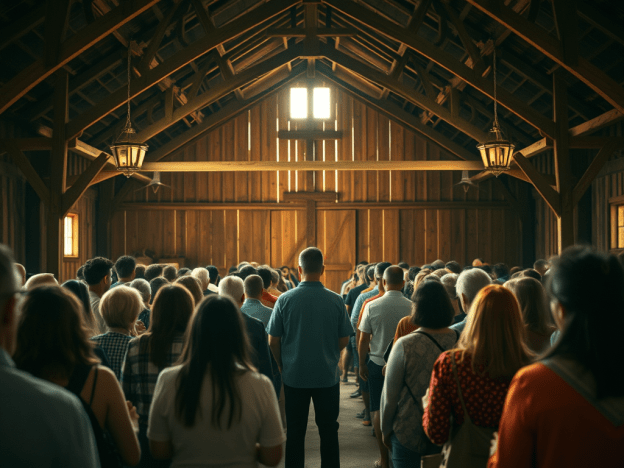
In the midst of all this change, a local man named Jonah worked quietly. He was a carpenter by trade, known for his plain but sturdy work. His wife, Alice, shared his faith, and together they dreamed of starting a small church. They believed in helping people, in the simple power of prayer. One Sunday, after years of saving, they gathered a few families at an old barn on the outskirts of town.

But the town did not welcome them. Newstead was not a religious place, and many saw Jonah and Alice as intruders. “This town has its own ways,” people said. “We don’t need new ideas.” Others whispered that the couple were just looking for power or money, though Jonah worked his trade every day and Alice tended to their small garden.

Jonah’s friend, Andrew, spoke to him one evening. “They fear what they don’t know,” Andrew said, as they sat by the fire. “It’s not personal. It’s just the way of things here.”

Jonah nodded. “We didn’t come here to fight,” he replied. “But we won’t leave either.”

Weeks turned to months, and still the community opposed the church. Some spread rumors, others made threats. Yet Jonah and Alice remained steadfast. They held small gatherings every Sunday, praying quietly for their neighbors and the town.

One day, news spread about a boy named Peter. He was the son of a prominent merchant and had been sick for many months. No doctor in the town could help him. Desperate, the family sought out Jonah and Alice.

Alice visited the family home. She sat beside Peter’s bed, her hands folded. “We’ll pray,” she said softly to the boy’s mother. The air in the room was heavy with doubt, but Alice’s voice was steady. Jonah stood by the door, silent and watchful.

For three days, they prayed, and on the fourth, Peter stirred. By the week’s end, he was walking. The news spread quickly. Many could hardly believe it. The boy who had been on death’s door was now playing in the town square.

“What did they do?” people asked. “Could it really be a miracle?”

Word of the healing traveled far, and the opposition to Jonah and Alice’s church began to fade. “Maybe there’s something to it,” someone muttered at the market. “Maybe we were wrong.”

The church grew slowly after that. People who had once turned their backs now came, curious but still cautious. Jonah and Alice didn’t make any grand claims about what had happened. “We just prayed,” they would say when asked. “The rest was not ours to decide.”

Years passed, and the church became a small but steady presence in Newstead. The community warmed to them, though the town never fully embraced religion. But Jonah and Alice did not mind. They had built something that mattered to them, and that was enough.

One evening, long after the church had become part of the town’s fabric, Alice sat on the porch with Jonah. The sun was setting, casting long shadows across the yard.

“Do you ever wonder why it all worked out?” Jonah asked.

Alice smiled, looking out toward the horizon. “Because we didn’t ask for anything,” she said softly. “We just gave what we could.”

Jonah was quiet for a long time. Then, with a sigh, he stood. “There’s something I need to tell you,” he said.

Alice turned to him, her eyes questioning.

“Remember the night before Peter was healed?” Jonah began. “I wasn’t sure anymore. I wasn’t sure of anything. But that night, after we prayed, I asked God for a sign. Not for me, but for you. I didn’t want to see you lose hope.”

“And?”

Jonah smiled gently. “I think the sign was for both of us.”

Redding’s Untold Stories: Courage in Marriage

Redding, nestled between mountain ranges and the Sacramento River, has always thrived on the land around it. In the 1950s, the town’s life changed forever. A dam was built, bringing workers from all over. Whiskeytown and Keswick followed, turning the place into a hub for industry. The lumber business grew alongside it, with the sound of saws filling the air. People moved here for the jobs, and Redding continued to grow.

In the 1960s, new roads were laid down. Interstate 5 cut through the town, connecting it to the rest of the state. Tourism came in waves. Travelers marveled at the lakes formed by the dams. Boats glided across the water. Some stayed, buying land, building homes. The town stretched east across the Sacramento River, swallowing up Enterprise. Electricity from the dam was cheap. The people voted for annexation, hungry for savings.

The 1970s brought hard times. The lumber mills struggled. Demand slowed, and the trees themselves were protected. By the 1990s, mills shut down, workers lost their jobs. The Spotted Owl had a habitat to keep, and it was the trees. The town went quiet. Redding had to reinvent itself. And it did.

In the late 1980s, retail and housing boomed. Construction companies thrived again. Families came looking for a fresh start. By the mid-1990s, the town had found its feet. New businesses lined the streets. The days of the lumber mills were gone, but Redding stood tall, reshaped by change.

But this town had more stories than just industry. It had people, and the quiet acts of courage that often went unnoticed. There was a man named James and a woman named Martha who lived on the edge of town. They weren’t loud or proud, but they had a heart for others. People knew them, but not too well.

One summer, a woman named Sarah came to them. Her face was bruised, her hands shaking. She had come from a nearby town. Her marriage was bad. Her husband, Paul, was a hard man. He worked in the mills before they shut down. When the work dried up, so did Paul’s patience. His anger turned on Sarah, and it wasn’t long before she had nowhere to go.

James and Martha took her in. They didn’t ask too many questions. Sarah sat at their kitchen table, eyes down, tears falling.

“Stay as long as you need,” Martha said.

James nodded. “You’re safe here.”

Weeks went by. Sarah slowly found her strength. The bruises healed, but her spirit was still tender. Martha showed her how to tend the garden, how to care for the chickens. Simple things. Each day, Sarah grew quieter, more peaceful. But fear lingered in the back of her mind. Paul would come looking. She knew it.

One evening, Sarah sat outside, watching the sun dip behind the hills. Martha joined her.

“He’ll come,” Sarah whispered.

Martha looked out at the horizon. “Maybe.”

“What will I do?” Sarah’s voice broke.

Martha didn’t answer right away. She let the silence settle. Finally, she spoke. “Strength comes in knowing you’ve survived.”

Sarah looked at her, uncertain.

“When he comes, you’ll know what to do,” Martha said. “You’ll stand.”

James walked up to them. He’d heard the conversation. “If he comes, we’ll be here. But you’ve already done the hard part.”

And so, Sarah waited. A week passed. Then two. Nothing. She started to believe she might be free.

Then, one night, there was a knock at the door. James opened it. Paul stood there, fists clenched, eyes wild.

“I’m here for my wife,” he growled.

James stood firm, his hands at his sides. “She’s not leaving.”

Paul took a step forward, but James didn’t move. Martha stood behind him, watching.

Paul’s eyes flicked to Sarah, standing in the doorway, no longer hiding. He expected fear, but saw something else.

“You coming?” he barked.

Sarah shook her head. “No.”

Paul’s face twisted in anger, but then something changed. He stared at Sarah, seeing her for the first time. Not the woman he had tried to control, but someone different. Someone strong. His shoulders sagged.

Without another word, Paul turned and walked away. Sarah didn’t watch him go. She closed the door softly.

“You stood,” Martha said.

Sarah nodded, her voice steady. “I did.”

The town went on. Redding grew and changed, shaped by forces bigger than anyone could control. But in the quiet corners of the town, where no one was looking, people found their own kind of strength. People like Sarah. And like the town, she too was reshaped, not by the weight of her past, but by the quiet resolve she found within herself.

As the years passed, the story of the dams and the highways would be told over and over, but no one would ever know about Sarah. No one, except James, Martha, and one other.