Live Streaming Your Climb: Tips from Alice Finch

Bend, Oregon, was founded in the early 20th century. A small settlement grew around the Deschutes River, where traders and pioneers paused on their westward journeys. The river’s waters powered mills, and by 1910, timber became the backbone of Bend’s economy. Logging boomed, and trains carried lumber to build towns across the west. As the logging industry declined in the 1960s, Bend faced a choice: fade into obscurity or reinvent itself. Locals leaned into the area’s natural beauty. By the 1980s, Bend had become a hub for outdoor recreation. Tourists flocked to ski Mount Bachelor, raft the Deschutes, and hike Pilot Butte. Craft beer followed in the 1990s, solidifying Bend’s reputation as a destination for adventurers and beer enthusiasts alike.

In 2023, a young woman named Alice Finch lived in Bend. Alice worked part-time at the last Blockbuster, an iconic relic that attracted tourists and nostalgia seekers. When she wasn’t shelving DVDs, she climbed rocks. “Pilot Butte isn’t enough,” Alice told her friend Josh. “I need bigger walls, harder climbs.” Josh shrugged. “You’re good, but are you that good?” Alice decided to find out. She entered the Northwest Rock Climbing Championship in Portland. Against seasoned climbers, she surprised everyone, including herself, by winning. Her victory brought attention. She was offered free gear, trips to climbing sites, and a shot at international competitions. Her Instagram following doubled overnight. Alice felt like she’d arrived.

But success was not what she imagined. The trips were exhausting. The competitions felt hollow. Sponsors pushed her to post content constantly. One evening in Yosemite, Alice scrolled through her phone, searching for inspiration. She stumbled on an online climbing coach named Kian, who posted unconventional training advice and philosophical musings. His followers praised his methods. “Find the joy in the climb,” he often wrote. Alice sent him a message. “I think I’ve lost my way,” she typed. “Then climb for yourself,” he replied.

Alice decided to leave the competitive circuit. She called her cousin Leah, who lived in a small Oregon town she’d barely visited. “I’m done,” Alice said. “You just started,” Leah replied. “No, really. I’m coming to stay with you.” In this new town, Alice helped Leah with farm chores and avoided social media. She hiked and climbed alone, revisiting Kian’s videos for guidance. He often spoke in riddles. “The hardest move,” he said in one clip, “is the one you avoid.”

Leah’s family had mixed feelings about Alice’s stay. Leah encouraged her to take her time, but her parents called often, urging her to come home and “get serious.” Alice ignored them. By late summer, Alice had improved significantly. She felt stronger, more grounded. Inspired by Kian’s teachings, she decided to tackle a challenging route at Smith Rock State Park. She invited Leah to watch.

The climb tested her in every way. At one crux, she froze. Kian’s voice echoed in her mind: “The hardest move is the one you avoid.” Alice laughed despite herself. She pushed past her hesitation and finished the climb. At the top, Alice felt a rush of clarity. She wanted to share her passion with others, not through competition but by teaching. When she returned to Leah’s, she began drafting ideas for how to do this.

Alice realized that while she enjoyed teaching in person, her audience could be much larger if she streamed her climbs online. She had avoided live-streaming for years because of her dislike for performing in competitions, but this felt different. She wasn’t climbing to win; she was climbing to share what she loved. She set up a basic streaming setup using her phone and a small tripod.

Her first stream was from a small boulder field near Leah’s home. Alice climbed a simple route while narrating her thought process. “Okay,” she said into the camera. “The first thing to look for are solid handholds. See this crack here? It’s perfect for your fingers.” She paused to adjust her grip. “Next, think about your feet. Don’t just stick them anywhere—place them deliberately. It’s like solving a puzzle.”

The stream didn’t attract many viewers—just a handful of people stumbled across it—but one left a comment: “This is super helpful. Do more!” Encouraged, Alice planned her next stream at Smith Rock. She chose a moderate route and borrowed Leah’s GoPro for better footage.

The second stream was more polished. Alice began by showing the gear she used, explaining why each piece was important. “These shoes,” she said, holding them up, “are tight and uncomfortable, but they help you feel every little bump and edge on the rock.” She then demonstrated how to tie a figure-eight knot. “This knot is your lifeline. If you mess this up, you’re in trouble.”

As she climbed, Alice talked about managing fear. “Everyone gets scared,” she said. “The key is to breathe through it. Don’t fight the fear—acknowledge it, then focus on what you can control.” By the time she reached the top, dozens of viewers had joined the stream. Comments poured in. “This is amazing!” one person wrote. Another asked, “Can you do a beginner series?”

Alice was thrilled. She had found a way to connect with people that felt authentic. Over the next few weeks, she planned more streams, focusing on different aspects of climbing. One stream was all about footwork, another on choosing routes. She also did Q&A sessions where viewers could ask anything about climbing.

Her audience grew steadily. People from all over the world tuned in to watch her climbs and learn from her. Some sent messages saying she had inspired them to try climbing for the first time. Others shared their own climbing stories and asked for advice. Alice felt a sense of fulfillment she had never experienced in competitions.

One day, while streaming a climb on Pilot Butte, Alice paused mid-route to address her audience. “You know,” she said, “it’s funny how life works. I started climbing because I loved the challenge. Then I got caught up in winning and lost that love. Now, I’ve found it again, and it’s better than ever.” She smiled at the camera. “If there’s one thing I’ve learned, it’s this: climb for yourself, not for anyone else.”

After the stream, Alice sat at the top of the Butte, looking out over Bend. She thought about how far she had come—not just as a climber but as a person. She had learned to let go of others’ expectations and follow her own path. It hadn’t been easy, but it had been worth it.

Leah joined her at the top, bringing two cans of beer. “You’ve got fans now,” Leah said, handing her a can.

Alice laughed. “It’s weird, isn’t it? People actually want to watch me climb.”

“Not weird,” Leah said. “You’ve got something to say, and people want to hear it.”

Alice nodded, feeling grateful. She didn’t know what the future held, but for the first time in a long time, she was excited to find out.

Young Painter Goes to New York

Tacoma, Washington, has always been a place where the improbable meets the inevitable. Nestled by the Salish Sea, it grew from a scrappy railroad terminus into a city with a story as gritty as its industrial nickname, “Grit City.”

The town’s fortunes took off in 1873 when it became the western terminus of the Northern Pacific Railway. “Where the rails met the sails,” they said. Over the next century, Tacoma’s skyline filled with smoke stacks and its air with the pungent “Aroma of Tacoma.” But its residents were proud. They built ships, brewed beer, and whispered to each other in their homes, “Someday, this town will shine.”

In 2024, Tacoma had cleaned up nicely. The old slag heap was now Dune Peninsula, named after Frank Herbert, the local boy turned sci-fi legend. Tourists marveled at the Chihuly Bridge of Glass and the Museum of Glass with its iconic cone. They sat on patios, soaking in mountain views, sipping locally brewed beer, and thinking, “This might be better than Seattle.”

Amidst all this transformation, there lived a young painter named Ella Maynard. Ella was twenty-three, with a mop of unruly curls and an eye for the peculiar. She spent her days painting in a small studio near Point Defiance Park, inspired by the old-growth forests and the shimmering Salish Sea. “You paint what you see,” her grandmother used to tell her. Ella saw colors where others saw gray.

One foggy morning, Ella took one of her paintings to a local coffee shop. It was a depiction of the Dune Peninsula at sunrise, with Mount Rainier looming in the background. The piece had a strange glow—the slag heap turned golden, the mountain almost surreal. “Art’s supposed to tell the truth,” Ella said when someone asked about it. “That’s the truth I see.”

A woman sitting nearby overheard. She introduced herself as Nancy Bell, a gallery owner from New York. “I’ve never seen anything like it,” Nancy said. “I’ll take it for $3,000.” Ella blinked, then nodded. “Sold,” she said. Her voice cracked.

Within a week, Ella was on a plane to New York City. Nancy showcased her work in a trendy SoHo gallery, and within days, all her paintings sold. Critics called her “the Pacific Northwest’s new voice” and “a visionary of light and landscape.” Ella spent her days in galleries, her nights in cramped apartments, and her mornings wishing for Tacoma’s quiet.

She began dreaming about her family. In the dreams, her mother’s hands were covered in paint. Her father was singing old railroad songs. Her brother’s laughter echoed like wind through the trees. When Ella woke, she felt hollow. After three weeks in New York, she bought a one-way ticket back home.

“You’re leaving already?” Nancy asked when Ella told her. “I don’t belong here,” Ella said. “I belong where the air smells like salt and pine.”

Back in Tacoma, her family’s reaction was mixed. Her mother hugged her and said, “You followed your heart.” Her brother teased her: “Couldn’t handle the big city, huh?” Her father, ever the pragmatist, said, “Well, you’re here now. Let’s make the best of it.”

Ella rented a bigger studio and got to work. Her time in New York had sharpened her skills and her resolve. She painted Tacoma as she saw it: gritty, glowing, alive. One evening, her brother burst into her studio. “You won’t believe this,” he said, holding up his phone. “Your gallery’s trending on TikTok. Some influencer called your work ‘raw Pacific Northwest magic.’ People are losing it.”

Within days, orders poured in. But Ella wasn’t interested in fame anymore. “Art is for people, not for hype,” she said. She hosted a show in Tacoma, offering her paintings for free. “Pay what you can,” she told visitors. Her family was skeptical. “You could make a fortune,” her father said. Ella smiled. “I’ve made enough.”

The event was a wild success. People lined up for hours. Children stared wide-eyed at her glowing landscapes. One man offered her a loaf of homemade bread in exchange for a small painting. Ella accepted.

On the last day of the show, a man in a suit approached her. “Ella Maynard?” he asked. She nodded. “I’m with the Tacoma Art Museum. We’d like to acquire your collection.” Ella’s eyes widened. “All of it?” she asked. “All of it,” the man said. “Your work belongs here, in Tacoma.”

Ella agreed, on one condition. “The museum must always have free admission,” she said. The man hesitated but then nodded. “Deal,” he said.

Months later, Ella walked into the museum to see her paintings hanging in a room named after her. A small boy stared at her depiction of Dune Peninsula. “It’s glowing,” he said. Ella crouched beside him. “That’s the truth I see,” she said.

As she left, she passed her father in the lobby. He was shaking hands with the museum director, holding a check. “What’s that for?” Ella asked.

Her father grinned. “They’re paying for the bread,” he said. Ella laughed so hard, she almost cried.

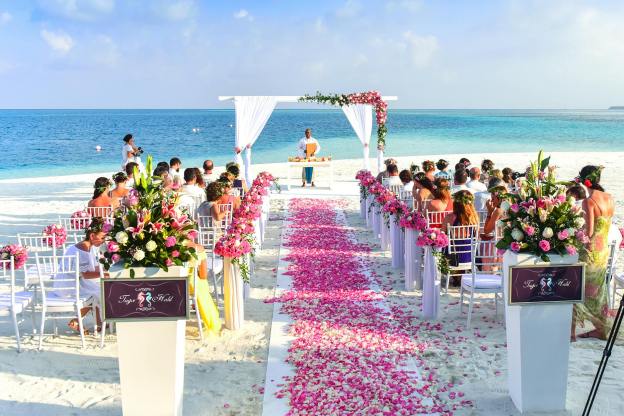
beach wedding ceremony during daytime

She Married Quickly in Bali

Portland, Maine, grew from a modest fishing settlement into a vibrant coastal hub. Its story begins in the 1600s when settlers arrived seeking fortunes on the Atlantic. The sea shaped everything—economy, culture, and life rhythms. Casco Bay was their lifeline. Early settlers built homes of timber, traded fur, and learned the currents.

By the 1800s, Portland was thriving. The waterfront bustled with activity. Ships carried goods from Europe, the Caribbean, and beyond. Fishermen, merchants, and craftsmen shaped its identity. Yet the city endured fires, storms, and wars. Each time, it rebuilt stronger. Its red-brick buildings still echo tales of perseverance.

Modern Portland is small but dynamic. Its population of 68,000 enjoys a walkable downtown. Cobblestone streets mix the past with the present. Bar Futo, a Japanese-inspired eatery, represents the city’s global taste. Owner-chef Jordan Rubin sources seafood from nearby waters. “We walk to the pier for fish,” he said.

One recent event captured the town’s essence—the story of Jenny Monroe. A 25-year-old local woman, Jenny worked at a bakery in the Old Port. Her life was simple: mornings at the oven, afternoons walking the waterfront. Then, her life changed overnight.

Jenny bought a lottery ticket on a whim. She never expected to win. When the numbers were announced, her ticket matched. She’d won $2 million. The news spread fast. “Jenny, the baker millionaire,” people joked.

But Jenny surprised everyone. She didn’t buy a mansion or a luxury car. Instead, she booked a flight to Bali. “I need a break from the familiar,” she said. Her family was stunned. “Why Bali?” her mother asked. “Why not?” Jenny replied.

In Bali, Jenny met David. He was American but had lived there for years. They crossed paths at a market. David was a crypto trader and spoke passionately about digital currencies. Their connection was immediate. Within weeks, they married in a small ceremony. Jenny called home to share the news.

“You’re married?” her brother asked. “Already?”

“Yes,” Jenny said. “David’s coming home with me.”

Jenny’s family reacted with a mix of shock and worry. Her mother was skeptical. “You barely know him,” she said. Jenny’s brother was more direct. “This is reckless,” he said. Jenny defended her decision. “I know what I’m doing,” she insisted. Her father, always the peacemaker, said, “Give them a chance.”

When Jenny and David returned, her family tried to be supportive. They invited David to family dinners and included him in their routines. At first, things seemed promising. David joined Jenny’s father on fishing trips and bonded over shared stories. Her mother, though cautious, began to warm up. “He’s trying,” she admitted.

But cracks began to show when David’s crypto trades faltered. One day, Jenny discovered that he had lost a significant portion of her lottery winnings. She confronted him. “Why didn’t you tell me?” she asked. David looked defeated. “I thought I could fix it before you found out,” he said.

Jenny turned to her family for support. Her mother was furious. “I told you this was a mistake,” she said. Her brother agreed. “You need to cut him off,” he said. Her father, however, urged caution. “People make mistakes,” he said. “The question is whether he’s willing to make it right.”

Jenny decided to separate from David. She stayed with her parents while she sorted her thoughts. David, meanwhile, spiraled into guilt and despair. One icy evening, while driving to clear his head, his car skidded on a patch of black ice and hit a tree. He was rushed to the hospital in critical condition.

When Jenny got the call, she was overwhelmed. Despite their troubles, she went to see him. At his bedside, David whispered, “I’m sorry for everything. I just wanted to build something for us.” Tears filled Jenny’s eyes. Seeing him so vulnerable, she realized she still cared. “Let’s focus on healing,” she said.

David’s recovery was slow but steady. During this time, Jenny’s family rallied around them. Her father visited the hospital often, bringing home-cooked meals. Her brother, though hesitant, helped David with errands once he was discharged. Even her mother softened. “He’s trying to make amends,” she acknowledged.

As David regained his strength, he and Jenny began to rebuild their relationship. They promised each other honesty and teamwork. “No more secrets,” Jenny said. David agreed. “We’ll face everything together from now on.”

In one month, Jenny’s life had transformed. Her journey was a testament to resilience and the power of family. Through challenges and reconciliation, she rediscovered the strength of love and support that anchored her—just like the sea that surrounded her hometown.