Power of Prayer: Believe You have Received

Paia, a charming town on Maui’s North Shore, has seen many transformations. Originally a plantation town, its sugarcane roots gave way to a Bohemian hub for surfers, artists, and wanderers. By 2025, it was known for its laid-back vibe, bustling small shops, and golden beaches. Despite its small size, barely 7.5 square miles, Paia had a magnetic charm, drawing visitors and residents alike.

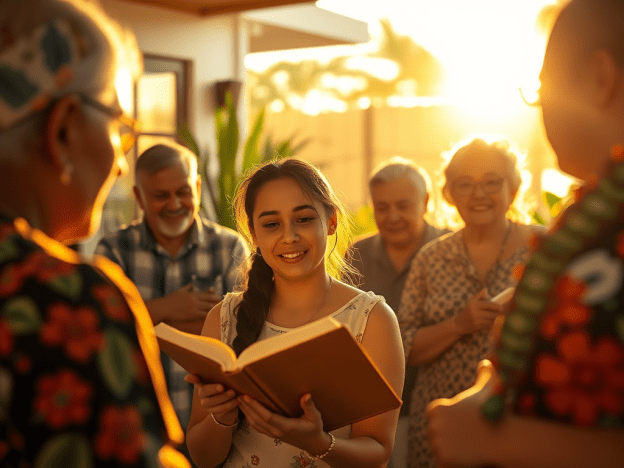
At the heart of this community was a young woman named Leilani. She was 24, born and raised in Paia, with a mind as curious as the winds that swept Ho’okipa Beach. She worked part-time at a local café and spent her evenings reading. Leilani had recently joined a church home group, intrigued by their promises of faith and community.

The group met every Wednesday at the home of Auntie Malia, an elder known for her warm smile and banana bread. Each session began with a prayer circle. Members took turns sharing their needs—from healing illnesses to finding lost pets. Yet, Leilani noticed something odd. Few of these prayers were answered. Weeks passed, and the same requests echoed in the circle.

“Auntie,” Leilani asked after one meeting, “why do you think our prayers don’t seem to work?”

Auntie Malia shrugged. “Maybe we must wait. Or pray harder. Faith is a mystery, child.”

Leilani wasn’t satisfied. She decided to investigate. She borrowed a Bible from the church library and studied it meticulously. She read about faith, persistence, and the promises of answered prayers. But she found no clear reason for the group’s apparent lack of success.

One Sunday, while chatting with the pastor, Leilani heard about another Bible study group meeting on Fridays. Curious, she attended. This group was smaller, and the leader, a man named Kimo, shared a different perspective.

“When you pray, believe you’ve received it already,” Kimo said. “That’s what the Bible teaches. Faith sees it as done before it happens.”

Leilani listened, fascinated. She began taking notes, comparing the two groups. The Friday group’s prayers focused on clear outcomes and a deep conviction that the answers were already given. In contrast, Auntie Malia’s group often prayed in vague terms, leaving outcomes entirely to divine will.

One Friday, Leilani shared her observations. “Do you think it’s about believing first?” she asked.

Kimo nodded. “Exactly. Faith without sight. That’s the key.”

Leilani decided to compile her findings into a letter for Pastor Keawe. It outlined the differences between the groups and suggested focusing on believing in answered prayers. Her mother, a former schoolteacher, helped edit the letter.

Leilani delivered the letter on a sunny afternoon. Pastor Keawe read it carefully. “This is insightful,” he said. “Let’s discuss it with both groups.”

Over the next five weeks, the church held joint lessons to delve deeper into the principle of believing before seeing. Each week focused on a specific aspect:

  1. Faith Beyond Sight: Members learned to visualize their prayers as already answered, grounding their belief in Scripture.
  2. Aligning with God’s Promises: They explored biblical promises and how to align their prayers with God’s will.
  3. Speaking Life: The group practiced speaking positively and affirmatively about their requests.
  4. Gratitude in Advance: Members expressed thankfulness for their prayers being answered, even before seeing results.
  5. Action Steps of Faith: They discussed practical actions to demonstrate their trust in God’s provision.

Slowly, they noticed a shift. Auntie Malia’s group began to see results. Lost pets were found. Illnesses improved. Relationships mended. By December, the church community buzzed with stories of answered prayers.

One evening, after a particularly moving session, Auntie Malia pulled Leilani aside. “You’ve taught us much, child. Mahalo.”

Leilani smiled. “It’s not me. It’s all of us learning together.”

The culmination of their faith journey came during a special Christmas service. The congregation had been praying for a young boy in the community, Kaipo, who had been battling a severe illness. That evening, Kaipo and his family stood before the church to share incredible news: he had received a clean bill of health from his doctors, defying all odds.

Tears of joy filled the room as Pastor Keawe spoke. “This is the power of faith and belief. When we trust completely, miracles happen.”

Leilani sat quietly, her heart full. The year had changed her and her community forever. Faith had become more than words; it had become their way of life.


Uncovering Spa Secrets: A Biology Grad’s Impact on Wellness

Champaign-Urbana, Illinois, is known for its sprawling university, strong ties to technology, and vibrant cultural scene. Its twin-city charm has attracted many ambitious minds. Among them was a young woman named Helen Hastings. She had grown up in Urbana, the quieter of the two cities, and recently graduated from the University of Illinois with a degree in biology. The story of Helen’s extraordinary year began with a visit to Crystal Lake Park on a crisp spring day.

Helen had heard about Serenity Spa, a wellness retreat near the park. It was gaining popularity for its unique mud baths, touted as “revitalizing” by locals. Helen decided to treat herself to a session, having recently landed a research job. Her parents, avid supporters of her pursuits, encouraged her to relax after months of grueling study.

The spa had a calming atmosphere. Customers sipped herbal teas while waiting for their treatments. Helen signed up for the signature mud bath and found the experience oddly soothing. The staff were friendly, and the setting was serene. She left feeling rejuvenated.

A week later, Helen felt unusually tired. Soon, she developed a fever and a persistent rash. Her physician ran tests but found nothing conclusive. “It’s probably a viral infection,” he said. Helen’s parents urged her to rest, but her curiosity gnawed at her.

“The spa seemed clean,” Helen told her friend Maya, a fellow biology graduate. “Still, I can’t shake the feeling that something wasn’t right.”

Maya shrugged. “If you’re that worried, go back and ask questions. Maybe you’ll find something interesting.”

Helen returned to Serenity Spa, posing as a curious customer. She asked about their mud source. The manager, an affable man named Greg, explained that it came from a local supplier. “We test it monthly for contaminants,” he assured her. Helen left feeling slightly embarrassed for suspecting anything.

Two months later, Helen overheard a coworker, Jake, discussing his recent visit to Serenity Spa. “Great experience,” he said, “but I’ve been sick ever since.” Helen’s ears perked up. She questioned him about his symptoms, which mirrored her own.

“I’m sure it’s unrelated,” Jake said. “These things happen.”

But Helen couldn’t let it go. This time, she took action. Armed with sterilized containers, she revisited Serenity Spa and discreetly collected samples of the mud. She mailed them to a former professor’s lab at the university, seeking help to analyze them.

The results came back two weeks later. The mud contained unusually high levels of a rare bacterium, Pseudomonas thermotolerans, known to thrive in warm, moist environments. It was harmless to most but posed risks to individuals with certain genetic markers—like Helen.

Her family rallied around her. “You should notify the spa,” her mother urged. Her father agreed. “But be tactful. They may not know about this.”

Helen arranged a meeting with Greg. She presented her findings calmly. Greg appeared genuinely concerned. “We’ll investigate immediately,” he promised. He thanked Helen for her diligence and assured her that the spa’s operations would be halted temporarily.

A month later, Helen received an unexpected call. It was Greg. “We found nothing wrong with the mud from our supplier,” he said. “Your results were an anomaly.”

Confused, Helen revisited her data. Everything seemed accurate. Meanwhile, reports of illnesses among spa visitors dwindled. Helen wondered if she had been mistaken.

Then came the twist. Helen’s mother, an avid gardener, mentioned something peculiar. “The compost I bought recently had a strange smell,” she said. Helen’s curiosity flared. She examined the compost and ran quick tests in her lab. To her shock, it contained traces of the same bacterium found in the spa’s mud.

Helen pieced it together: the spa’s mud supplier and the compost vendor were the same. A contaminated batch of compost had likely seeped into the mud used at the spa. Helen notified Greg, who immediately pulled all products sourced from the vendor.

The spa reopened months later with stringent new protocols. Greg invited Helen to their grand reopening. “Thanks to you, we’re safer now,” he said, offering her a lifetime membership, which she politely declined.

The year ended with Helen receiving a local award for community contribution. During her acceptance speech, she joked, “Who knew mud baths could be so educational? I’ll stick to bubble baths from now on.” The audience roared with laughter. Helen’s mother added, “And I’ll stick to planting flowers, not bacteria.”

Champaign-Urbana’s residents still talk about the time a young woman uncovered the mystery of the spa mud. Helen became a local hero—and an accidental advocate for better compost. The spa continues to thrive, and Helen’s story is a reminder that even small actions can make a big difference.

From Real Estate to Reality TV Star in Providence

Providence, Rhode Island, a city steeped in history and innovation, is a blend of old and new. Once an industrial port, the city has transformed itself into New England’s creative capital. The Providence River, its centerpiece, divides neighborhoods like College Hill and Fox Point from downtown. The riverfront is now a vibrant hub, thanks to the Providence River Relocation Project, which began in 1988 and spanned 30 years. The city’s hallmark events, such as WaterFire, bring residents and visitors together in celebration of art and community. Against this dynamic backdrop, the story of Amelia Rinaldi unfolded.

Amelia grew up in the Federal Hill neighborhood. Her family owned a small real estate office. Her mother, Gina, managed the business, while her father, Marco, handled maintenance. Amelia worked part-time for them after graduating from the University of Rhode Island with a degree in communications.

One winter morning, while sipping coffee at a downtown café, Amelia’s phone buzzed. It was her friend Natalie. “Amelia, did you see this? They’re casting for a movie here in Providence! They need extras.”

“Extras? Sounds fun,” Amelia replied. She filled out the online application that evening. Two weeks later, she got an email: she’d been selected—but not as an extra. She had a small speaking role in an indie film shooting in the city.

Her family was thrilled. “You’ve got the personality for this,” Marco said. Gina added, “Just don’t forget us when you’re famous.”

The film, Shadows on the Hill, was a modest production. Amelia played a barista who offered cryptic advice to the protagonist. She spent three days on set, meeting local actors and enjoying craft services. The director praised her natural delivery.

When the film wrapped, Amelia started dreaming bigger. She applied for auditions in Boston and New York. In March, she landed a role in a commercial for a travel app. It aired on regional TV, and her parents proudly showed it to clients at the office.

Encouraged, Amelia took a leap of faith. She told Gina, “I’m going to focus on acting full-time for a while.” Gina hesitated but nodded. “If anyone can make it, it’s you.”

In May, Amelia got her biggest opportunity yet: a supporting role in an off-Broadway play. The production, a modern adaptation of Antigone, promised exposure. She rented a tiny apartment in Queens and threw herself into rehearsals. The cast bonded over late-night pizza and shared dreams of stardom.

Opening night arrived in June. Amelia’s family drove down to see her. Her performance was heartfelt, but the reviews were harsh. One critic wrote, “The cast’s enthusiasm cannot compensate for uneven acting.” Amelia’s name was specifically mentioned.

Crushed, she called Gina. “Maybe I’m not cut out for this.”

“Come home,” Gina said gently. “The office needs you.”

Amelia returned to Providence in July. She threw herself back into real estate, showing apartments and handling paperwork. Her clients appreciated her cheerful demeanor. She tried not to think about acting, but her coworkers occasionally teased her. “Watch out,” one joked, “she’ll sell you a house and then star in the movie about it.”

In August, an unexpected call came. A casting director she’d met in New York was working on a commercial shooting in Boston. They needed someone with real estate experience to play a realtor. “It’s a one-day shoot,” he said. “Are you interested?”

Amelia hesitated but agreed. The shoot went smoothly. The director called her “perfectly authentic.” The commercial aired in September, and Amelia’s parents were overjoyed.

But the cycle repeated. A prominent blog reviewed the ad and described her performance as “forgettable.” Amelia laughed it off but felt a pang of doubt.

In October, she considered quitting acting for good. “You keep bouncing back,” Marco said. “That’s what matters.” Gina added, “Maybe you’re meant to juggle both worlds.”

By November, Amelia found a new rhythm. She worked at the real estate office during the week and attended local acting workshops on weekends. The dual focus felt balanced.

Then came the twist. In December, a local TV station announced a new reality series: Selling Providence. It would follow realtors navigating the city’s competitive housing market. Amelia’s friend Natalie nudged her to apply.

“Reality TV? Really?” Amelia said.

“You’d be great,” Natalie insisted.

Amelia applied, thinking little of it. Two weeks later, she got the call: she’d been cast as one of the show’s leads. Filming began in January. The producers loved her mix of charisma and local knowledge.

By February, Selling Providence premiered on regional TV. It became an instant hit. Viewers adored Amelia’s humor and honesty. One episode featured her balancing a house showing with a last-minute audition. Her parents became minor celebrities in Federal Hill.

One day, a client asked her, “Do you still act?”

Amelia grinned. “Every time I’m on this show.”

Her critics? They didn’t matter anymore. Providence had embraced her.

At the end of the season, a major network picked up the show. As Amelia signed the new contract, Marco joked, “So does this mean you’ll finally buy us dinner?” Gina added, “Just don’t forget us when you’re a big star.”

Amelia laughed. “I’ll never forget where I started. Or who helped me keep going.”