Category Archives: Towns

Republican Party and Democratic Party Compromise.

Crescent River was founded in 1720 by French settlers, who were soon followed by Spanish missionaries. The town sat at a bend in a wide, shimmering river, giving it the name Crescent River. Native American religions, and Christianity mixed in unexpected ways. Rituals would blend Catholic hymns with the rhythmic drums of the faiths. Spanish priests walked through the streets, while local people continued their traditional practices under the moonlight.

By 1800, Crescent River had grown into a bustling trade port. French, Spanish, and British settlers fought over control, each leaving a mark on the town’s culture. The town became a melting pot of languages, beliefs, and traditions. A small Catholic church stood in the town square, next to a Protestant meeting house. On weekends, the streets filled with both worshippers and street vendors, all moving in harmony. Christianity dominated the religious landscape, but echoes of older faiths still lingered in whispers.

In the early 1900s, Crescent River was a thriving place, known for its riverboats and agriculture. Farms grew along the fertile riverbanks, bringing wealth to a few, while many toiled in the fields. The town saw many shifts in its leadership as the United States grew. Other Christian denominations, like Southern Baptists and Methodists, were also present, but they stayed small in the shadow of the town’s Catholic roots.

As the 20th century continued, Crescent River became a center for political debate.
It was a place where community and personal beliefs often collided.

The Political Dispute

By 2020, Crescent River was still a quiet town, but one couple caused quite a stir: Emily and John Delacroix. They lived in a modest house on the riverbank, and though they were well-liked, their recent political decisions worried everyone.

Emily had begun to promote the Republican Party. She passed out flyers, attended rallies, and even organized small gatherings at the town hall. John, her husband of 25 years, was a lifelong Democrat. He would attend local Democratic meetings and hang campaign posters on their front porch. Soon, their house had become a battlefield of political banners.

The townspeople didn’t know what to make of it.

“John, you’ve gone and done it again,” Emily teased one morning. She was pouring coffee at their kitchen table, pointing to a new Democratic sign on the lawn.

“Well, Em, I had to. Can’t have the neighbors thinking we’ve lost our senses,” John said with a grin.

Emily laughed. “I think they’re more worried about us, not our signs.”

The political tension between them amused the couple. Yet, it began to make others nervous. Neighbors whispered at church.

“What will happen if Emily and John really start fighting? It could divide the town,” one woman murmured in the pews.

Despite the townspeople’s fears, the couple carried on as usual. They laughed at each other’s debates and even helped one another prepare speeches. Emily handed John notes before his Democratic club meetings, and John gave Emily pointers on her public speaking at Republican events.

But one evening, after a particularly heated election season, Emily brought up something that had been bothering her.

“John, we need to talk,” she said as they sat on their porch.

“About what, Em?” John asked, leaning back in his chair.

“This. Us. The politics. We’re pulling people apart,” Emily said quietly.

John smiled, a bit sad now. “I’ve been thinking the same.”

They sat in silence for a moment, listening to the river’s quiet flow.

“We need a deal,” Emily finally said. “How about… we make a bargain. No more public campaigning. We can have our beliefs, but we won’t pull the town into it.”

John nodded. “Agreed. But… what’s the catch?”

Emily grinned. “Well, I want one thing in return.”

“What’s that?”

“You help me set up a charity for the community. Something we both agree on. We’ll still be involved, but in a way that unites, not divides.”

John laughed, his mood lightening. “That’s a fine idea, Em. But I have a condition too.”

Emily raised an eyebrow. “Oh? What’s that?”

“You have to admit, just once… that the Democrats have better coffee at their meetings.”

Emily laughed out loud. “You wish!”

They both chuckled, but Emily winked. “Fine. Once. But only after you admit the Republicans make better pies.”

John smirked. “Deal.”

The Surprise

The next morning, the town buzzed with news. The Delacroix house no longer had any political signs. Instead, a large banner hung across their porch: “Crescent River Charity – Bringing Us Together.”

As Emily and John worked on their new project, the townspeople breathed a sigh of relief. They had feared the worst, but instead, they got something far better—a community united.

And when the charity opened its doors, John and Emily were behind the counter, side by side, serving pie and coffee. The real surprise? Both tasted equally delicious.
The History of Newstead Town

In 1797, a small settlement began to grow along the coast, attracting people from distant lands. By 1830, the population had quadrupled as immigrants poured. The settlers came from all walks of life. Many were drawn by the promise of prosperity. With them, a cosmopolitan community began to emerge, blending cultures and traditions. It was a bustling place, but growth brought its challenges.

Crime surged, and health facilities could not keep up. Riots broke out in 1867, as rival factions clashed over control. It was a time of unrest, but that same year, Newstead came under British rule. The colonial administration set about restoring order. Immigration was tightly regulated, and new laws were enforced. Investments were made in hospitals and schools, and the town began to stabilize.

Newstead developed a reputation as a hub of intellectual life, with ideas spreading like wildfire. Newspapers championed reform and education. The settlement became known for its lively debates, where people from different backgrounds exchanged ideas. Over time, a middle class emerged. They were not European by birth, but many aspired to European standards of living. It was a town constantly shifting and growing, pulling in new influences from all over the world.

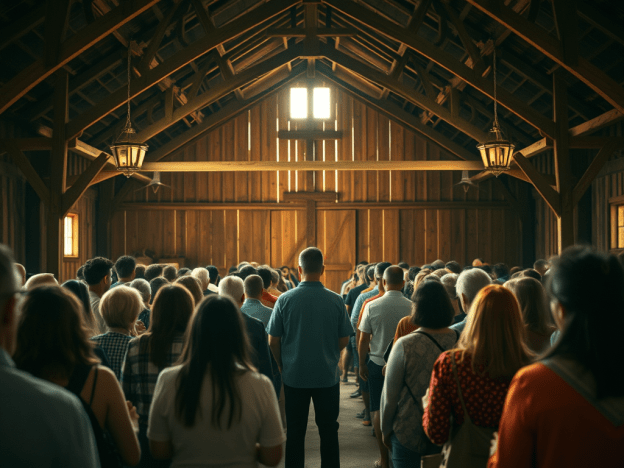
In the midst of all this change, a local man named Jonah worked quietly. He was a carpenter by trade, known for his plain but sturdy work. His wife, Alice, shared his faith, and together they dreamed of starting a small church. They believed in helping people, in the simple power of prayer. One Sunday, after years of saving, they gathered a few families at an old barn on the outskirts of town.

But the town did not welcome them. Newstead was not a religious place, and many saw Jonah and Alice as intruders. “This town has its own ways,” people said. “We don’t need new ideas.” Others whispered that the couple were just looking for power or money, though Jonah worked his trade every day and Alice tended to their small garden.

Jonah’s friend, Andrew, spoke to him one evening. “They fear what they don’t know,” Andrew said, as they sat by the fire. “It’s not personal. It’s just the way of things here.”

Jonah nodded. “We didn’t come here to fight,” he replied. “But we won’t leave either.”

Weeks turned to months, and still the community opposed the church. Some spread rumors, others made threats. Yet Jonah and Alice remained steadfast. They held small gatherings every Sunday, praying quietly for their neighbors and the town.

One day, news spread about a boy named Peter. He was the son of a prominent merchant and had been sick for many months. No doctor in the town could help him. Desperate, the family sought out Jonah and Alice.

Alice visited the family home. She sat beside Peter’s bed, her hands folded. “We’ll pray,” she said softly to the boy’s mother. The air in the room was heavy with doubt, but Alice’s voice was steady. Jonah stood by the door, silent and watchful.

For three days, they prayed, and on the fourth, Peter stirred. By the week’s end, he was walking. The news spread quickly. Many could hardly believe it. The boy who had been on death’s door was now playing in the town square.

“What did they do?” people asked. “Could it really be a miracle?”

Word of the healing traveled far, and the opposition to Jonah and Alice’s church began to fade. “Maybe there’s something to it,” someone muttered at the market. “Maybe we were wrong.”

The church grew slowly after that. People who had once turned their backs now came, curious but still cautious. Jonah and Alice didn’t make any grand claims about what had happened. “We just prayed,” they would say when asked. “The rest was not ours to decide.”

Years passed, and the church became a small but steady presence in Newstead. The community warmed to them, though the town never fully embraced religion. But Jonah and Alice did not mind. They had built something that mattered to them, and that was enough.

One evening, long after the church had become part of the town’s fabric, Alice sat on the porch with Jonah. The sun was setting, casting long shadows across the yard.

“Do you ever wonder why it all worked out?” Jonah asked.

Alice smiled, looking out toward the horizon. “Because we didn’t ask for anything,” she said softly. “We just gave what we could.”

Jonah was quiet for a long time. Then, with a sigh, he stood. “There’s something I need to tell you,” he said.

Alice turned to him, her eyes questioning.

“Remember the night before Peter was healed?” Jonah began. “I wasn’t sure anymore. I wasn’t sure of anything. But that night, after we prayed, I asked God for a sign. Not for me, but for you. I didn’t want to see you lose hope.”

“And?”

Jonah smiled gently. “I think the sign was for both of us.”

The Fight for Justice in a Changing Bakersfield

In 1873, Bakersfield was officially incorporated. The town had grown quickly, with migrants from all over looking to make their fortune. The land was dry, but opportunity flowed like water. By 1874, Bakersfield replaced the nearby town of Havilah as the county seat. This shift of power didn’t sit well with some, but the oil fields and farmlands demanded it. Bakersfield was becoming something more. The city’s leaders decided they needed a marshal to keep order. They chose Alexander Mills.

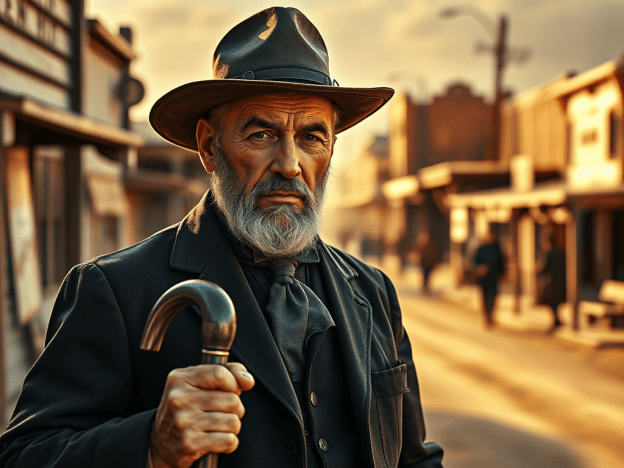
Mills was from Kentucky, a man who had seen the world change. He walked with a cane, and some said he should have retired long before Bakersfield hired him. But Mills had a steady hand with a gun and a reputation for getting things done. Some liked him for his grit, others feared him for his temper. He was known to be high-handed with the local businessmen, often treating them as if they were criminals. As time went on, the resentment grew.

By 1876, the city was struggling. It couldn’t collect the taxes it needed to provide services, and the businessmen wanted Mills gone. But no one dared confront him directly. Instead, they came up with a plan. They would vote to disincorporate the city. Without a city, Mills would have no job, no authority. It worked. Bakersfield disincorporated, and Mills was left with nothing. For the next 22 years, a council of citizens managed the town.

But Bakersfield wasn’t done. By 1880, the town had a population of 801, including 250 Chinese laborers. The railroads and the oil industry brought new faces, new money. People came from Texas, Louisiana, Oklahoma, and Southern California, all looking for work. By 1890, the population had swelled to over 2,600. Bakersfield reincorporated on January 11, 1898. The town was back, and it was bigger than ever.


In the late 1890s, a woman named Eliza Harper lived in Bakersfield. She was known for her quiet demeanor, but she was sharper than most people realized. Eliza ran a small shop on Main Street, selling dry goods to the townspeople. She kept to herself, but she saw and heard everything that happened in Bakersfield.

One evening, Eliza was closing her shop when a young man burst through the door. He was frantic, sweating, and out of breath. “Miss Harper,” he said, “they’re going to hang me for a crime I didn’t commit.”

Eliza had heard about the crime. A local rancher had been murdered, and the sheriff had rounded up a suspect—this young man. The evidence was thin, but the town was angry. Someone had to pay. Eliza looked the man over. His clothes were torn, his face bruised. “Why should I believe you?” she asked.

“Because I wasn’t there,” he said. “I was with someone that night. But she’s scared to speak.”

Eliza thought for a moment. “Who is she?” she asked.

The young man hesitated. “Her name’s Sarah. She works at the saloon.”

Eliza nodded. She knew Sarah, a quiet girl who kept to herself, much like Eliza. The next morning, Eliza went to the saloon. Sarah was sweeping the floor when Eliza walked in. “We need to talk,” Eliza said.

Sarah looked up, her eyes wide with fear. “I can’t,” she whispered. “They’ll kill me if I speak.”

Eliza stepped closer. “If you don’t, an innocent man will die.”

Sarah hesitated, then nodded. She told Eliza what she knew. On the night of the murder, the young man had been with her at the saloon. He couldn’t have killed the rancher. But the real killer, Sarah said, was someone powerful in town, someone who had threatened her to stay silent.

Eliza knew what she had to do. She went straight to the sheriff. At first, he didn’t believe her. But Eliza was persistent. She told him about Sarah, about the threats, and finally, the sheriff agreed to investigate. It wasn’t long before the real killer was found—a local businessman who had a dispute with the rancher over land.

The town was shocked. They had been ready to hang the wrong man. The sheriff arrested the businessman, and the young man was freed. The townspeople were grateful to Eliza, though she didn’t ask for thanks. She went back to her shop, content to fade into the background again.

Years later, people still talked about how Eliza Harper had saved that young man’s life. But there was something Eliza never told anyone. She had known all along who the killer was. She had seen him arguing with the rancher days before the murder. But she had waited. She had wanted to see if Sarah would find her courage.

In the end, Eliza had been right to wait. The truth had come out, and Sarah had spoken up. But Eliza knew that without her quiet push, nothing would have changed. Sometimes, she thought, it’s not about what you know, but what you let others discover on their own.